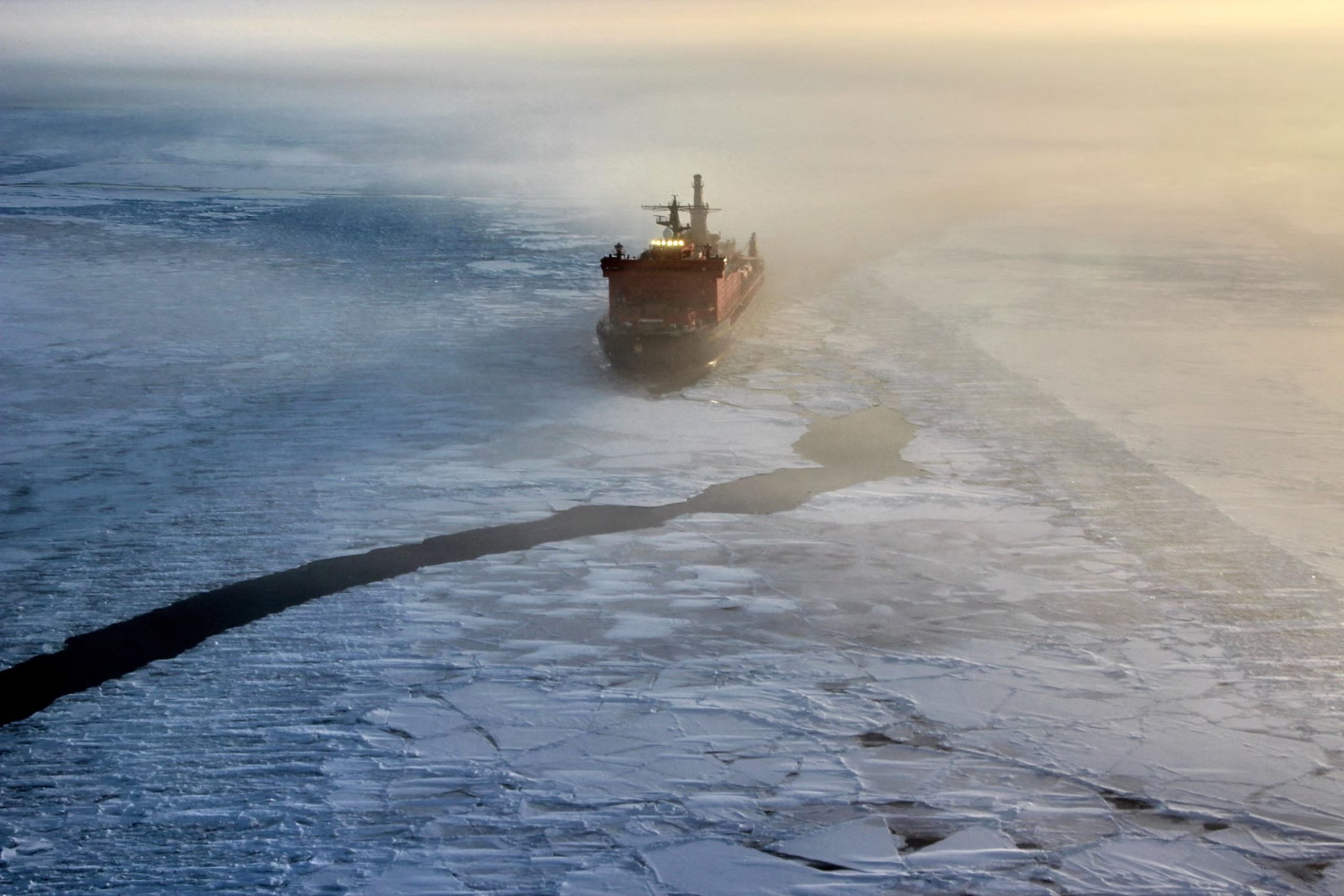
Chinese shipping line Sea Legend has announced a regular container service linking China and Europe via the Arctic, following a successful trial in 2025 when a vessel sailed from Ningbo-Zhoushan in eastern China to Felixstowe in the UK in 20 days. The move has drawn attention in Western capitals, especially as tensions around the Red Sea have raised the risks of using the Suez Canal. The northern sea route can cut journey times by up to 40%, but significant barriers remain.
A centuries-old dream
The idea of a northern sea route has fascinated strategists for generations. During the Russo-Japanese War of 1904-05, Russia's Baltic Fleet could not use the icy Siberian waters for a surprise attack; instead, it sailed around Africa and across the Indian Ocean, only to be destroyed by the Japanese Navy at the Battle of Tsushima. After the 1917 revolution, Soviet planners began surveying the northern coast, seeing the route as essential for industrial development and, later, for military installations during the Cold War.
In 1987, Soviet leader Mikhail Gorbachev proposed opening the passage to foreign ships. Soon after, the International Northern Sea Route Program—a joint effort by Japanese, Norwegian, and Russian institutions—was launched to build scientific and technical knowledge for commercial shipping. Its findings were sobering: shallow straits and floating ice imposed strict size limits on vessels. Ships were capped at roughly 20,000 to 50,000 deadweight tons, far less than the 70,000 to 80,000-ton container ships emerging on other global routes in the late 1990s.
Climate change opens the door
Over the past three decades, the Arctic has warmed at nearly three times the global average. Scientists estimate the Arctic Ocean could see its first ice-free day as early as 2030. This is catastrophic for wildlife, infrastructure, and the 400,000 to 500,000 indigenous inhabitants, but it also makes the northern sea route more navigable. China, Japan, and South Korea have all referenced the route in their Arctic policies, and each has icebreaker capabilities—something the US has struggled with due to declining shipbuilding capacity.
South Korea has been particularly active. In early 2026, it passed legislation to turn Busan into a major Arctic shipping hub, and in August it announced plans for a trial container ship voyage in September, which would require coordination with Russian authorities—a point that has raised eyebrows among European diplomats. China, however, has been the most proactive non-Arctic nation. For Beijing, the route offers an alternative to the Malacca Strait, through which about 80% of its imported oil and a vast share of its trade passes, a strategic vulnerability. In 2018, China launched the Polar Silk Road initiative under its Belt and Road framework. After dozens of test transits, mainly between China and Russia, Sea Legend's regular service marks a shift from trials to scheduled operations.
Japan also sees the Arctic as a potential energy shortcut, with deep-water ports on Hokkaido and Honshu well positioned for liquefied natural gas imports. But Tokyo has been more cautious, reflecting its frosty relations with Moscow.
Persistent obstacles
Despite the promise, several operational and economic hurdles prevent the Arctic from becoming a mainstream alternative. The route is open only during a narrow late-summer window, and ice conditions vary dramatically year to year. Ships need reinforced hulls, specialized crews, and permits, and Russian icebreaker escorts are legally required for parts of the passage. Insurance premiums are steep because emergency infrastructure is sparse. While climate change may ease some constraints, it will not eliminate the region's inherent hazards.
Then there is the geopolitical dimension. European companies have largely stayed away due to the route's association with Russia. As a result, the northern sea route remains less a Suez alternative and more a seasonal gambit—defined as much by geopolitical ice as by the physical kind. For now, it is a niche option for a few operators, not a game-changer for global trade.