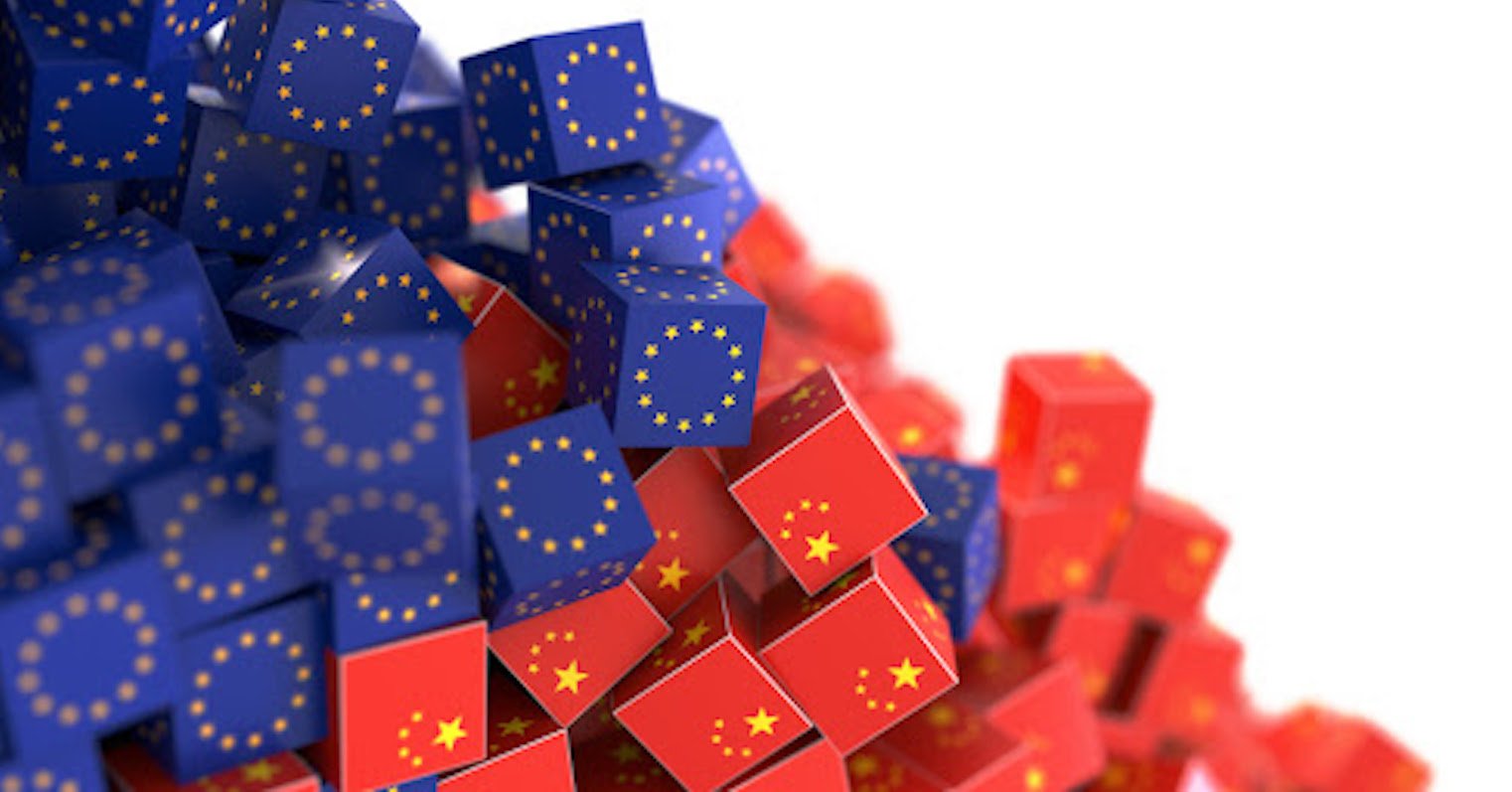
Beijing and Brussels have formally established a permanent mechanism for trade and investment consultations, marking a significant institutional step in managing their increasingly complex economic relationship. The China-EU Trade and Investment Consultation Mechanism held its inaugural meeting in Brussels on June 29, co-chaired by Chinese Commerce Minister Wang Wentao and European Commissioner for Trade and Economic Security Maros Sefcovic.
China's Ministry of Commerce described the discussions as “comprehensive, in-depth and constructive,” though no major policy announcements emerged. The mechanism's value lies in creating a standing forum for regular dialogue between two of the world's largest economic powers, rather than in any immediate breakthroughs.
Timing and Strategic Context
The launch comes at a moment of profound change in the global trading system. Governments worldwide are recalibrating economic competitiveness against national security concerns, supply chain resilience, and industrial policy. For Beijing, the mechanism offers a chance to stabilize relations with a crucial trading partner at a time when external demand remains vital for China's economic recovery. The European Union is among China's largest export markets and a key source of foreign investment, technology, and advanced manufacturing expertise.
Institutionalizing dialogue allows China to reinforce its longstanding position that trade disputes should be resolved through consultation within established frameworks, rather than through unilateral restrictions or prolonged tariff disputes. Regular ministerial-level discussions provide Beijing with a formal platform to explain policy objectives, respond to European concerns over industrial subsidies, market access, and regulatory practices, and pursue negotiated outcomes before disagreements escalate.
For Brussels, the mechanism reflects a pragmatic recognition that economic engagement with China remains indispensable despite growing strategic competition. The EU has consistently maintained a policy of “de-risking” rather than “decoupling,” seeking to reduce excessive dependencies in critical sectors without disrupting the extensive commercial relationship that underpins European industry. China remains a vital market for European manufacturers, luxury brands, pharmaceutical companies, chemical producers, and engineering firms. Equally, European businesses continue to rely on China as an important manufacturing base and source of components within global supply chains.
While disputes over electric vehicles, industrial subsidies, and investment screening have become increasingly prominent, neither side has an interest in allowing these disagreements to undermine broader economic cooperation. The new mechanism also provides Brussels with an institutional avenue to raise longstanding concerns regarding market access, regulatory transparency, intellectual property protection, and investment conditions through sustained diplomatic engagement rather than relying exclusively on trade defense measures.
Such dialogue is unlikely to eliminate differences, but it may reduce the risk of policy misunderstandings and encourage more predictable commercial relations. The significance of the initiative extends beyond the bilateral relationship. Together, China and the European Union account for a substantial share of global trade and economic output. Greater stability between the two economies has implications for international supply chains, investment flows, and business confidence across multiple sectors, including renewable energy, electric vehicles, advanced manufacturing, pharmaceuticals, and digital technologies.
The inclusion of investment alongside trade is particularly important. Investment relationships create long-term economic linkages through technology cooperation, employment, research, and industrial development. As governments increasingly compete for advanced manufacturing and strategic industries, providing investors with greater regulatory certainty has become an important element of economic competitiveness.
Additionally, the establishment of a consultation mechanism reflects a broader shift towards renewed emphasis on negotiation in international trade. Since returning to office, US President Donald Trump has consistently argued that trade disputes should ultimately be resolved through direct negotiations aimed at improving market access, reducing trade imbalances, and establishing more reciprocal commercial arrangements. While his administration has frequently employed tariffs as negotiating leverage, the central objective has been to bring trading partners to the negotiating table. In that respect, the China-EU initiative aligns with the broader principle that sustained dialogue remains preferable to prolonged economic confrontation.
Still, the methods differ considerably – Washington has generally favored using economic pressure to encourage negotiations, whereas Brussels and Beijing have opted to institutionalize regular consultations – but both approaches acknowledge that negotiated settlements offer a more durable foundation for international commerce than open-ended trade disputes. This does not imply policy convergence. Significant disagreements remain over industrial policy, state support for strategic sectors, technology transfers, market access, and economic security. The European Union continues to investigate Chinese subsidies in sectors such as electric vehicles, while Beijing has raised concerns about EU investment screening mechanisms.
The mechanism's launch also comes amid broader geopolitical shifts in the Indo-Pacific. For instance, China's role in Indonesia's nickel boom illustrates how Beijing's industrial strategy intertwines with resource-rich Southeast Asian economies. Meanwhile, German conservative leader Friedrich Merz has revived the Plaza Accord idea as a potential tool to counter Chinese trade practices, highlighting ongoing European debates about how to engage with Beijing. These dynamics underscore that while the new mechanism is a constructive step, it operates within a landscape of persistent tensions and competing interests.