The Asia-Pacific is undergoing a profound transformation in how it governs the ocean. Governments from Indonesia to Japan, South Korea to the Pacific Islands are expanding marine protected areas, investing in blue carbon initiatives, deploying digital fisheries monitoring systems, and positioning the ocean as a cornerstone of both climate resilience and economic growth.
The scale of ambition was on display at the 2026 Our Ocean Conference in Mombasa, Kenya, where more than 100 governments, businesses, and civil society organizations announced 320 commitments worth $6.4 billion for marine conservation, sustainable fisheries, climate resilience, and blue economy development. What was once primarily an environmental agenda has evolved into a strategic economic project. Marine ecosystems are increasingly valued not only for their biodiversity but also for their role in carbon sequestration, food security, renewable energy, and geopolitical influence.
Yet amid this enthusiasm for blue growth, a fundamental question remains largely unanswered: Who benefits from the blue economy? The answer may determine whether the region's ocean transition becomes a model for sustainable development or a new source of social and political tension.
The Rising Value of Ocean Space
The Asia-Pacific contains some of the world's most productive fisheries, largest mangrove forests, and most diverse marine ecosystems. It is also home to hundreds of millions of people whose livelihoods depend directly on coastal and marine resources. As climate change intensifies and global demand for sustainable investment grows, ocean space is becoming increasingly valuable. Governments are now expected to simultaneously expand marine conservation, support fisheries production, develop offshore renewable energy, protect biodiversity, attract blue finance, and achieve climate mitigation targets.
The result is a new competition for ocean resources. Marine protected areas (MPAs) are expanding under the Global Biodiversity Framework's commitment to protect 30% of the world's land and oceans by 2030 — the so-called "30×30" target. Blue carbon projects are attracting growing climate finance as investors seek carbon credits generated from mangrove and seagrass restoration. Offshore wind projects are proliferating across East Asia, from the coasts of Taiwan to South Korea. Digital monitoring systems are transforming fisheries governance from Indonesia to Japan.
Individually, these initiatives are widely supported. Collectively, however, they are reshaping who has access to the ocean and under what conditions. This is where the concept of blue justice enters the conversation.
What Is Blue Justice?
Blue justice challenges the assumption that environmental sustainability automatically leads to social sustainability. The concept emerged from growing concerns among fisheries scholars, development practitioners, and coastal communities that the benefits of the blue economy are often distributed unevenly. While conservation organizations, investors, governments, and large industries frequently gain influence within emerging ocean governance frameworks, small-scale fishers often remain marginalized from decision-making processes.
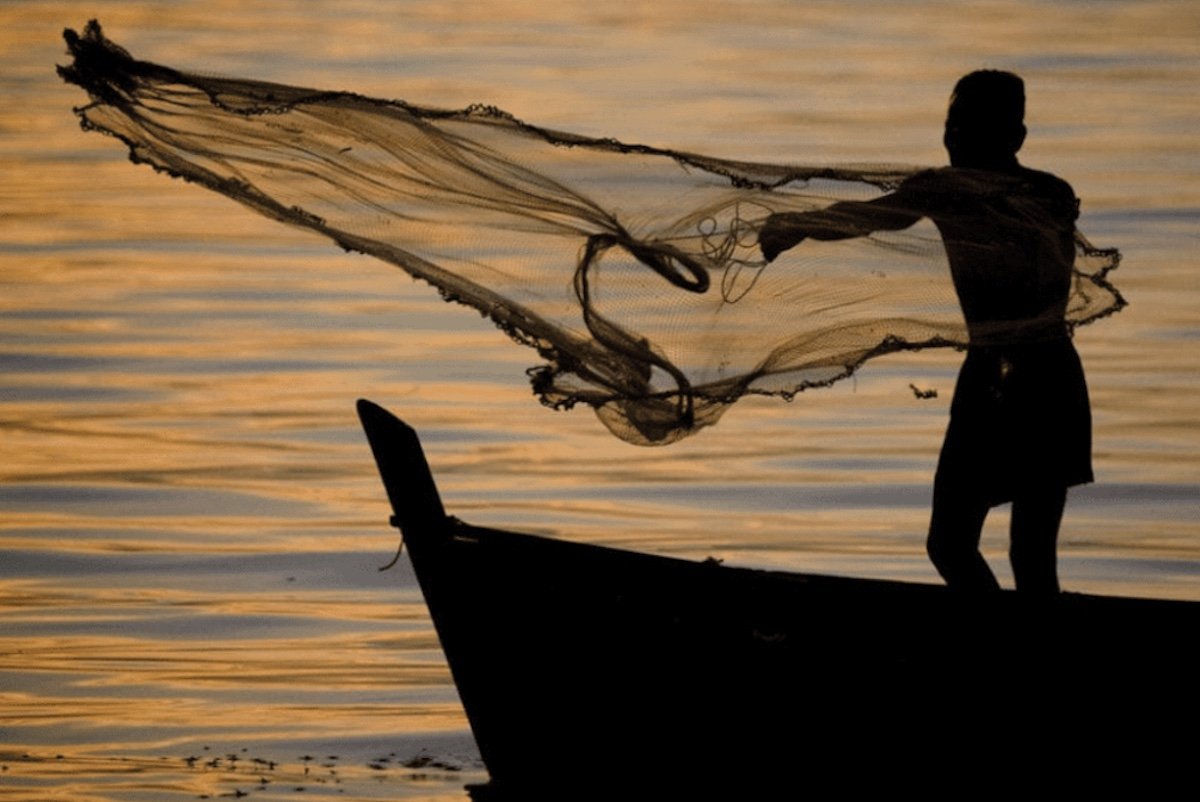
This concern is particularly relevant in the Asia-Pacific, where small-scale fisheries support food security and livelihoods for millions of people. According to the UN Food and Agriculture Organization, about 600 million people worldwide depend at least partially on fisheries and aquaculture for their livelihoods, with a significant concentration in Asia. Yet many blue economy discussions continue to prioritize investment flows, conservation targets, and technological innovation while paying relatively little attention to questions of access, participation, and equity.
The issue is not whether marine conservation or climate action should occur. The issue is whether communities most dependent on marine resources are able to participate meaningfully in shaping those transitions.
Protected Waters, Unprotected Communities?
One of the most ambitious global conservation goals is the protection of 30% of the world's oceans by 2030. Across the Pacific, governments and conservation organizations have embraced this objective. New marine protected areas have been announced or expanded in several regions, while international funding increasingly supports large-scale marine conservation initiatives. From a biodiversity perspective, the rationale is compelling: MPAs can help restore fish stocks, protect vulnerable species, and improve ecosystem resilience against climate change.
However, conservation success is not measured solely by ecological indicators. Many coastal communities depend on access to fishing grounds that have sustained livelihoods for generations. Restrictions imposed without meaningful consultation can generate resentment, reduce compliance, and ultimately undermine conservation objectives. Recent discussions surrounding large marine protected areas in parts of the Pacific have highlighted this tension. While conservation advocates emphasize ecological benefits, local stakeholders often ask a different question: Who decides which areas are protected, and who bears the economic costs?
The challenge is not unique to the Pacific Islands. Similar debates are emerging throughout Southeast Asia and parts of East Asia as governments expand marine conservation commitments. Without community legitimacy, conservation risks becoming politically fragile.
Blue Carbon: The Next Resource Conflict?
If marine protected areas represent one governance challenge, blue carbon may represent the next. The Asia-Pacific hosts some of the world's largest blue carbon ecosystems. Mangrove forests in Southeast Asia and coastal wetlands across the Pacific are increasingly attracting international climate finance due to their ability to absorb and store carbon. Governments and development institutions are investing heavily in restoration projects as part of broader climate mitigation strategies.
Yet the rush to monetize these ecosystems raises difficult questions. Who holds the rights to carbon credits generated from coastal restoration? How are benefits shared with local communities who have stewarded these ecosystems for generations? Without clear frameworks for equitable benefit-sharing, blue carbon projects could replicate the pitfalls of terrestrial carbon offset schemes, where local communities see little return while international investors reap the rewards.
This dynamic is particularly acute in regions like Indonesia and the Philippines, where mangrove restoration is accelerating. As Japan's Terra Drone tests combat drones in Ukraine, the lessons for surveillance and monitoring in the Indo-Pacific are being closely watched, but the more immediate challenge for ocean governance may be ensuring that local voices are heard in decisions about their own waters.
The Asia-Pacific's ocean governance test is not just about meeting conservation targets or attracting investment. It is about whether the region can build a blue economy that is both sustainable and just. The answer will shape the livelihoods of millions and the health of the world's most important marine ecosystems for decades to come.