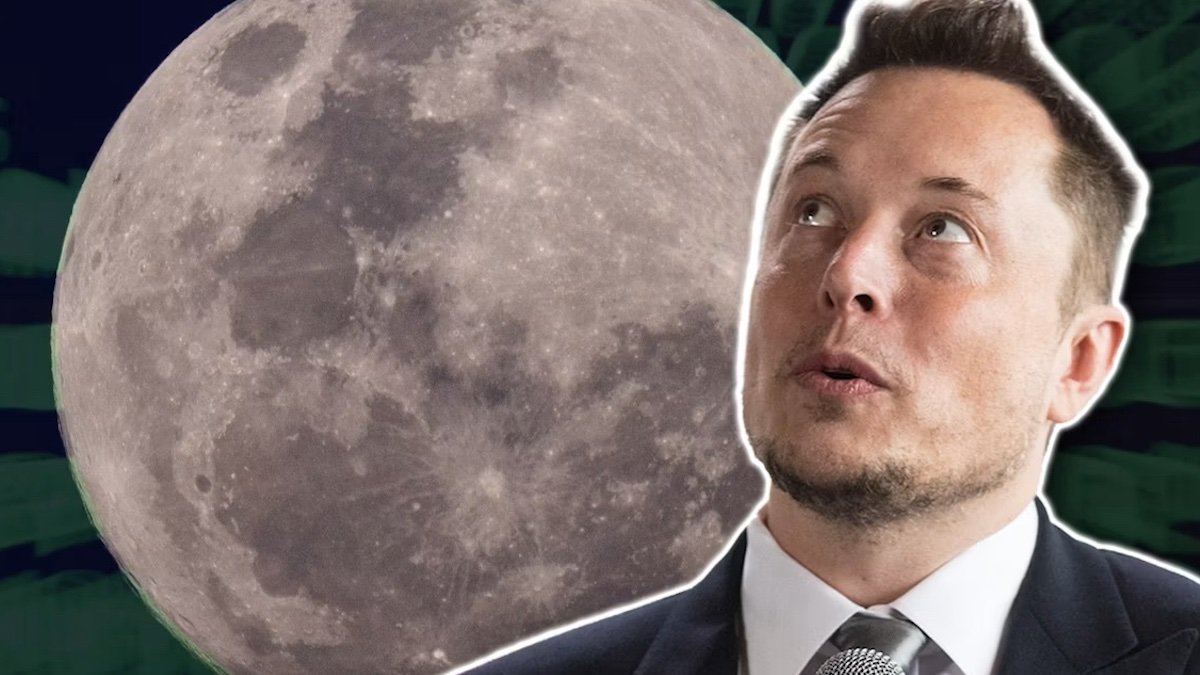
Elon Musk, who briefly held the title of the world's first trillionaire before slipping back to mere billionaire status, has long operated as a man of exceptions. He has built two of the most pioneering technology companies—Tesla and SpaceX—and for two decades has spoken with apparent seriousness about colonizing Mars. Unlike most tech chief executives, he posts multiple times daily on his own platform, X. In 2025, he gave what many observers described as a Nazi salute in Washington, D.C., while simultaneously holding a senior U.S. government role with no prior political experience and expanding his business empire.
During his chaotic tenure as head of the Department of Government Efficiency (DOGE), Musk treated governance as a data-synthesis problem, seeking optimized policy solutions while appearing to forget that real people—entitled to fairness and justice—were profoundly affected by his desk-bound decisions. This has made him a household name and one of the world's most powerful individuals. Journalist Cory Doctorow and others have asked: is Musk now exceptionally dangerous? And where does he fit among other West Coast “broligarchs” like Amazon's Jeff Bezos, Palantir's Alexander Karp, and Meta's Mark Zuckerberg?
Canadian political economist Quinn Slobodian and technology journalist Ben Tarnoff tackle these questions in their meticulously researched book, Muskism: A Guide for the Perplexed. The term “Muskism” deliberately echoes “Fordism,” named after Henry Ford, whose mass-production model reshaped American government and society from around 1935. The authors argue that Musk—along with other tech titans—is building a far-reaching industrial edifice that is similarly transforming society, but in a far more dangerous direction.
While Ford and other mega-corporations underpinned mass employment, decent wages, strong social security, and mass consumption in postwar America, Musk's companies aim to forge a very different socioeconomic order. This order, the authors contend, is stupendously networked, massively surveilled, anti-liberal, and insular. Under Muskism, oligarchs and national governments together use advanced technology to weaken democracy, divide populations, impose social hierarchy, and immunize themselves from serious external threats.
South Africa as the Cradle of Muskism
“To understand the world that Musk aims to build, we have to understand the worlds that built Musk,” Slobodian and Tarnoff write. The first of these worlds was 1970s South Africa, where Musk was born and raised—none too happily, by a wealthy family—during the final years of the apartheid regime. “South Africa was the cradle of Muskism,” they write. “It taught the lesson of fortress futurism: the belief that technology can strengthen self-reliance in a hostile world.”
Systemic racism organized the entire society Musk grew up in. State and big business conspired to favor whites, using elaborate bureaucratic procedures and numerous laws despite hostility from outside the country. Bookish, an early video gamer, and a fan of sci-fi and new technology, Musk emigrated to Canada in 1989 at age 17 to avoid mandatory military service. He took his beliefs with him, rather than shedding them, say the authors.
By 1992, Musk was in the United States, attending the University of Pennsylvania to study physics and economics. By 1995, he was in Palo Alto, establishing his first tech startup, Zip2, and later X.com, which merged with Peter Thiel's PayPal. By 2002, he was incredibly rich; he set up SpaceX that year. His involvement with Tesla began in 2004 and grew from there. In 2015, he helped found OpenAI. In 2016, he co-founded Neuralink, a firm seeking to integrate human minds with AI. In 2017, he founded the Boring Company, focused on tunneling and underground transport. In late 2022, he acquired Twitter, and eight months later, founded xAI with its Grok chatbot. Then in 2025, he was head of DOGE before falling out with President Donald Trump. All this occurred before Musk was 55.
A white South African immigrant now commands the heights of American power, his influence global. This is why Slobodian and Tarnoff propose the term “Muskism,” linking Musk the man—like Ford before him—to something far bigger that he has built. They argue that Musk “sells the fantasy that, in an increasingly unstable world, both states and individuals can fortify their self-reliance by plugging into his infrastructures. The paradox is that, in doing so, you become reliant on him.”
They describe Muskism as a blend of proven technologies, technological promises-cum-prophecies, relationships between business and the state, and memes designed to sell and legitimize Musk's business empire. Together, these things promote “techno-sovereignty,” where advanced technology produced by private companies allows a national government and its preferred citizens to project power overseas while reducing their own vulnerability to external threats.
For readers in Asia and the Indo-Pacific, the implications are stark. Musk's Starlink satellite network already provides internet connectivity across the region, from rural Indonesia to conflict zones in Myanmar. His electric vehicle ambitions directly compete with Chinese giants like BYD, which recently undermined Indonesia's nickel-based EV supply chain ambitions. And his political influence—amplified by his control of X—has been felt in elections from India to the Philippines. As Slobodian and Tarnoff warn, Muskism is not just an American phenomenon; it is a global one, and its most profound consequences may yet unfold in the world's most dynamic region.