The latest flashpoints in the South China Sea have reignited long-simmering tensions, with the Philippines at the epicenter but shockwaves felt across the Indo-Pacific. Two developments in late May and early June have drawn sharp reactions from Manila, Tokyo, and Taipei, exposing deep fractures in regional diplomacy.
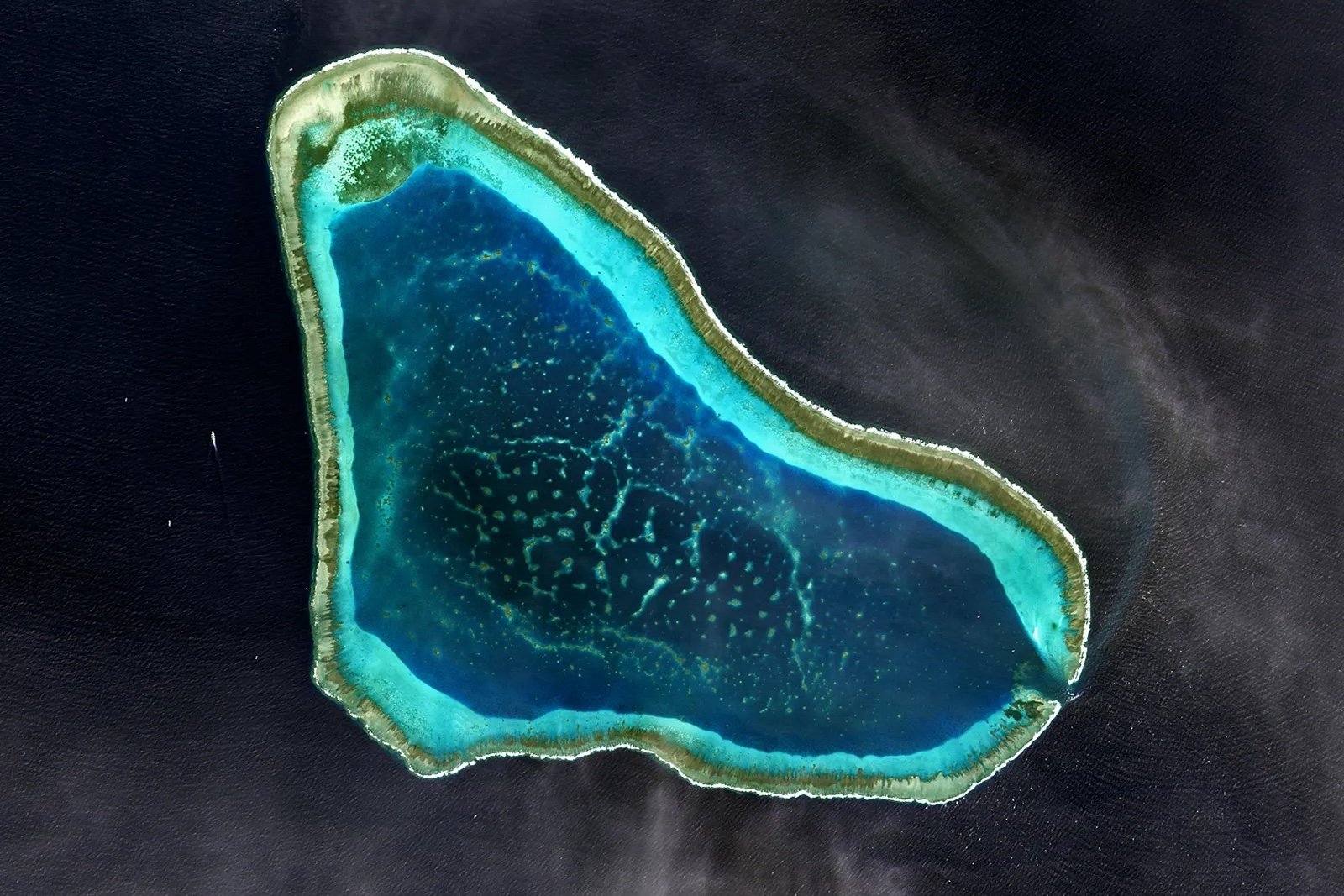
First, the Philippine government reported the appearance of several large objects within Scarborough Shoal—known locally as Bajo de Masinloc or Panatag Shoal. These include two buoys equipped with antennae and a floating platform that once housed six personnel. China has effectively controlled the atoll since 2012, despite a 2016 Permanent Court of Arbitration ruling that declared Beijing’s “10-dash line” claim invalid and its exclusion of Filipino fishermen illegal. China rejected that ruling and has not confirmed responsibility for the new objects, but a June 5 statement from its Ministry of Foreign Affairs asserted a right to “scientific research.” A follow-up statement on June 9 accused the Philippines of “false accusations,” a response many observers saw as an implicit admission.
Japan-Philippines Talks Trigger Chinese Response
The second development involves Philippine President Ferdinand Marcos Jr. and Japanese Prime Minister Sanae Takaichi, who announced on May 28 plans to hold bilateral talks to delineate their exclusive economic zones (EEZs), excluding Taiwan. China’s Ministry of Foreign Affairs spokeswoman declared on June 7 that “the so-called delimitation negotiations between Japan and the Philippines are entirely illegal and invalid.” In response, Beijing dispatched Chinese Coast Guard and other government vessels to patrol waters east of Taiwan on June 1 and June 8. Chinese sources confirmed these patrols were a direct reaction to the Japan-Philippine talks, using law enforcement ships rather than naval vessels to signal a sovereignty claim. Notably, the patrol area extended beyond China’s own 10-dash line.
The presence of Chinese ships near Taiwan’s east coast prompted Taiwan’s Coast Guard to deploy its own vessels. Taipei also reported that Chinese ships contacted commercial vessels in the area by radio, demanding to know their ports of origin, destinations, and cargo.
China’s strong reaction to Japan’s EEZ negotiations with the Philippines is rooted in deeper anxieties. Observers in Beijing are acutely aware of Japan gradually shedding constraints imposed by its postwar “peace constitution,” a trend accelerated since the Ukraine war—a conflict China has supported through diplomatic and material backing for Russian President Vladimir Putin. Chinese state media and academic circles often frame Japanese foreign policy through the lens of “remilitarization” and a purported goal of reconquering the region, as if little has changed since the 1940s.
A more specific fear is that Japan might help protect Taiwan from forcible annexation. Beijing has been on high alert since Sanae Takaichi became prime minister in October 2025, known for her advocacy to revise the constitution. In November, she stated publicly that a Chinese attack on Taiwan could trigger Japanese military action under collective self-defense, prompting a Chinese overreaction. The Taiwan scenario also fuels alarm over growing Japan-Philippines security cooperation, as both countries bracket Taiwan. The September 2025 Reciprocal Access Agreement allows Japanese forces to deploy to the Philippines, as seen in joint exercises last October. In May, Japan joined the Balikatan exercise and fired a Type 88 anti-ship missile from Philippine territory. Manila and Tokyo are discussing transferring Abukuma-class destroyers, now legal under Japan’s liberalized arms export rules, and negotiating intelligence sharing.
The perception of expanding security cooperation between Japan and another China-threatened neighbor appears central to Beijing’s concerns. A commentary in the Chinese Communist Party-run Global Times warned that if Tokyo and Manila “go further in their illegal collusion,” China will “further advance its exercise of jurisdiction in waters east of Taiwan island in the future.” This threatens neighbors banding together against Chinese expansionism with further Chinese expansionism. The commentary also invoked the Trump-Xi summit in May, implicitly calling on the United States to stop Japan-Philippines collaboration based on an “important consensus” on “stability.”
The Tokyo-Manila EEZ negotiation has also amplified a schism in Taiwan’s domestic politics. The opposition Kuomintang (KMT), dominated by descendants of mainland Chinese who suffered under Japan’s wartime invasion, is more anti-Japan than the Democratic Progressive Party (DPP), whose supporters include ethnic Chinese whose ancestors lived in Taiwan before and during the war. This internal divide complicates Taipei’s response to regional dynamics.
These developments underscore a broader pattern: China’s assertive actions in the South China Sea and East China Sea are reopening old wounds, testing alliances, and reshaping the strategic landscape of the Indo-Pacific. For countries like the Philippines and Japan, the challenge is to balance deterrence with diplomacy, while for Taiwan, the stakes are existential. As Beijing continues to leverage law enforcement and diplomatic pressure, the region watches warily for the next move.