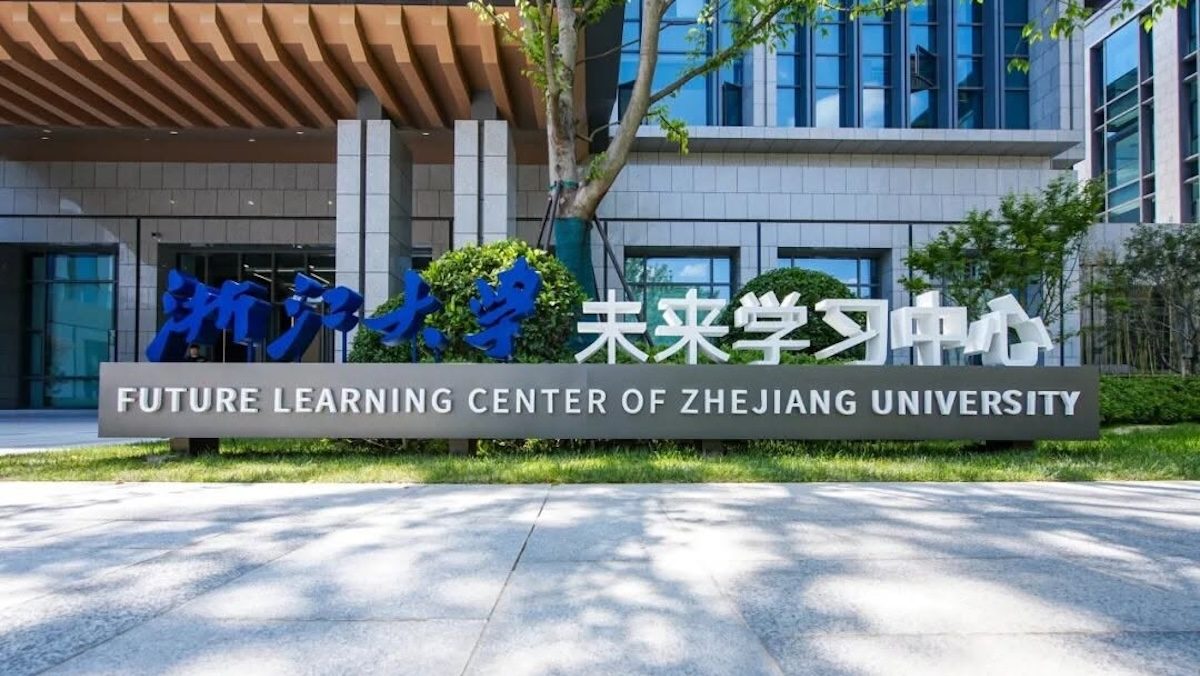
In a seismic shift for global science, nine of the world's top ten research universities are now in China, according to the 2026 Nature Index. Zhejiang University (ZJU) has dethroned Harvard University, which had held the top spot since the index's inception in 2015. China's share of research papers published in the 145 leading journals tracked by the index has more than doubled that of the United States, marking a dramatic acceleration in the country's scientific output.
When the Nature Index first launched, China's contribution was just 37% of the US share. By 2023, it had taken the lead, and by 2025, it had lapped the US. In the latest year, China's share grew 22.4% year-on-year, compared to 4.2% for the US. All other top-20 nations grew by single-digit percentages or declined, as total papers in the index rose 10.8%.
Beyond Legacy Rankings
Mainstream media outlets such as The Economist and The New York Times have increasingly turned to the Nature Index and the Leiden Rankings (which focus on citations rather than publications) to assess university performance. These metrics are seen as more objective than legacy rankings like Times Higher Education, US News, and QS, which rely on subjective factors such as academic reputation, employer surveys, and international student percentages. The top ten in Times Higher Education have remained virtually unchanged since 2004, despite China's rapid economic and technological ascent. For context, China's real per capita GDP has grown at a compound annual rate of 7.4% over two decades, while the UK's has stagnated at 0.6%.
The Nature Index does not claim to measure teaching quality, undergraduate experience, or prestige. It is a blunt instrument focused solely on high-impact research output. ZJU's victory over Harvard came with more than three times the number of PhD students, underscoring that the index rewards scale and productivity rather than selectivity or reputation.
The Engine Behind the Rise
China's surge is a direct result of its massive investment in tertiary education. Since 2000, the number of annual STEM graduates in China has increased nearly tenfold. This pipeline of researchers has fueled the country's dominance in fields ranging from electric vehicles and electronics to artificial intelligence, drug discovery, quantum computing, and nuclear fusion. As China moves up the value chain, its universities are becoming the world's primary engines of scientific production.
Yet the picture is not without blemishes. In May 2025, the academic community was shaken by a whistleblower known as Classmate Geng, a PhD dropout and influencer on Bilibili (China's equivalent of YouTube). Using both sophisticated AI statistical tools and simple visual inspection of data, Geng exposed alleged fraud among prominent researchers at top institutions, including Sun Yat-sen University, Nankai University, and Tongji University (ranked 11th, 20th, and 21st in the Nature Index, respectively). Four professors were demoted, three lost deanships, and multiple postdocs were fired.
Eminent neurobiologist Rao Yi, a former dean of Peking University's School of Life Sciences, publicly supported Geng's efforts, accusing Chinese researchers of producing not only the most fraudulent research but also the highest proportion of fraud globally. Rao described a culture of cronyism, where researchers keep their heads down, scratch each other's backs, and share awards, funding, and promotions among networks. Classmate Geng himself has called for methodological reforms, such as requiring independent replication of experiments and mandating that co-authors certify they have verified raw data. In response, Chinese academic journals now require such certifications, and universities have implemented mandatory training on data integrity.
The state-run Xinhua News Agency interviewed Geng, effectively granting official recognition to his campaign. Regulatory bodies have stepped up random data audits for key research projects. The long-term impact on China's research quality remains to be seen, but the country's demographic tailwinds—with STEM graduates continuing to outnumber retiring workers for decades—suggest that its dominance in the Nature Index will persist, even if growth plateaus.
For an informed audience, the story is not simply one of Chinese ascendancy. It is a tale of how massive state investment, scale, and a relentless focus on output can reshape global science, even as internal debates over integrity and methodology continue. The Nature Index may not tell you where to send your child to college, but it does reveal where the future of research is being written.