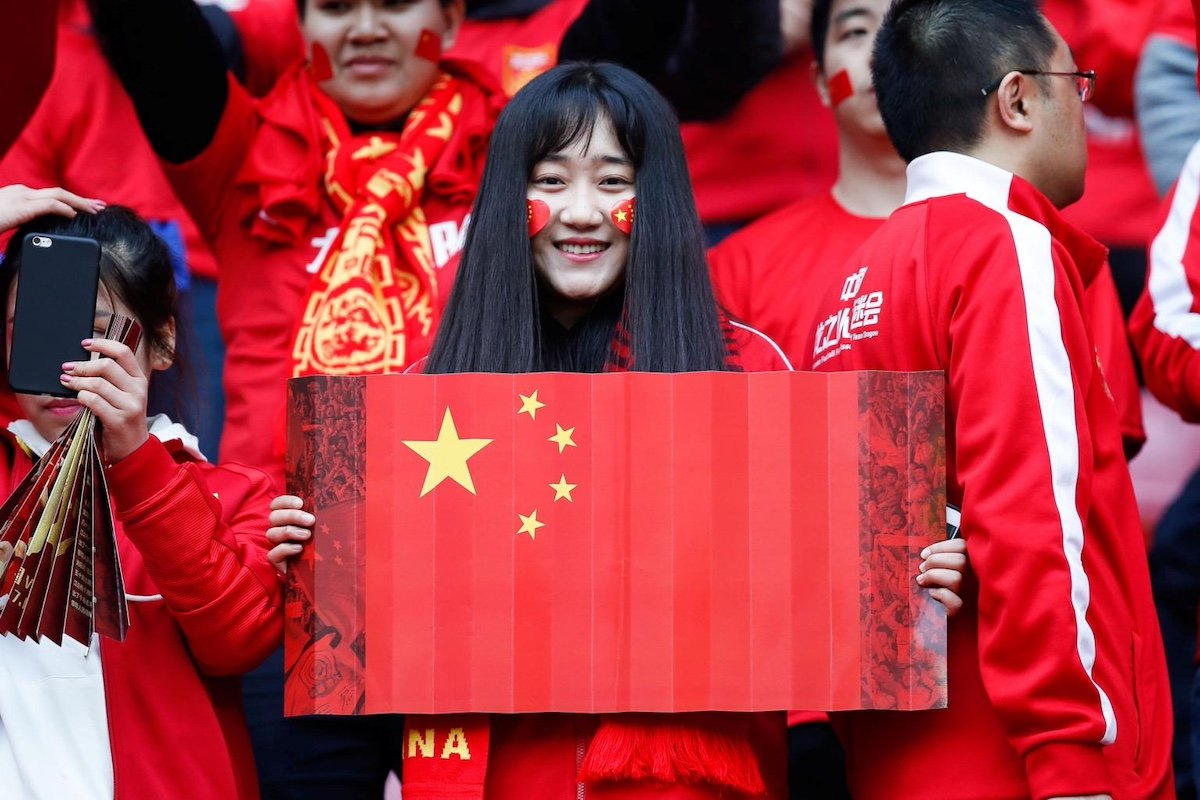
The 2026 World Cup in North America is underway, and once again, China's men's national team is watching from the sidelines. This is not a surprise—China has not qualified since 2002—but the story is more nuanced than the familiar joke about a nation of 1.4 billion failing to field eleven footballers.
China came close in the expanded 48-team format, reaching the third round of Asian qualifying in 2024. But it fell short, exposing a deeper structural problem: vast population, wealth, and infrastructure have not translated into a reliable World Cup side.
The Two Chinas at the World Cup
There are really two Chinas at this tournament. One is absent: the men's national team, whose only appearance remains a goalless group-stage exit in 2002. The other China is everywhere—embedded in the tournament's commercial architecture, technology systems, consumer branding, and supply chains.
Chinese firms like Lenovo, Hisense, and Mengniu are not peripheral sponsors; they are integral to how the World Cup is produced, watched, and monetized. Even Chinese referee Ma Ning has become an unlikely symbol of representation, with fans treating him as a national proxy in the absence of a team.
This paradox is revealing: China is absent in the way football fans most desire—on the pitch—yet central to the modern World Cup economy. As China's deflation exit hinges on housing and reforms, Japan's experience shows, the country excels at mobilizing capital and scaling infrastructure, but football resists that logic.
Why Football Defies China's Development Model
China did not under-invest in football. A landmark 2016 plan promised tens of thousands of pitches and millions of schoolchildren playing the game. Chinese Super League clubs spent heavily on foreign stars, chasing global attention. For a moment, Chinese football looked like the next great market shock.
But the foundations cracked. Many clubs were tied to property developers and local prestige projects rather than durable institutions. When the property sector weakened and the pandemic hit, the professional game's fragility became visible. Clubs folded, finances deteriorated, and corruption scandals deepened public cynicism.
The lesson is not that China cannot succeed in football, but that football cannot be manufactured like an industrial output. A football culture grows through neighborhood rivalries, trusted youth coaches, local clubs, and unstructured play—not just counting pitches. China's system, which trains divers and gymnasts through repetition, struggles to produce the improvisation of a midfielder or the collective trust of eleven players under pressure.
There is also an academic cliff. Around early adolescence, many Chinese children face intensifying exam pressure and drift out of sport. For families, football can look like a risk rather than a pathway. That narrows the talent pool before it matures, explaining why China's football problem is not a mystery of population size but of pipeline.
Signs of Change from Below
Encouraging signs are not coming from another spending spree but from grassroots movements. Amateur leagues like the Suchao phenomenon in Jiangsu have shown that football enthusiasm in China may be healthier socially than institutionally. Teachers, coders, and delivery drivers playing in front of packed crowds will not produce a national striker overnight, but they may make football feel normal—the beginning of a real football culture.
China's commercial presence at the World Cup should be treated not as a consolation prize but as a platform. Chinese companies benefiting from football's global visibility could fund open-access youth leagues, coaching exchanges, and scholarships that connect football with education. The goal should be a patient ecosystem: school-community partnerships, stable local clubs, and pathways that reassure parents that sport and academic mobility can coexist.
As the China collapse that never arrives shows, forecasts often miss the mark. Whether China will be at the 2030 World Cup is possible but far from assured. The expanded format helps, but it does not erase the gap between commercial ambition and sporting reality.