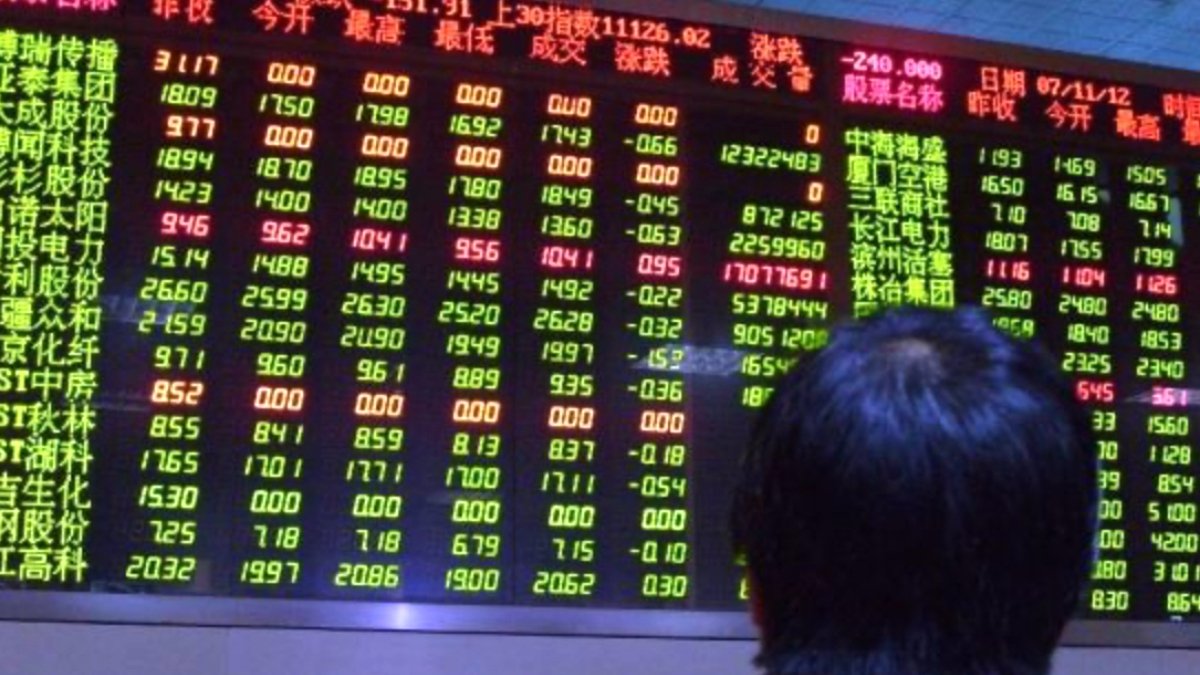
Shares of Chinese semiconductor companies suffered steep losses on Thursday, July 17, as state-backed fund purchases that had briefly stabilized broader tech stocks earlier in the week proved insufficient to halt a sector long considered overvalued by analysts.
Among the hardest hit, Hua Hong Grace Semiconductor dropped 12.58%, Beijing YanDong Micro Electronic fell 10.55%, Ningbo Silicon Electronics slid 9.44%, and Shenzhen Intellifusion Technologies declined 9.42%. Semiconductor Manufacturing International Corporation (SMIC), China's largest foundry, lost 2.95%.
The selloff followed a global tech rout on July 16, when major US chip stocks including SanDisk (-11%), Seagate Technology (-10%), Nvidia (-2.30%), Intel (-5.84%), Advanced Micro Devices (-3.61%), and Micron (-4.60%) all closed lower. Taiwan Semiconductor Manufacturing Company (TSMC) shares fell 7.29% on July 17 after its third-quarter gross margin outlook of 65% to 67% missed market expectations of 70%, weighed down by the rapid ramp-up of its 2-nanometer process.
Some analysts attributed the global downturn to investor concerns about overspending on artificial intelligence (AI) chip development, particularly after the debut of China's Kimi K3 AI model by Moonshot, which offers competitive performance at a much lower cost than Anthropic's Claude and OpenAI's ChatGPT. The launch prompted US Treasury Secretary Scott Bessent to say on Tuesday that Washington would investigate whether Chinese AI models had been distilled from US models. This issue is explored further in our analysis of US sanctions threats.
The July 17 plunge coincided with the opening of the World AI Conference in Shanghai, where President Xi Jinping delivered a keynote speech outlining China's strategy to promote open-source AI models and their deployment in Global South countries. The slump spread across sectors, dragging the benchmark Shanghai Composite Index down 3% on the same day.
State Intervention Fails to Stem the Tide
After the market crash, Beijing moved swiftly the following Monday, reportedly directing state funds to stabilize stock markets. On July 20, Wu Qing, chairman of the China Securities Regulatory Commission (CSRC), visited a Beijing brokerage and met with retail investors. The CSRC described the session as part of a broader series of market stabilization forums, with similar meetings planned for listed companies, securities firms, and fund managers.
Two major central state-owned funds announced share purchase moves. China Reform Holdings said its investment arm had deployed more than 50 billion yuan (US$6.9 billion) from a special government relending facility to buy stocks and would continue to draw on policy tools. China Chengtong Holdings said its subsidiaries had purchased nearly 10 billion yuan of domestic stocks and would keep adding exposure to state-owned enterprises, quality technology shares, and related exchange-traded funds. Listed companies also launched share buybacks, asset injections, and dividend distributions in a coordinated push to shore up confidence. For more on the pattern of state intervention, see our earlier report on Beijing's national team moves.
However, the impact lasted only two to three days, with many chip makers seeing their shares decline again on Thursday. “Multiple negative factors have combined to drive this consecutive sell-off in the chip sector,” said a Shaanxi-based financial columnist writing under the pen name Fengyun Caijin. “Investors holding positions should not rush to buy the dip, but watch trading volume and capital flows closely before making any decision.”
He identified three main triggers: On July 16, South Korea's central bank raised its benchmark interest rate by 25 basis points to 2.75%, triggering margin calls globally and sending memory giants Samsung and SK Hynix down more than 10%. ChangXin Technology's 57.9 billion yuan (US$8 billion) share offering on Shanghai's STAR Market also prompted institutions to dump semiconductor stocks to raise subscription funds. On July 17, foreign capital fled after the US Federal Reserve's June meeting minutes signaled balance sheet reduction. Short-sellers piled into SMIC's Hong Kong-listed shares, pushing short trades to 16% of total volume and dragging SMIC's A-shares down more than 6%. The third wave hit on July 21 and 22, as institutions used upbeat first-half earnings previews as an exit opportunity, with valuations above price-to-earnings (P/E) ratios of 200 times for some names collapsing as optimism about AI infrastructure spending cooled.
Some observers say the slump could mark the beginning of a downward cycle, as most Chinese chip makers have long traded at inflated valuations. A Shandong-based technology analyst noted that as of mid-July, the combined market capitalization of the top 11 semiconductor companies on China's A-share market stood at 7.37 trillion yuan, while their projected net profit for 2026 totals only 60.4 billion yuan, implying an average P/E ratio of 122 times. AI chip maker Moore Threads carries a P/E ratio of 2,560 times, while Hua Hong Grace stands at 1,039 times, with other companies clustered between 50 and 300 times. By contrast, leading US and Taiwanese chip stocks trade at far lower multiples.
“The July 17 plunge helped investors identify chipmakers with manufacturing orders from speculative stocks,” said Zhou Fan, a researcher at Asia Fund Research. “Speculative stocks fell significantly when overall markets declined for fears of an AI bubble burst, while equipment suppliers and foundries were more resilient because their orders had already been locked into procurement pipelines for coming quarters.”
The divergence between Chinese and global chip stocks underscores the fragility of Beijing's market support. While US-listed chip makers have largely recovered their July 16 losses over the past week, their Chinese peers continue to search for a floor, raising questions about the sustainability of state-led interventions in a sector driven by fundamentals rather than policy.