Washington is escalating its scrutiny of Chinese artificial intelligence firms, threatening sanctions over allegations that companies like Moonshot AI have systematically distilled outputs from American AI systems. US Treasury Secretary Scott Bessent told Fox Business that the administration has found evidence of large-scale, covert theft of proprietary US technology, specifically pointing to watermarks from American large language models (LLMs) on Chinese counterparts.
“If we see, especially that overseas models are stealing from our great companies, we have the ability to sanction them because of this theft,” Bessent said. “We are finding watermarks of our US large language models on many of the Chinese models, and that’s unacceptable.” He added that the matter would be investigated in the coming days or weeks.
Allegations Against Moonshot AI
Michael Kratsios, Director of the White House Office of Science and Technology Policy, posted on X that Moonshot AI distilled Anthropic’s Fable model to develop its Kimi K3. He described a sophisticated internal platform designed to conduct large-scale distillation against US models, allowing the company to switch between access methods to avoid detection. Kratsios also noted that Moonshot AI acquired GB300-equipped servers and accessed GB300s in Thailand, likely for training its AI models.
Knowledge distillation, a technique where a smaller model learns from a larger one by querying it repeatedly, is generally considered legitimate for creating efficient models. However, Kratsios emphasized that large-scale, covert industrial distillation aimed at stealing proprietary US technology is unacceptable.
Moonshot AI, backed by Alibaba, Meituan, and Tencent, released Kimi K3 on July 17. A benchmark comparison shows Claude Fable 5 ahead in 22 of 35 evaluations, with advantages in vision and knowledge tasks, while Kimi K3 leads in long-horizon coding and terminal-use benchmarks and costs 70% less per token—$3 per million input tokens versus Fable 5’s $10.
Denials and Counterclaims
Moonshot AI’s business head Huang Zhenxin denied the allegations, stating that Kimi K3’s performance relies on three original innovations: Moon Clip, which doubles training efficiency while halving computing costs; Kimi Linear Tension, which expands the context window tenfold; and Attention Residuals, praised by Elon Musk, which boosts reasoning speed by 25%. In simplified terms, Moon Clip acts as a strict data filter using only Moonshot’s own training sources, Kimi Delta Attention approximates relationships in text more efficiently, and Attention Residuals allow deeper layers to retrieve insights from earlier layers directly.
Chinese media commentators have accused Washington of double standards. A commentary from Guancha.cn argued that distillation is treated as innovation when American firms do it but as theft when Chinese developers do the same. It cited Inkling, the debut model from Thinking Machines Lab founded by former OpenAI CTO Mira Murati, which was built on DeepSeek’s architecture and trained on data from Moonshot AI’s Kimi K2.5. “Chinese open-weight models share their technology freely, cut costs and let the whole world build on top of them,” the commentary said, quoting Chinese netizens. “Meanwhile, American closed labs hide everything, charge a premium and lobby for restrictions, then turn around and call everyone else a thief. The irony is breathtaking.”
Broader Context
The dispute underscores a fundamental divide in AI development: open-source models like DeepSeek, Kimi K3, and Alibaba’s Qwen series make their weights freely available, while closed models like OpenAI’s GPT series and Anthropic’s Claude Fable 5 keep them proprietary. In April, the White House issued National Security Technology Memorandum 4 (NSTM-4), designating adversarial distillation as a national security threat, warning that foreign actors could clone frontier AI capabilities at modest cost by flooding American systems with targeted queries.
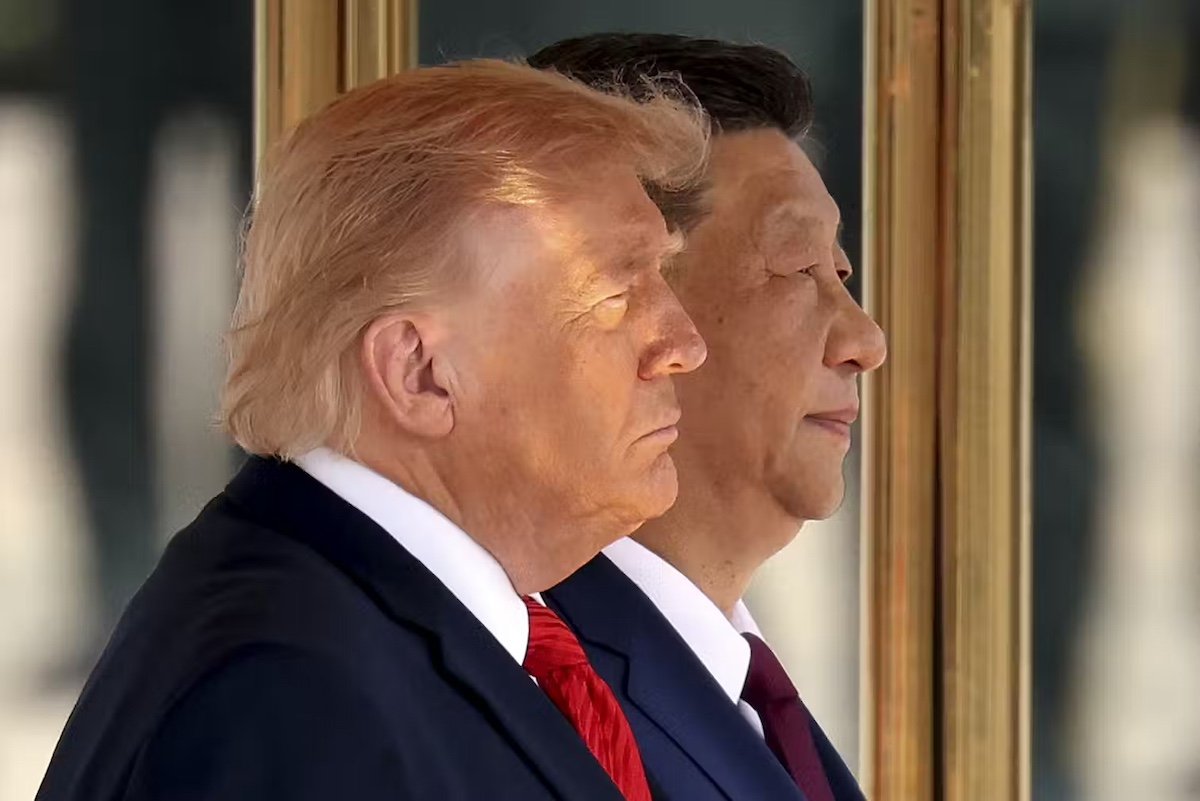
US and Chinese officials are scheduled to hold AI talks in September, ahead of Chinese President Xi Jinping’s meeting with US President Donald Trump on September 24. The tensions also echo broader concerns about technology transfer and intellectual property, as seen in China's Surging Ag Research Funding Outpaces US Decline and the challenges of Why US Innovation Models Fail to Grasp China's State-Led Tech Ascent. Meanwhile, figures like Elon Musk, who has praised Moonshot's innovations, may play a unique role in bridging the divide, as explored in Elon Musk's Unique Position Could Bridge US-China AI Divide.
As the debate intensifies, the outcome of these talks and potential sanctions could reshape the global AI landscape, affecting not only companies in Beijing and Silicon Valley but also the broader Indo-Pacific tech ecosystem.