The Gulf Cooperation Council (GCC) — Saudi Arabia, the United Arab Emirates, Qatar, Kuwait, Bahrain, and Oman — has long been a haven for imported cars, with Japanese, American, South Korean, and European brands dominating showrooms. Now, Chinese electric vehicle (EV) manufacturers are accelerating into this oil-rich market, even as they face headwinds in Western markets.
Chinese automakers are no longer content with selling budget-friendly, basic models. They are building distribution networks, forging partnerships, and bringing advanced battery technology to a region that is actively diversifying its energy mix and upgrading transportation infrastructure. BYD, Geely, Chery, Changan, MG, and Li Auto are all making inroads, though their lineups often include plug-in hybrids and extended-range vehicles alongside fully electric models. This means the growing share of Chinese brands in the Gulf's overall car market should not be mistaken for a pure EV takeover.
A strategic shift in China-Gulf ties
This commercial push reflects a deeper economic realignment between China and the Arab world. For Gulf states, embracing Chinese EVs aligns with national visions like Saudi Arabia's Vision 2030, which seeks to reduce oil dependence and build advanced manufacturing. For Beijing, the Gulf offers a lucrative export destination and a testing ground for its automotive technology, with implications for industrial development, technological dependence, and future mobility across the region.
The GCC's EV market is still small compared to China, Europe, or the United States, but its potential is significant. According to Arthur D. Little's 2026 Global Electric Mobility Readiness Index, the UAE ranks 22nd out of 31 countries, the highest in the Gulf. In 2025, EVs — including battery-electric and plug-in hybrids — accounted for about 9% of new-vehicle sales in the UAE. The country has roughly 2,800 charging points, including about 1,250 DC chargers and 350 high-power units, though coverage remains uneven in remote areas.
Saudi Arabia offers a different kind of opportunity. Its larger population, extensive road network, and bigger car market provide long-term upside for Chinese manufacturers. Industry estimates suggest the UAE holds about 42% of the GCC's EV market in 2025, with Saudi Arabia potentially among the fastest-growing. However, these figures should be treated with caution, as several GCC countries lack comprehensive, independent EV sales data.
Competitive pricing and advanced tech
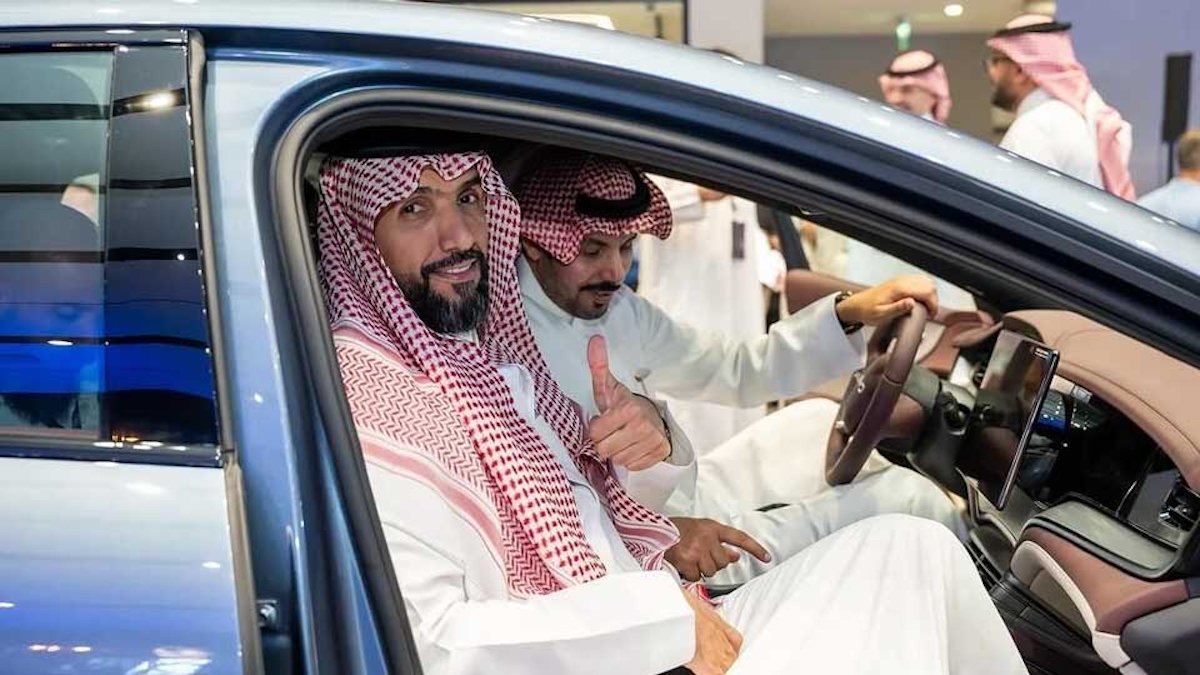
Chinese manufacturers are entering the Gulf with competitive pricing, advanced technology, and partnerships with established regional distributors. BYD has emerged as a particularly prominent challenger. In September 2026, its Saudi distributor, Al-Futtaim, announced new showrooms in Riyadh and Al-Qassim, bringing its Saudi network to 10. This expansion underscores a strategy built on after-sales service, spare parts, and customer trust as much as on vehicle sales. BYD's emphasis on hybrids also reflects the realities of a market where drivers cover long distances and charging infrastructure remains sparse.
Other Chinese brands are following similar paths. Geely is building its position with conventional cars, electric models, and premium brands, while Chery and Changan compete on price across several segments. In April 2026, Li Auto signed distribution agreements with Al Fahim Motors in the UAE and Mohamed Yousuf Naghi Motors in Saudi Arabia. Its extended-range vehicles, which pair an electric drivetrain with an onboard gasoline generator, may ease concerns about finding a charger.
These moves show that Chinese automakers are adapting to local infrastructure and consumer preferences rather than betting solely on battery-electric cars. As Toyota bets on hydrogen trucks and other alternatives, the Gulf market is becoming a testing ground for diverse powertrain strategies.
Saudi Arabia: the strategic battleground
Saudi Arabia is central to China's Gulf ambitions. Under Vision 2030, Riyadh aims to diversify its economy and build advanced manufacturing to reduce its reliance on oil revenue. Electric mobility fits that agenda, but the kingdom's industrial strategy goes beyond importing foreign cars. It is developing domestic vehicle manufacturing and encouraging investment in batteries, charging networks, and related supply chains.
Chinese automakers therefore face both competition and opportunity. Their relatively inexpensive vehicles could appeal to middle-income households, commercial fleets, and younger buyers. But the Saudi government also expects foreign companies to contribute to local employment, technology transfer, and industrial development. The state-backed charging operator, Electric Vehicle Infrastructure Company (EVIQ), has partnered with BYD's local distributor to expand fast-charging and customer-charging services, an arrangement that could build consumer confidence over time.
Still, Saudi Arabia's long distances, punishing summer heat, and preference for large vehicles will test battery durability, cooling systems, and servicing. Chinese EV manufacturers that get these basics right stand to build lasting, profitable positions.
UAE: China's regional gateway
The UAE gives Chinese EV makers a foothold in the wider Middle East. Its cities have well-developed infrastructure, international logistics links, and customers accustomed to advanced automotive technology. Its business environment also supports regional distribution, vehicle testing, financing, and brand building. Chinese brands increasingly compete on more than price, offering digital connectivity, interior design, driver-assistance features, and battery technology. The change is most striking in premium segments, long the preserve of Western and Japanese marques.
As the Gulf accelerates its energy transition, the influx of Chinese EVs is reshaping a market once dominated by traditional automakers. The race is not just about cars — it is about who will define the region's mobility future. For Chinese manufacturers, the Gulf is a proving ground where they can showcase their technology and build relationships that may extend far beyond the showroom floor.