It is easy to assume that every Russian either backs the war in Ukraine or is too intimidated to oppose it. The dominant image is of a passive, complicit civil society, crushed by censorship and repression. But that picture is incomplete.
Since the full-scale invasion of Ukraine in 2022, Moscow has imposed sweeping war censorship laws. Critics face long prison sentences for spreading alleged “false information” or “discrediting the army.” Yet a diverse resistance movement has emerged among Russians who fled the country, operating from exile to challenge the Kremlin’s narrative and support those inside Russia.
For two years, researchers have been documenting this quiet rebellion. Interviews with activists scattered across Europe, the Caucasus, and beyond reveal a network that sends money and solidarity letters to political prisoners, coordinates legal aid for anti-war defendants, and lobbies Western governments to distinguish between the Kremlin and Russian civil society.
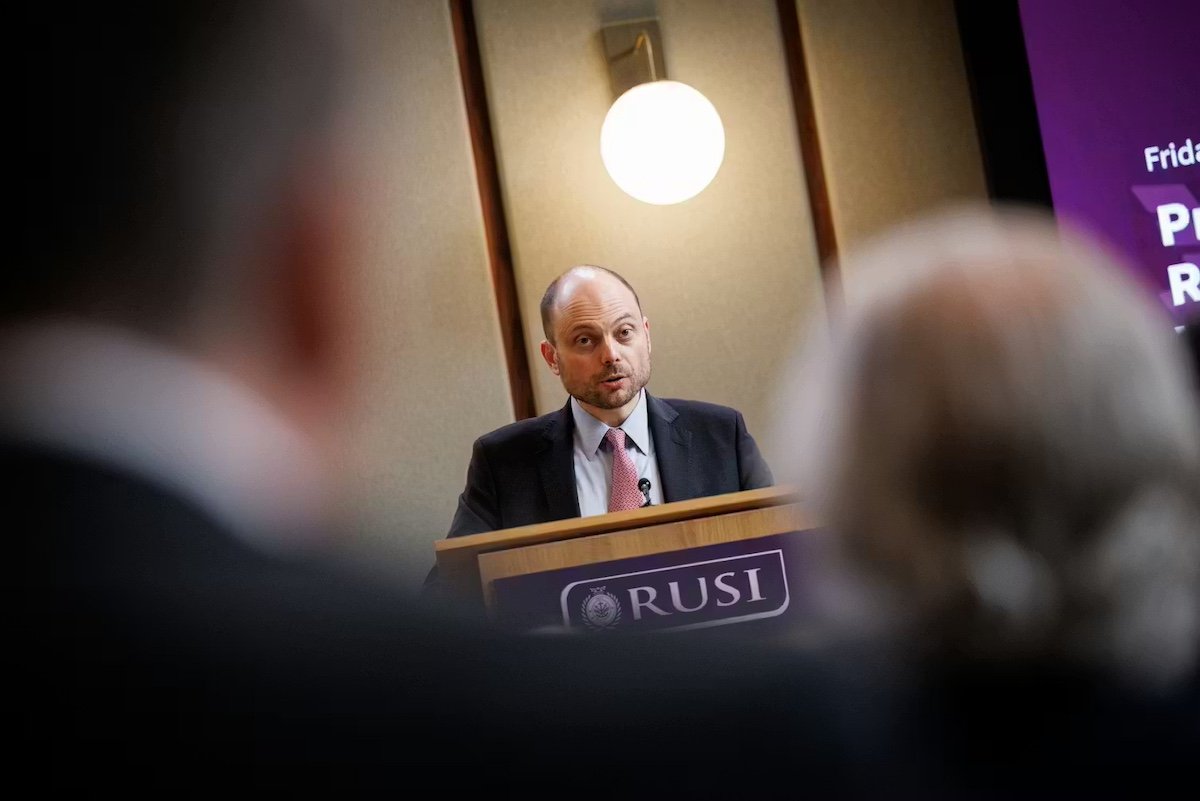
High-profile exiled figures—including former chess champion Garry Kasparov, former oligarch Mikhail Khodorkovsky, and politician Vladimir Kara-Murza—have helped form the Platform for Dialogue with Russian Democratic Forces. Established in 2026, this consultative body operates within the parliamentary arm of the Council of Europe, giving Russia’s opposition an international platform.
Digital Resistance and Indigenous Networks
Exiled Russians have also kept independent media alive through Telegram channels and YouTube, even as Russia’s telecommunications regulator, Roskomnadzor, has severely restricted access to these platforms. The regulator has pushed citizens toward the state-controlled Max app in an attempt to censor outside information. Russia's Telegram crackdown risks destabilizing its domestic information space, but activists continue to find workarounds.
Indigenous diaspora networks have been particularly active in regions with large ethnic minority populations—Tuva, Tatarstan, Buriyatia, and Chelyabinsk. They use Instagram, YouTube, Facebook, Telegram, and Signal to counter official propaganda, exposing the use of underage soldiers and the heavy recruitment from ethnic minority areas. They also share casualty figures that Moscow refuses to release. The Center for Strategic and International Studies, a Washington-based think tank, estimated in early 2026 that Russian forces had suffered nearly 1.2 million casualties since the war began.
Some exiles help people inside Russia escape mobilization by providing shelter and safe routes out of the country. One 22-year-old activist, now living abroad, established transnational networks across Europe, the Caucasus, and Russia to help criminally prosecuted anti-war Russians flee before trial.
Solidarity with LGBTQ+ Communities
Moscow’s crackdown has also targeted LGBTQ+ rights. Anti-LGBTQ+ laws introduced in December 2022 prohibit any perceived propaganda about non-traditional relationships. In 2023, Russia’s supreme court designated the “international LGBT movement” as an extremist organization, making any association or support a criminal offense. In response, exiled activists have provided shelter and safe routes for LGBTQ+ compatriots, created digital safe spaces, and lobbied European governments for protection.
This resistance movement is not about to overthrow the Russian government. But regime change is not the only measure of success. As one respondent told researchers: “We have to stay in touch with supporters in Russia and plan for transition. There will be no time to strategize, so the plan has to happen now. We try to do as much as possible to be prepared.”
The movement challenges the assumption that all Russians support the war. It keeps democratic political ideas alive inside the country, ready for when change becomes possible. Dissent does not disappear when it is crushed at home. It relocates, adapts, and reconfigures across borders.
This story of transnational resistance matters far beyond Russia. It shows how opposition survives under authoritarian regimes and highlights the role diasporas can play in sustaining democratic civil society globally. For the Indo-Pacific, where many countries face similar pressures on civil space, the lessons are clear: exile is not silence.