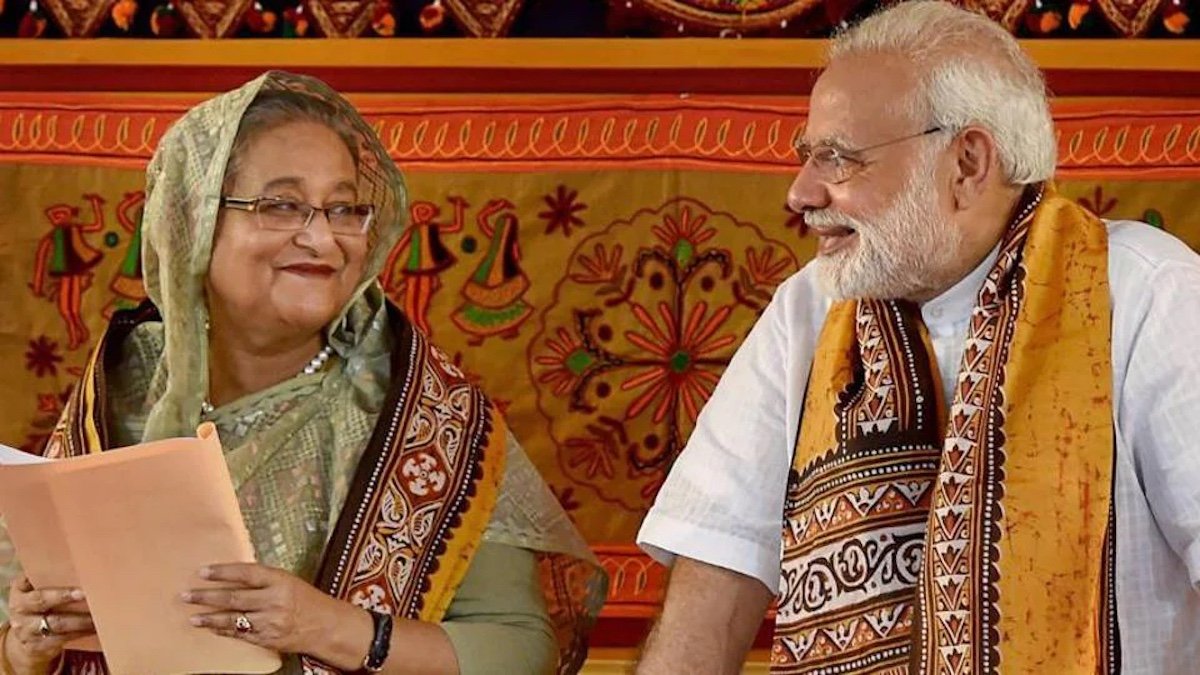
Bangladesh's former Prime Minister Sheikh Hasina, ousted in August 2024 after a student-led uprising, has announced she will return to the country in December 2025 alongside senior Awami League leaders. The declaration, made on July 10 from exile in India, has reignited a bitter debate about sovereignty, justice, and the limits of neighborly asylum.
Hasina fled Bangladesh after months of deadly protests against her increasingly authoritarian rule, marked by enforced disappearances, arbitrary arrests, and suppression of dissent. The International Crimes Tribunal in Dhaka has since convicted her in absentia and sentenced her to death. Bangladesh's government has formally requested her extradition from India—a request New Delhi acknowledges but says remains under legal review.
Yet Hasina continues to issue political statements, address supporters, and organize activities from Indian territory. For many Bangladeshis, this raises a fundamental question: can a former head of government facing serious criminal charges use a neighboring state as a political base?
Legal Obligations vs. Geopolitical Realities
Toby Cadman, former special adviser to the chief prosecutor at the Bangladesh International Crimes Tribunal, argues that India has failed to meet its legal commitments. “I repeatedly called for India to respect the extradition treaty and to surrender Sheikh Hasina to Bangladesh to face trial,” he told this correspondent. “India repeatedly ignored all calls. In my view, there was no basis to refuse on any of the grounds mentioned in the treaty.”
Cadman warned that Bangladesh's political future should be shaped by its own institutions and laws, not by “insidious political campaigns orchestrated from exile under the protection of a neighboring state.”
India's stance is not merely a legal matter—it is a geopolitical one. Under Hasina, Bangladesh became New Delhi's closest strategic partner in South Asia, with deep cooperation on security, counterterrorism, and trade. Her removal disrupted that equation. The interim government led by Chief Advisor Muhammad Yunus has signaled that relations with all major powers must be based on mutual respect and sovereign equality, not dependence.
Ali Riaz, distinguished professor of political science at Illinois State University and a former special assistant to Yunus, described the timing of Hasina's announcement as a “well-designed political ploy.” By declaring her return six months in advance, he said, “Hasina is trying to ensure that the political conversation in Bangladesh is dominated by herself, her party and her return.”
The choice of December is no coincidence. That month marks Bangladesh's victory in the 1971 war against Pakistan—a foundational event the Awami League has long used to cement its political identity as the guardian of the nation's independence. A return during this period is a deliberate attempt to recast Hasina not as an authoritarian leader convicted of abuses, but as the heir to the liberation struggle.
Bangladesh's chief prosecutor, Mohammad Tajul Islam, responded bluntly: “Whether you come in December or January is your decision, but we want you tomorrow.” He reiterated that Hasina would be arrested immediately upon entering Bangladesh.
The announcement also forces the government in Dhaka to prepare for potential unrest, street mobilizations, and security challenges months before any actual return. This psychological pressure diverts political attention and state resources toward a confrontation that may never materialize.
India's continued protection of Hasina has already strained bilateral ties. Bangladesh recently put a planned visit to New Delhi on hold amid eroding trust over water-sharing, border incidents, and the Hasina issue. The broader question remains: can Bangladesh exercise full sovereignty over its legal and political affairs while a former leader orchestrates her comeback from across the border?
As the December deadline approaches, the answer will shape not only Bangladesh's domestic politics but also the future of one of South Asia's most consequential relationships.