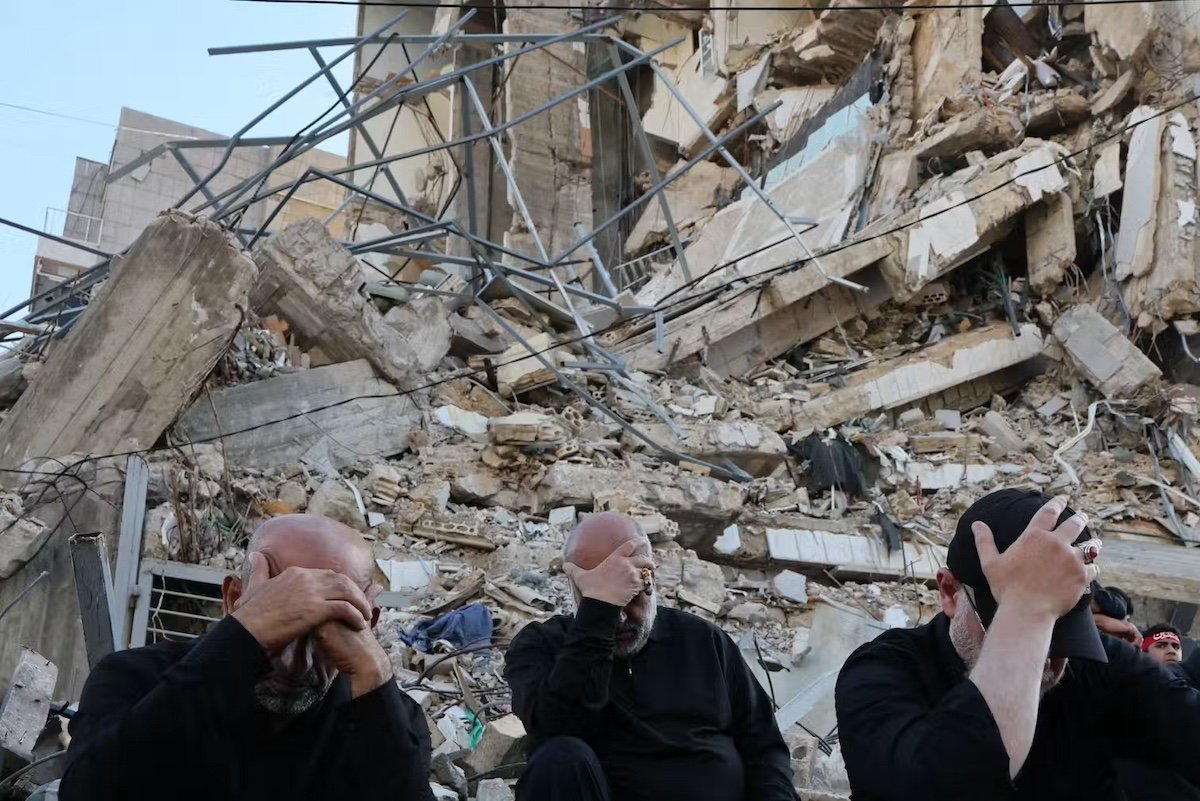
Hamas's recent announcement that it would dissolve its government in Gaza and hand control to a US-backed Palestinian committee has raised questions about the future of Iran's proxy network in the region. While the move may be largely symbolic—Hamas's military wing remains intact—it signals a tactical retreat from governance. Now, observers in Beirut and across the Middle East are asking whether Hezbollah will follow suit in Lebanon.
Since the outbreak of the Israel-Hamas war, Hezbollah and Hamas have presented a united front as pillars of Iran's axis of resistance. Both groups have suffered significant leadership and military losses. Yet Hezbollah has managed to preserve its organizational cohesion and military capability, even after a tenuous 2024 ceasefire with Israel collapsed following US and Israeli strikes on Iran earlier this year.
In March, Lebanon and Israel signed another ceasefire agreement—this time without Hezbollah's participation—that called for the militant group to disarm. Hezbollah's leader, Hassan Nasrallah, rejected the demand, vowing to continue fighting until Israeli troops withdraw from Lebanese territory. But with domestic support waning, the group faces a strategic crossroads.
Three Scenarios for Hezbollah's Future
Hezbollah must now recalibrate its role in Lebanon and the wider region. Analysts point to three possible paths: political transformation, rebranding its military wing, or maintaining the status quo—each carrying significant risks.
Political transformation. Hezbollah could shed its military identity and become a purely political party. This would grant it legitimacy in the eyes of Gulf states and the international community, but it would also undermine the group's founding ideology as an armed resistance movement against Israeli occupation. Given Hezbollah's deep ties to Tehran—which provides military, diplomatic, and financial support—such a shift appears unlikely in the short term. Moreover, many Lebanese Shiites still see Israel as a threat, and Hezbollah's ability to criticize the government without accountability would vanish. As a conventional party with no clear policy platform, it could fail electorally.
Rebranding the military wing. Instead of disarming, Hezbollah could recast its armed wing as a national necessity to deter Israeli aggression. This narrative has worked in the past, but it is losing traction. Hezbollah's popularity has declined sharply as Lebanon has been dragged into multiple wars, and many Lebanese now believe the group prioritizes Iran's regional agenda over national interests. If public support continues to erode, even core Shiite constituents may turn against the group, especially if Hezbollah can no longer provide the financial patronage that underpins its base. In that scenario, pressure to disarm would come from within Lebanese society itself—not just from Washington or Tel Aviv.
Maintaining the status quo. The ceasefire could collapse entirely, leading to renewed hostilities between Hezbollah and Israel. This could be triggered by fresh US-Iran tensions, Hezbollah's refusal to disarm, or its rejection of any Lebanese-Israeli agreement. Lebanon's government, under intense US and Israeli pressure, has so far avoided a civil war by not forcibly disarming the group. But Iran's calculations remain decisive. Hezbollah's future depends on how much Tehran values the group as a strategic asset—and whether the Iranian regime believes it can afford to lose its most capable proxy.
As Hezbollah's support base shrinks, the group faces a reckoning that could reshape Lebanon's political landscape and the balance of power in the eastern Mediterranean. The coming months will test whether it can adapt—or whether it will drag the country into another devastating conflict.