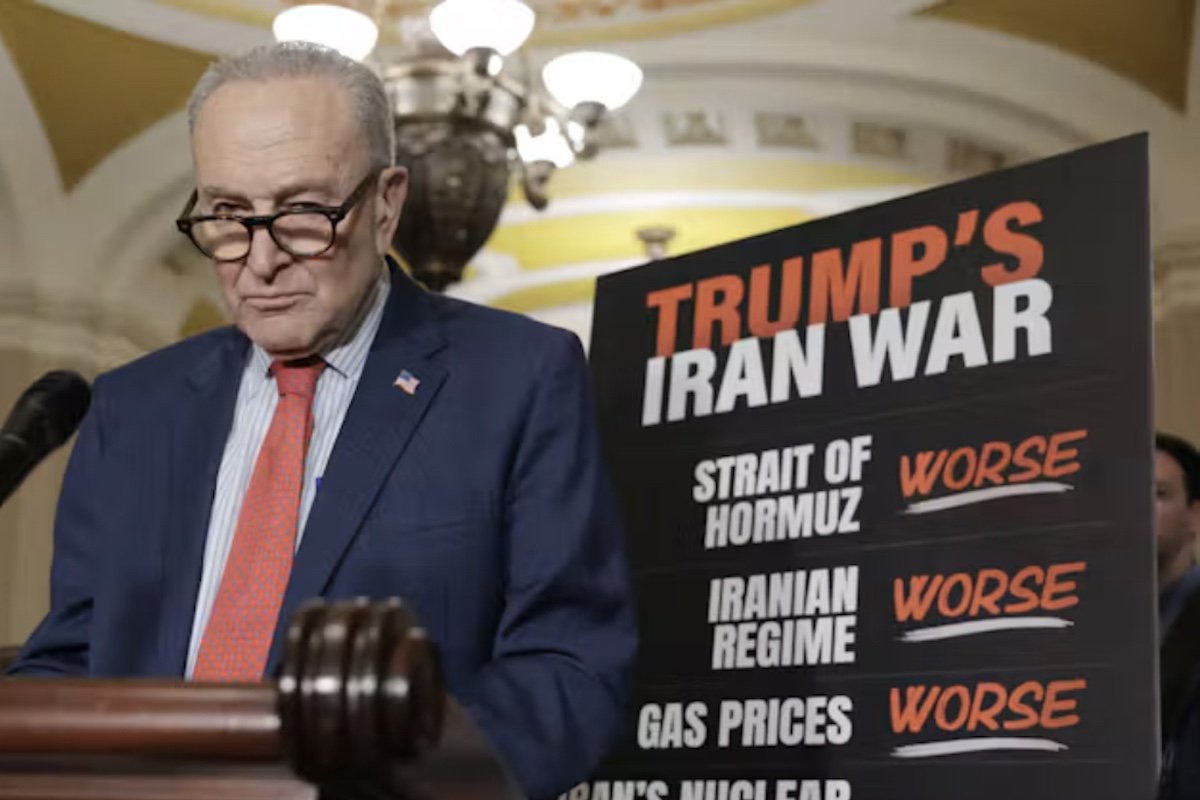
The Democratic Party's decisive victory in the US midterm elections has shifted the balance of power in Washington, giving the opposition new leverage to challenge President Donald Trump's military campaign against Iran. With control of both chambers of Congress from January, Democrats are poised to make the war—already deeply unpopular with American voters—a central target of their agenda.
Trump retains the power to veto any legislation aimed at ending hostilities, but Democrats have a constitutional tool that could force his hand: the power of the purse. Under Article I, Section 9 of the US Constitution, no money can be drawn from the Treasury without congressional appropriation. That means every new dollar for the war effort must be approved by the House and Senate, which Democrats will soon control.
Legislative limits and the veto problem
The most straightforward approach—passing a binding resolution to end the war—faces steep hurdles. In June, Congress passed a concurrent resolution under the War Powers Resolution of 1973, directing Trump to withdraw US forces from hostilities against Iran or seek congressional approval. But such resolutions are widely considered non-binding, and Trump ignored it. A similar measure failed in the Senate in September.
For a binding law, Democrats would need to overcome a presidential veto, requiring a two-thirds majority in both chambers. That would demand significant Republican defections, which remain unlikely given the party's loyalty to Trump on national security issues.
Another option is aggressive congressional oversight. Democrats could launch hearings, issue subpoenas, and demand documents from the Trump administration about the conduct of the war. They might even target senior officials for impeachment. Hakeem Jeffries, the expected next House speaker, could face pressure from progressive lawmakers to move against Defense Secretary Pete Hegseth. But impeachment proceedings are lengthy and would likely fail in the Senate without bipartisan support.
The power of the purse: a double-edged sword
The most immediate lever is the appropriations process. Democrats could attach a clause to the defense budget prohibiting funds from being used for hostilities against Iran. Trump could veto the entire budget, but that would also block paychecks for all US military personnel—a politically explosive move.
This tactic has precedent. In 2007, Democrats tried to force a withdrawal timeline from Iraq by attaching conditions to a funding bill. President George W. Bush vetoed it, and the ensuing standoff became a political football, with both parties accusing each other of abandoning troops. Democrats eventually backed down amid voter backlash.
Today, the same risk looms. If Trump accuses Democrats of undermining the military, they may be forced to blink first. The political cost of appearing unpatriotic could outweigh the desire to end an unpopular war.
Republican reckoning and shifting alliances
Trump himself acknowledged after the midterms that the Iran war contributed to the Republican defeat, but he doubled down, saying he would repeat the decision to prevent Iran from acquiring nuclear weapons. Vice President JD Vance, however, struck a different tone. In a statement on X, Vance bluntly said the war was the reason Republicans lost, adding that "any honest conversation about where we go from here must start there."
Vance has long criticized overseas military interventions, though he has publicly backed Trump's actions as vice president. The Democratic sweep makes it easier for him and other Republicans to break ranks, potentially creating a bipartisan coalition to constrain the president.
Strategic costs beyond Trump
The war has already cost the US nearly US$50 billion with few tangible gains. Iran has demonstrated its ability to threaten the Strait of Hormuz, a critical chokepoint for global oil shipments, and the Iran-aligned Houthis have attacked commercial vessels in the Bab al-Mandeb Strait off Yemen. These strategic lessons will outlast Trump's presidency.
More broadly, the conflict may accelerate the decline of the unipolar order Washington built after the Cold War. The biggest beneficiary could be Beijing, which watches as the US bleeds resources in the Middle East. For Asia, the stakes are clear: a distracted and weakened America has less capacity to counter China's rise in the Indo-Pacific.
As Democrats prepare to take control, they face a choice: risk a political confrontation over funding, or pursue slower oversight tactics. Either way, the war's legacy—and its impact on US credibility—will endure long after the political battles in Washington subside.