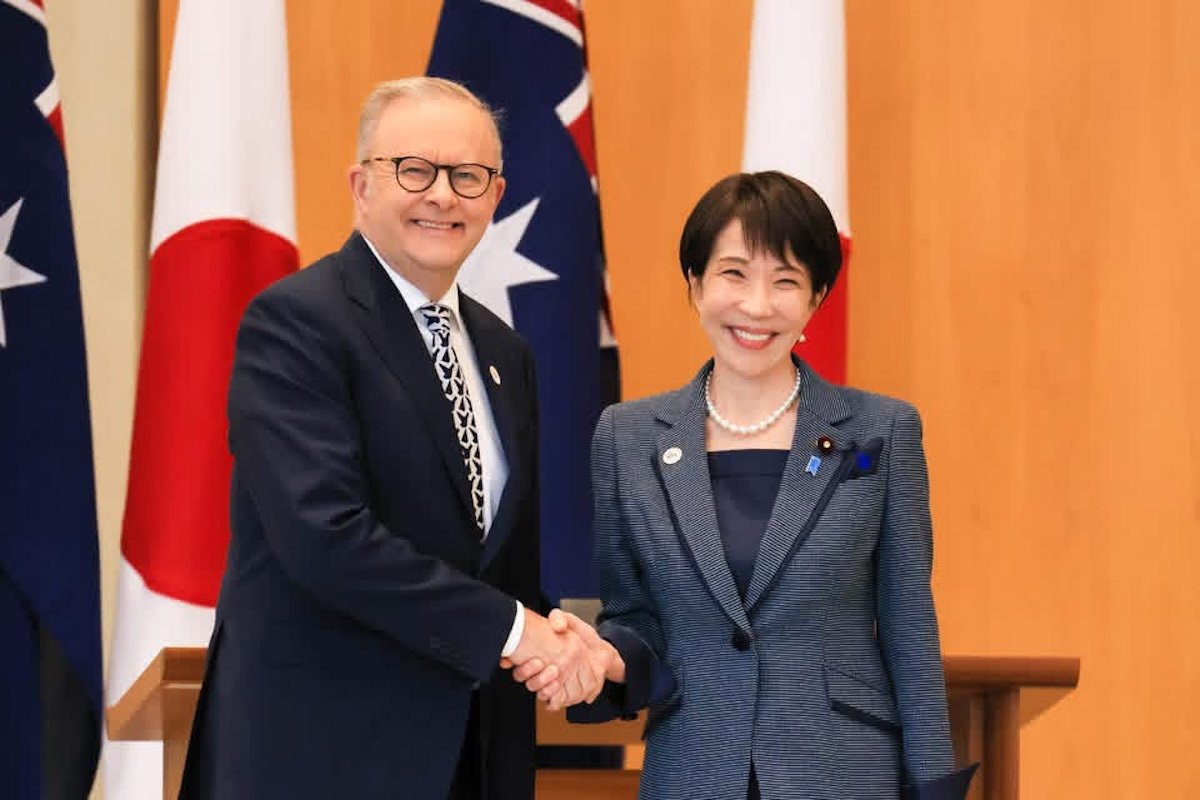
When Australian Prime Minister Anthony Albanese met his Japanese counterpart, Prime Minister Sanae Takaichi, in Canberra on May 4, the two leaders agreed to prioritize supply chains, energy, critical minerals, trade, and security under the Joint Declaration on Economic Security Cooperation. A notable outcome was a pledge to support Pacific island countries (PICs) in combating money laundering through capacity-building initiatives—a positive step for a region where financial crime remains a persistent challenge.
Yet climate change, which Pacific island states consistently identify as their single greatest security threat, was conspicuously absent from the agenda. This omission underscores a gap in the bilateral focus, even as Canberra and Tokyo deepen their strategic alignment.
Multilateralism Under Strain
For the Pacific islands, multilateralism is central to diplomatic and economic functioning. The decline of international institutions—accelerated by the United States’ retreat from global commitments and China’s increasingly assertive behavior—is a source of alarm. While North Korean missiles overflying Japan or Chinese aircraft buzzing foreign planes may seem distant from Port Moresby, Pacific governments are acutely aware of these developments and are planning for a more contentious era.
Chinese influence in the region is well documented. The Solomon Islands has aligned closely with Beijing; Kiribati has accepted Chinese funding for airstrip upgrades, which analysts view as evidence of grey-zone military tactics. Luganville Wharf in Vanuatu may soon serve a similar dual-use purpose for Chinese commercial and military vessels. Australia has long monitored these investments, while Japan under Takaichi is stepping up its own engagement, adding hard capabilities to its diplomatic efforts.
In February, Japanese Defense Minister Shinjiro Koizumi hosted 28 countries in Tokyo for the third Japan-Pacific Islands Defense Dialogue. Agreements were reached with Papua New Guinea, Tonga, and Fiji covering maritime security and disaster relief. Koizumi has been explicit that the global security environment is deteriorating and that Japan is sharpening its military capabilities and partnerships in response. Japan’s defense budget now exceeds 9 trillion yen (about US$56 billion), approaching 2% of GDP ahead of schedule. Self-defense remains the priority, but it increasingly comes through stronger alliances across the Indo-Pacific.
Koizumi’s call for the “autonomy” of Pacific island countries aligns with this approach and serves as a clear rebuke to China. Japan’s alternative pitch is the preservation of national sovereignty, with Tokyo as a long-term security partner—a core tenet of the Free and Open Indo-Pacific (FOIP) vision, now in its tenth year and updated for current circumstances.
Australia has faced diplomatic setbacks in the Pacific, notably the failure of a security and climate pact with Vanuatu in 2025. A revised Nakamal Agreement was approved by Vanuatu’s cabinet in May 2026, but only after explicit language limiting China’s security and investment role was removed. Australia is sometimes perceived as “other” in the islands or too close a partner of the United States. Japan’s renewed focus, therefore, is welcome.
Hardware and Cooperation
As Japan-Australia collaboration intensifies, positive knock-on effects for Pacific security are emerging. On April 18, Australia signed contracts for 11 of Japan’s Mogami-class frigates in a deal worth A$10 billion (US$7 billion). Built by Mitsubishi Heavy Industries, these frigates have a range of up to 10,000 nautical miles—a gamechanger for protecting Pacific maritime sovereignty. The deal was followed by Takaichi’s overhaul of defense export regulations, allowing Japanese firms to sell lethal weaponry to countries with defense equipment and technology transfer agreements, including Australia and New Zealand. Increased exports and improved interoperability with Japan’s Self-Defense Forces will bolster regional security.
Japan’s official security assistance (OSA) budget for 2026 has been doubled to 18.1 billion yen (A$175 million), with PNG and Tonga named priority recipients for 2025-2026. Dual-use assets for disaster response and maritime infrastructure have already been provided to PNG. Meanwhile, Australia’s Pacific Maritime Security Program, which has gifted Guardian-class patrol boats to 12 PICs plus Timor-Leste, remains a notable success. Japan is now well placed to add lethal weapons to these foundations.
Pacific island countries are small economically, militarily, and diplomatically, but they are not passive. They are navigating a more disputatious era, and the Australia-Japan partnership offers tangible benefits—from anti-money laundering support to maritime security hardware. The challenge remains to ensure that climate change, the region’s existential threat, receives the attention it deserves.