The standard timeline of the Ukraine war begins on February 24, 2022, when Russian troops crossed the border. But as journalist and historian Stephen Kinzer argues in his new book, Boiling Point: How America Brought War to Ukraine, the conflict's roots run far deeper—through seven and a half decades of US strategy aimed at pulling Ukraine out of Russia's orbit.
Kinzer, a veteran foreign correspondent and author of several works on American interventionism, contends that Washington's role was not passive. From the late 1940s, the CIA dropped armed commandos into Soviet Ukraine, and successive administrations nurtured Ukrainian nationalist movements. After independence in 1991, the project intensified: the US poured money into anti-government groups and promoted a vision of Ukraine as a bulwark against Moscow. NATO's eastward expansion, which Moscow viewed as a direct threat, added another layer of tension.
The result, Kinzer argues, was a confrontation that was anything but unprovoked. "You can say a lot of things about this invasion—for example, that it was illegal under international law, just like many American operations have been—but it was definitely not unprovoked," he told Asian Examiner. "That's my book."
A 75-year project
Kinzer's central thesis is that the war cannot be understood without examining the long arc of US policy. He traces the evolution from covert operations in the early Cold War to the post-1991 push to integrate Ukraine into Western institutions. "The book traces 75 years of uninterrupted American plans to turn Ukraine into a battering ram against Russia," he said.
That framing challenges the mainstream narrative of a peaceful democracy invaded by an aggressor. Kinzer acknowledges that some may argue the US was right to support Ukrainian nationalism, but insists that any judgment must be based on the full record. "Before you make any judgment on the justice or nature of the Ukraine war, you should know what happened before," he said.
The author also points to a persistent bipartisan consensus in Washington that treats the war as a success—because it has weakened Russia. "Most of the people in Washington who are most eagerly promoting this war can hardly find Ukraine on a map," Kinzer said. "They are not interested in Ukraine. All they're interested in is Russia."
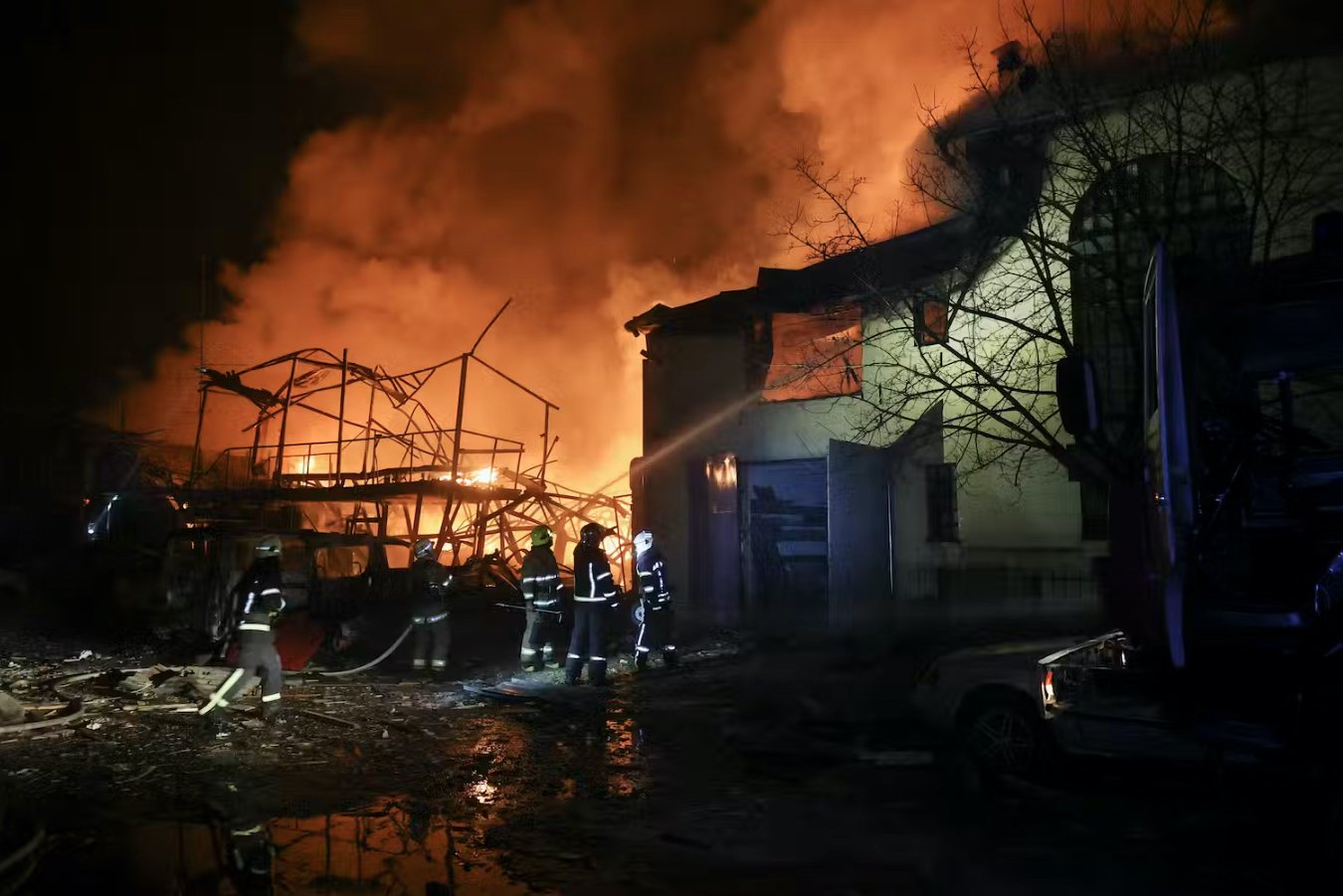
That attitude, he argues, has led to a devastating outcome for Ukrainians, while American and European policymakers focus on geopolitical gains. The human cost—tens of thousands of Ukrainian dead and a shattered country—is often overlooked in the strategic calculus.
For the wider Indo-Pacific, the Ukraine war offers lessons about great-power rivalry and the limits of military intervention. As Asian nations watch the conflict's trajectory, questions about sovereignty, alliance politics, and the dangers of proxy confrontation resonate from Seoul to New Delhi. The war's outcome will shape not only Europe's security order but also the global balance of power that Asian capitals must navigate.
Kinzer's book is a timely reminder that the roots of conflict are rarely simple. As he puts it, the snapshot of February 24, 2022, is just one frame in a long movie. Understanding the full reel is essential for anyone seeking to grasp why the war began—and where it might lead.