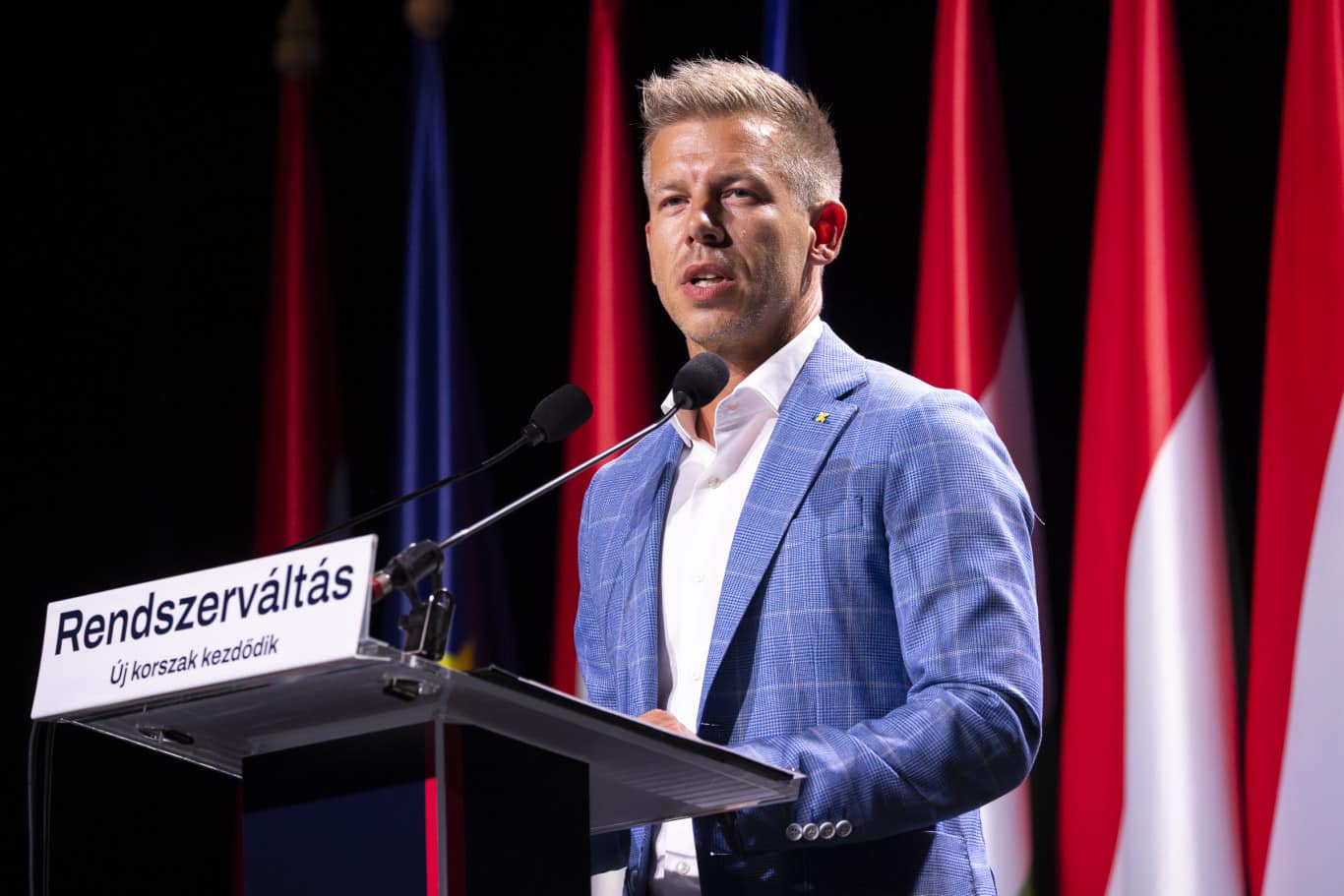
Hungarian Prime Minister Viktor Orban conceded electoral defeat on Sunday, concluding a 16-year tenure defined by his brand of nationalist, "illiberal" governance. Conservative European lawmaker Peter Magyar, leader of the Tisza Party, is projected to secure a commanding parliamentary majority, signaling a profound political shift for the Central European nation.
"The election result is not final yet, but it is understandable and clear," Orban stated in a public address. "The responsibility and possibility of governing was not given to us. I have congratulated the winner." He pledged that his Fidesz party would "serve our country and the Hungarian nation from the opposition." Magyar confirmed the concession in a social media post, noting Orban had called to congratulate him on the victory.
A Decisive Mandate for Change
With nearly half of votes counted, the national election office projects Magyar's Tisza Party will win 135 seats in the 199-seat Országgyűlés, Hungary's parliament. Orban's Fidesz party is projected to hold just 57 seats. This result follows a campaign where Magyar promised a return to European democratic norms, vowing to rebuild a "sovereign, modern, European Hungary."
Orban's rule, which began with his return to power in 2010 after a prior term from 1998-2002, faced sustained criticism for eroding democratic institutions. Critics accused him of consolidating control over the judiciary, the media, and the political system through constitutional changes like the "Fundamental Law." Human rights conditions for LGBTQ+ individuals, migrants, women, and the Roma minority deteriorated significantly, leading the European Union to withhold billions in funding.
The election unfolded under a cloud of alleged foreign interference. Former US President Donald Trump and senior members of his administration, including Vice President JD Vance who campaigned in Budapest last week, openly backed Orban's reelection. Simultaneously, European and Hungarian officials accused Russia of running a coordinated online disinformation campaign to support Fidesz—a charge that resonated at a large pre-election rally in Budapest where crowds chanted "Russians go home!"
International Reactions and a European Pivot
Leaders across Europe swiftly welcomed the result. European Commission President Ursula von der Leyen declared, "Europe's heart is beating stronger in Hungary tonight. Hungary has chosen Europe." German Chancellor Friedrich Merz and French President Emmanuel Macron similarly framed the outcome as a victory for European unity and democratic values.
Orban's foreign policy, particularly his warm relationship with Russian President Vladimir Putin, had long been a point of contention with EU allies. Although Orban condemned Russia's invasion of Ukraine and voted for EU sanctions, his consistent advocacy for closer ties with Moscow and Beijing created friction. This electoral shift is likely to realign Budapest more closely with mainstream EU foreign policy positions, potentially affecting the bloc's internal dynamics on issues like broader geopolitical conflicts and energy security.
In his victory statement, Magyar emphasized national sovereignty, asserting, "Hungarian history is not written in Washington, Moscow, or Brussels – it is written in Hungary's streets and squares." This sentiment underscores the complex domestic politics that will shape his government's approach to both domestic reform and international alliances.
The political transition in Hungary arrives at a moment of significant global realignment, where traditional alliances are being tested. Orban's model of governance had found admirers among some conservative movements worldwide, and his departure from executive power removes a vocal critic of EU federalism from within the bloc's leadership. The change may also influence how European nations navigate their relationships with major powers, including the intensifying technological and economic competition between the US and China.
For the Indo-Pacific region, a Hungary more aligned with core EU positions could contribute to a more cohesive European stance on challenges posed by China's global influence and Russia's actions. It may also indirectly affect the strategic calculus in Asia, where European unity on security and trade matters is increasingly relevant. The outcome demonstrates that domestic political currents in Europe, often influenced by external actors, have direct consequences for international cohesion on issues from Ukraine to Taiwan.
Magyar now faces the immediate task of forming a government and addressing the democratic backsliding and economic challenges that defined the Orban era. His ability to navigate these waters will be closely watched in European capitals and beyond, as Hungary seeks to redefine its role on the continent and in the world.