The International Monetary Fund has issued a pointed critique of China's state-directed economic model, warning that Beijing's reliance on debt-fueled investment and industrial policy risks long-term instability. Yet the rebuke arrives at a moment when the IMF's own authority as the world's financial firefighter is under unprecedented strain.
For decades, the Washington-based institution has prescribed a standard remedy for financial crises: fiscal austerity, deregulation, and open capital markets. That approach earned widespread condemnation during the 1997-98 Asian financial crisis, when IMF-mandated spending cuts deepened recessions in Thailand, Indonesia, and South Korea. It fared little better in the lead-up to the 2008 Lehman Brothers collapse, where the fund failed to foresee systemic risks in global banking. More recently, its handling of sovereign debt crises in Argentina and Greece has drawn accusations of ideological rigidity.
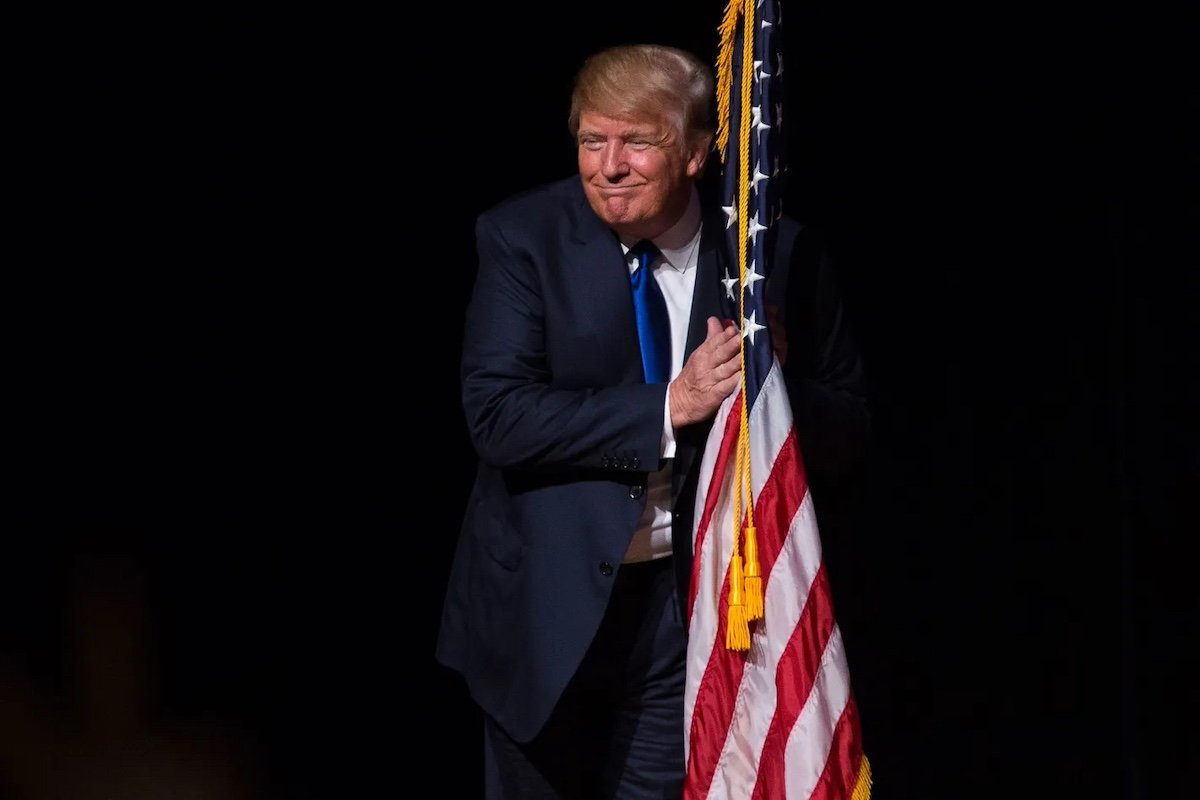
The problem now is that the IMF's neoliberal toolkit is losing relevance in a world shaped by Donald Trump's transactional approach to global economics. With the United States imposing tariffs, withdrawing from multilateral agreements, and weaponizing the dollar, the rules-based order the IMF was designed to uphold is fragmenting. As we noted in our analysis of global economic institutions reassessing state-led growth models, the IMF's prescriptions increasingly clash with the reality of great-power competition.
A Crisis of Legitimacy
The IMF's credibility problem is not new, but it has become acute. The fund's governance remains skewed toward Western powers, with the United States holding a de facto veto over major decisions. Emerging economies—especially China, India, and members of ASEAN—have long complained that IMF programs prioritize the interests of private creditors over borrower nations. This perception has driven many Asian countries to build alternative safety nets, such as the Chiang Mai Initiative Multilateralization, a regional currency swap arrangement among ASEAN+3 members.
China, meanwhile, has created its own parallel institutions. The Asian Infrastructure Investment Bank and the New Development Bank offer loans with fewer conditions, directly challenging the IMF's role as the lender of last resort. Beijing's Belt and Road Initiative has further expanded its financial influence, though it has also drawn criticism for saddling countries like Sri Lanka and Pakistan with unsustainable debt.
The IMF's latest Article IV consultation with China, released in August, took aim at what it called "excessive reliance on state-led investment" and urged Beijing to shift toward consumption-driven growth. But the fund's own track record gives little reason for confidence. As the Asian Examiner has reported, the IMF's forecasts for China have repeatedly missed the mark—overestimating growth in 2022 and underestimating the speed of the property sector's downturn in 2023.
Trump's Disruption
The IMF's irrelevance is compounded by the Trump administration's willingness to upend global economic norms. From trade wars with Beijing to threats against the World Trade Organization's dispute settlement system, Washington has shown little interest in the multilateral coordination the IMF champions. The fund's managing director, Kristalina Georgieva, has warned that the world risks a "slow-moving crisis" of fragmentation, but her calls for cooperation have been largely ignored.
This dynamic is particularly consequential for Asia. The region's export-dependent economies—Japan, South Korea, Vietnam, and others—are caught between US-China rivalry and the IMF's fading authority. As we explored in our piece on Japan-Australia frigate deal signaling shifts in Pacific security, economic and security concerns are increasingly intertwined. The IMF's inability to adapt to this new landscape leaves Asian policymakers without a reliable anchor.
The irony is that the IMF's critique of China's model contains valid points. Beijing's overinvestment in real estate and infrastructure has created massive debt overhangs, and its suppression of domestic consumption limits long-term growth. But the fund's credibility is so eroded that its warnings are easily dismissed as Western hypocrisy. When the IMF lectures China on state intervention, Beijing can point to the US government's own massive subsidies for semiconductors and green energy under the CHIPS Act and Inflation Reduction Act.
Ultimately, the IMF's rebuke of China says more about the fund's own predicament than about Beijing's economic trajectory. As the world's financial architecture fragments, the IMF must either reform itself—giving greater voice to Asia and other emerging economies—or risk becoming a relic of a bygone era. For now, its credibility lies in tatters, and its advice carries little weight in the capitals that matter most.