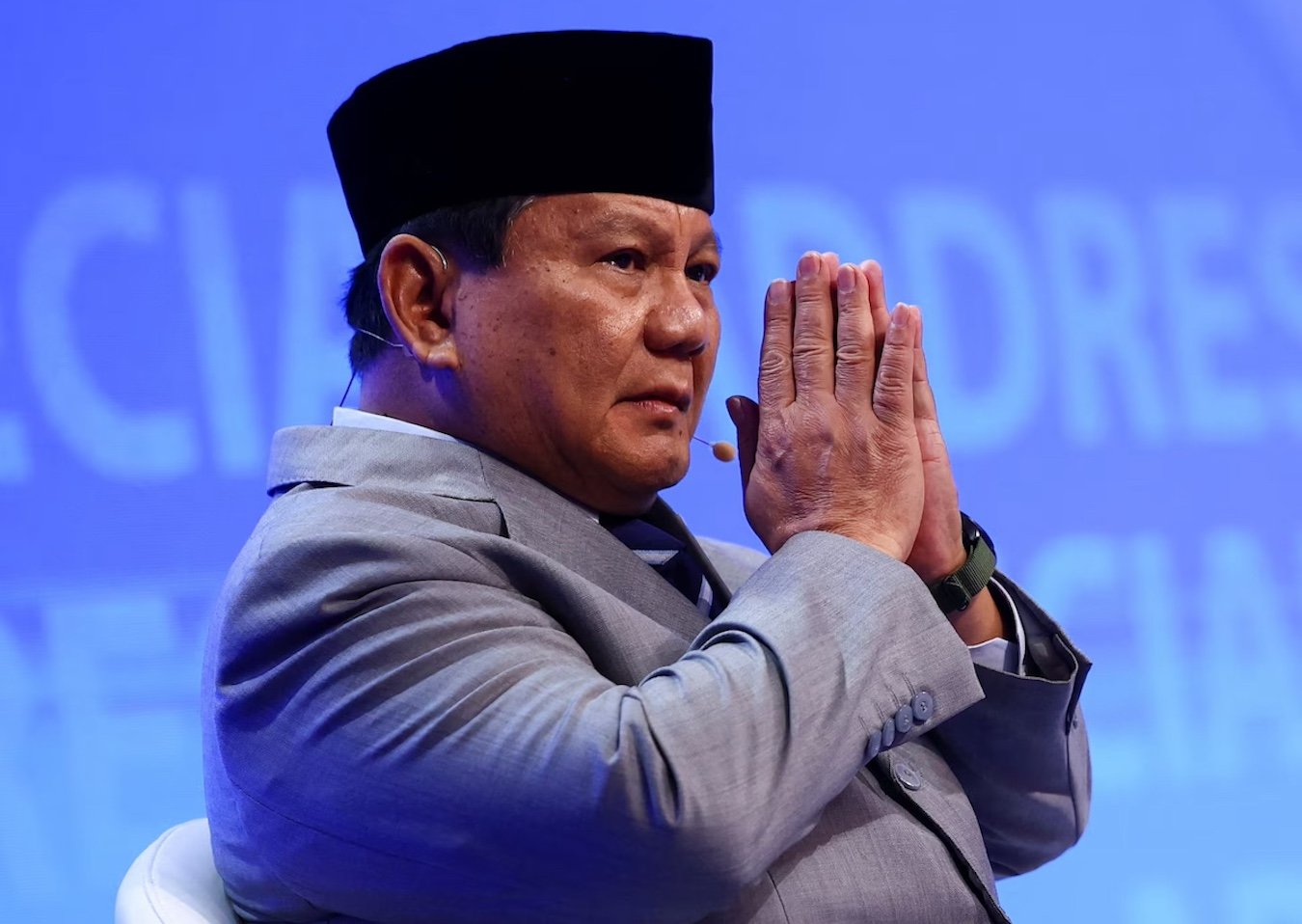
Twenty-nine years after the Asian financial crisis brought Indonesia to its knees, the ghosts of 1997 are stirring again. This time, the trigger is not a sudden devaluation but a slow bleed: the rupiah has fallen to record lows, foreign money is exiting equities and bonds, and MSCI, the global index provider, is threatening to reclassify Indonesia's market from emerging to frontier—or worse, a standalone category.
President Prabowo Subianto's administration has scrambled to respond. On Monday, exchange officials met with MSCI representatives in a bid to stave off the downgrade. But the damage may already be done. As Eugenia Victorino, head of Asia strategy at Skandinaviska Enskilda Banken, told Bloomberg: “Foreign capital is staging a full-blown exit from Indonesia's equity market, and now the bond market is feeling the heat. A sliding rupiah is eating real yields. Until the currency finds its footing, global money is content to watch this one safely from the sidelines.”
A familiar pattern
The parallels with 1997 are hard to ignore. Back then, a rupiah devaluation triggered capital flight, and President Suharto's desperate measures—including a short-lived flirtation with a currency board—failed to stem the tide. By May 1998, mass protests forced Suharto from power. Successive governments spent years rebuilding credibility. Now, under Prabowo, a former general and Suharto's ex-son-in-law, that credibility is eroding again.
Since taking office in October 2024, Prabowo has pursued an agenda that investors find unsettling: rising economic nationalism, pressure on central bank independence, populist spending, and the purging of technocrats from the finance ministry. The creation of a giant sovereign wealth fund with opaque governance has added to concerns. All three major credit rating agencies have moved Indonesia's sovereign outlook to negative, citing long-term fiscal strain.
Not all of this is Prabowo's fault. The widening Iran war has exposed Indonesia's dependence on imported fuel, despite its own oil reserves, which have been mismanaged for years. But the rupiah's slide—down 8.2% so far this year, the worst in Asia—reflects twin budget and current account deficits. Traders didn't need MSCI to tell them that.
Blindsided or willfully blind?
The Indonesia Stock Exchange's chief executive, Jeffrey Hendrik, says the bourse was blindsided by MSCI's announcement. “We never received any clue—nor any direct warning, either from MSCI or through any other parties,” he said. But the rupiah's slump was a clue. So was MSCI's January warning that Indonesia was flirting with frontier status. Anyone surprised ten months later isn't tracking the details as closely as foreign investors expect—and a bourse leader should.
Last-minute horse-trading is no solution either. After meeting MSCI, exchange officials pledged to remove companies with concentrated ownership from the benchmark, which account for roughly 18% of the Jakarta Composite Index by weight. They also promised to disclose investors holding 1% or more of a company's shares and to identify affiliates. But Hendrik then said implementation timelines would be detailed later. This is a trust-but-verify moment if ever there was one, and the damage is done either way.
Gareth Leather of Capital Economics notes that MSCI had threatened frontier status but now argues even that would understate the severity of the problems. Goldman Sachs says the burden of proof has shifted: avoiding reclassification will require clear evidence that reforms have been consistently implemented and have materially improved market functioning. The investment bank estimates that removal from MSCI could trigger US$5.6 billion in passive outflows, with active funds benchmarked to the indexes holding more than $8 billion.
Central bank dilemma
All of this complicates Wednesday's Bank Indonesia decision. Moody's Analytics economist Stefan Angrick expects a 25-basis-point hike to 6% to defend the currency. In late September, BI said it would scale back intervention amid concerns about reserves, so standing pat this week could send the rupiah to new record lows.
Investors sometimes get currencies wrong, but Indonesia's case is a multi-year trend. The rupiah fell every year from 2020 to 2025, often sharply. Less than 11 months into 2026, this year's decline is already more than double 2025's 3.5% loss. The causes are no mystery. Last year's budget deficit was 2.92% of GDP, just under the legal ceiling of 3%, which spooked bond investors and triggered outflows. A record $8.5 billion trade deficit in mid-2025 added pressure as import demand outpaced commodity exports. BI also cut rates by 125 basis points last year, to 4.75%. Since January, it has reversed course, raising the benchmark by 100 basis points to 5.75%. Inflation is tame at 3.28% in September, but with the Iran war dragging on, the subsidies keeping it that way are getting more expensive.
Few expected a former military strongman to be an economic reformer when he took office. But the speed of the backsliding has still shocked many investors. The first clear warning came in September 2025, when Prabowo abruptly fired Finance Minister Sri Mulyani Indrawati, long Indonesia's face of economic credibility. Her dismissal, and the subsequent policy drift, have left foreign investors questioning whether Jakarta can be trusted to manage its own economy.
As Indonesia navigates this crisis, it might look to its own history for lessons. The country's nickel boom has brought investment but also dependence on commodity prices. And while Prabowo has pushed for military modernization, the economic fundamentals remain shaky. The MSCI decision, whenever it comes, will be a verdict on whether Indonesia can escape the ghosts of its past.