For a decade, Jakarta has pursued a bold economic strategy: turn Indonesia's vast mineral wealth into something far more valuable than raw ore. The plan involves restricting nickel exports, attracting foreign investment, building processing plants, and moving downstream into the electric-vehicle (EV) battery supply chain that will power the next generation of transport and energy storage.
China sits at the center of this ambition. Chinese firms bring capital, technology, engineering know-how, and access to an industrial ecosystem that Indonesia lacks. Indonesia, in turn, offers what Beijing needs: abundant nickel, a growing domestic market, and a strategic production base in Southeast Asia. In 2024, Indonesia accounted for an estimated 62% of global mined nickel output, making it the world's largest producer.
The partnership fuses two very different kinds of economic power. But a decade in, a harder question is emerging: will this collaboration deliver genuine industrial upgrading, or simply bind Indonesia ever more tightly into China's industrial orbit?
China's ecosystem advantage
China's strength does not lie merely in producing more batteries than anyone else. It rests on an ecosystem built over more than two decades, in which EVs, batteries, materials, manufacturing, research, finance, and infrastructure reinforce one another. A comparative study by the Carnegie Endowment shows how Beijing combined demand creation, industrial policy, manufacturing scale, and technological upgrading to create the world's most vertically integrated battery industry.
Notably, China did not start by simply subsidizing gigafactories. Its early EV programs created demand, while industrial policies pushed manufacturers to improve scale and performance. A 2015 battery "white list," for instance, tied access to EV incentives to approved battery suppliers and required minimum production and innovation capabilities. That protection favored domestic champions like CATL and BYD, and was only removed in 2019 once Chinese producers were strong enough to compete without it.
China then added scale, drawing demand not only from EVs but increasingly from stationary energy storage. By 2025, EVs accounted for more than half of passenger-car sales in China, while battery storage became another major source of demand. At the same time, Beijing has begun shifting policy support toward higher-value technologies, including solid-state batteries, even as it tries to reduce low-end overcapacity. This is the ecosystem Indonesia is trying to enter.
The Indonesia Battery Integration Project
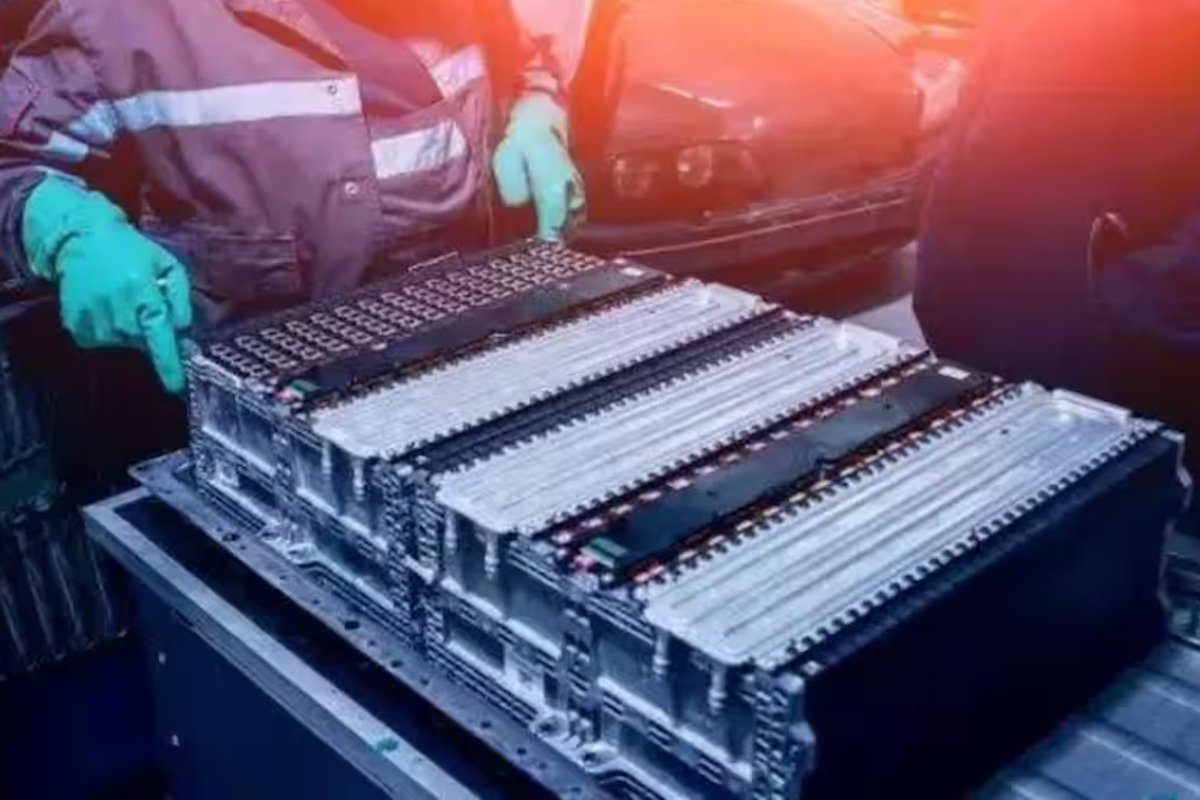
The planned Indonesia Battery Integration Project, involving CATL's subsidiary CBL, Indonesia's state-owned miner Antam, and Indonesia Battery Corporation, shows the scale of the ambition. The nearly US$6 billion project is designed to span nickel mining and processing, battery materials, cell manufacturing, and recycling. Its first battery plant is expected to have 6.9 GWh of annual capacity, with plans for expansion.
For Indonesia, this is a major step beyond exporting raw materials. But it also raises the harder question: who owns the capabilities embedded in this ecosystem? If Indonesian firms remain dependent on foreign technology, machinery, engineering expertise, intellectual property, and management, downstreaming may change where production takes place without fundamentally changing who controls the knowledge behind it.
From Chinese investment to Indonesian capability
This does not mean Chinese investment is a problem. Indonesia probably cannot build a globally competitive battery industry quickly without Chinese capital, technology, and industrial partners. The more consequential question is whether Jakarta can turn this dependence into a mechanism for learning.
The relationship is asymmetric but not one-sided. China needs Indonesian nickel and, increasingly, its market and strategic location. Indonesia needs China's capital, technology, and manufacturing ecosystem. The result is a form of asymmetric interdependence, which gives Indonesia room to bargain if that space is leveraged intelligently.
The scale of Chinese involvement is already substantial. The International Energy Agency estimates that Chinese investment in Indonesia's nickel-refining sector reached about $30 billion in 2024, while Chinese companies accounted for roughly 75% of Indonesia's refining capacity. Such concentration brings both opportunity and risk. Chinese firms can bring technologies, suppliers, engineering capabilities, and access to global production networks faster than Indonesia could on its own.
But if the most valuable capabilities remain concentrated in Chinese companies, Indonesia could end up with a battery industry that is local in geography but foreign in technological ownership. Jakarta should therefore look past the amount of foreign capital arriving and ask what it is actually being left behind. Are Indonesian engineers learning to design and improve production lines? Are local suppliers moving into more sophisticated parts and components? Are universities and companies building serious battery research capabilities? Is intellectual property starting to accumulate at home? And, over time, can Indonesian companies become technology partners rather than remaining suppliers, junior joint-venture partners, or providers of raw materials?
These questions may be less visible than the number of factories being built, but they will ultimately determine whether Indonesia's nickel strategy delivers lasting industrial power or merely a new form of dependency. As Jakarta negotiates with Beijing, it should also consider the hard questions raised by its negotiation training with China, and the hidden costs of its mineral incentives. The path from owner to owned is not inevitable, but it requires deliberate policy choices.