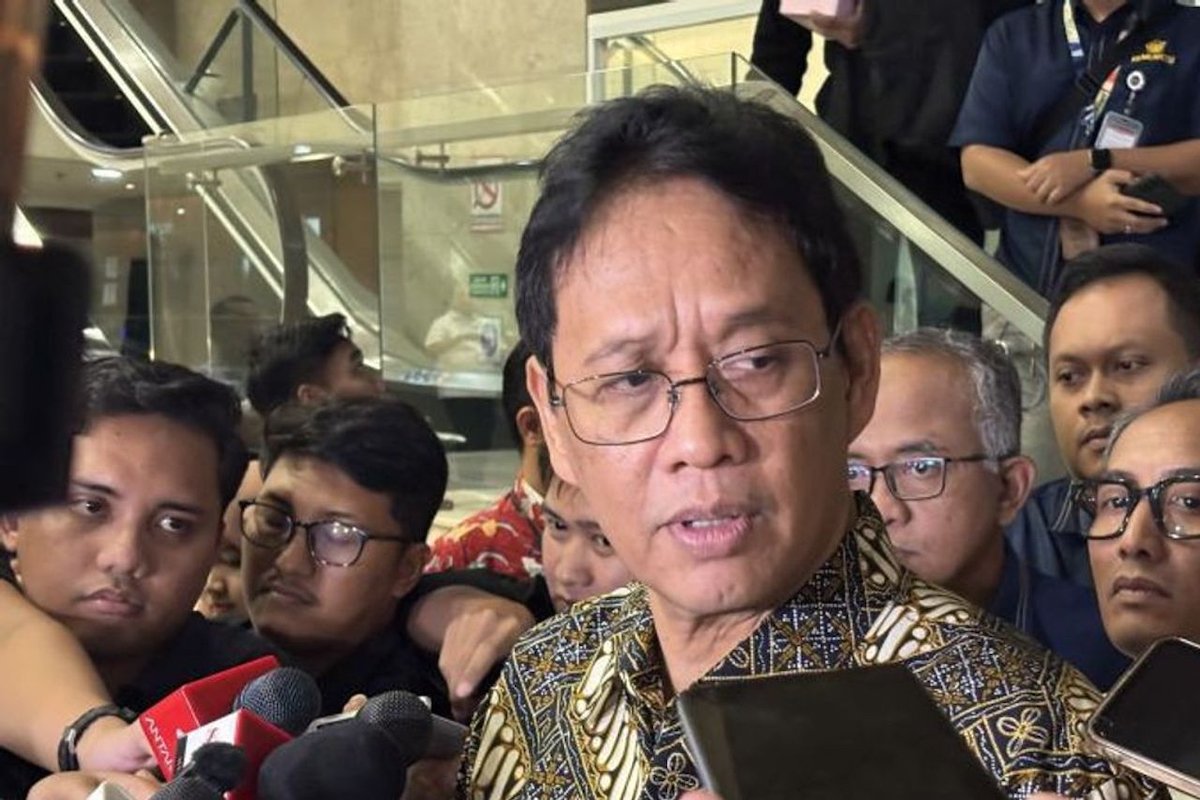
Last week, Indonesia's Coordinating Ministry for Economic Affairs dispatched 32 officials to China for a 14-day course on negotiating international economic deals. The program, run by the Academy for International Business Officials under China's Ministry of Commerce, is fully funded by Beijing as a grant. The curriculum covered tariff reductions, free trade agreement talks, dispute resolution, and e-commerce rules, complete with mock diplomatic negotiations.
Ministry secretary Susiwijono Moegiarso explained the rationale: Indonesia needs sharper negotiators to attract quality investment, open new markets, and advance its downstreaming agenda. But his framing was more striking. In China, he said, negotiation is not just a technical skill but a cultural habit rooted in history and tradition. That may be true, but it raises an obvious question: why is Indonesia asking China to teach its officials how to negotiate, when so much of what Indonesia most urgently needs to negotiate is with China itself?
The trade deficit that keeps growing
Indonesia still posts a healthy overall trade surplus, but its bilateral position with China has swung sharply into deficit. A small surplus in 2023 turned into an $11.4 billion deficit in 2024, and by 2025 the gap had widened further, with one estimate putting the shortfall near $20.5 billion. Indonesia's own statistics agency reports a similarly deepening trend. The trade minister has downplayed the numbers, but every dataset points the same way: the deficit with China roughly doubled in a single year.
Look at what's inside that gap. Indonesia mostly buys high-value manufactured goods like machinery, electronics, and vehicles from China. What it sells back is dominated by iron, steel, palm oil, and nickel—resource-based products near the bottom of the value chain. That pattern is precisely what an Indonesian trade negotiator should be worried about, and it has not improved despite a free trade arrangement between China and Southeast Asia that has been running for 16 years.
Nickel: a case study in imbalance
Nickel is the clearest example of how this imbalance took root. In 2020, Jakarta banned exports of raw nickel ore, hoping to force investors to build smelters at home and capture more value locally. The policy attracted enormous investment and made Indonesia the source of roughly 60% of the world's nickel supply. However, ownership of that processing capacity did not diversify across several countries. Chinese firms, led by Tsingshan Holding Group and Jiangsu Delong, now control an estimated 70% to 75% of Indonesia's nickel-smelting capacity. Indonesia supplies the ore and the land; China supplies the capital and keeps most of the profit.
To attract that capital, the government offered generous terms: corporate income tax holidays running as long as 15 to 20 years, access to nickel ore at government-regulated prices well below market rates, and subsidized energy. Tsingshan alone has invested close to $10 billion in Indonesia since 2015 while enjoying two decades of tax exemption. Indonesian miners, by contrast, must sell their ore domestically at controlled prices, leaving them little incentive to expand.
Jakarta has begun walking some of this back, cutting tax holidays for new nickel pig iron projects earlier this year and pushing investors toward higher-value, battery-grade processing instead. That is a welcome correction, but it came late—the legacy deals already signed are not going anywhere.
The Whoosh debt talks
A third negotiation is unfolding on a parallel track. Since 2023, Indonesia has been trying to restructure debt behind the Jakarta-Bandung high-speed rail line, known as Whoosh, after cost overruns pushed total financing over $7.2 billion, three-quarters of it borrowed from the China Development Bank. Talks dragged on for over a year, with Ambassador Wang Lutong repeatedly saying discussions were progressing well without disclosing terms. This month, Indonesia's finance ministry finally announced a deal: annual installments of about 1 trillion rupiah, roughly $56.7 million, spread across an 80-year term.
That may look manageable on paper, but an 80-year repayment schedule on a single infrastructure loan is itself telling of how much leverage sat on China's side of the table.
Whose interests are being served?
None of this makes the China-sponsored negotiation training itself sinister. It is reasonable for any civil service to want to learn how professional negotiators from a major trading power think and prepare. Rather, the problem is the framing. Indonesia is heading into a string of consequential talks, including the technical review of its OECD membership bid that began this year, ongoing tariff negotiations with Washington, and the long-running effort to diversify export markets away from overreliance on a single buyer.
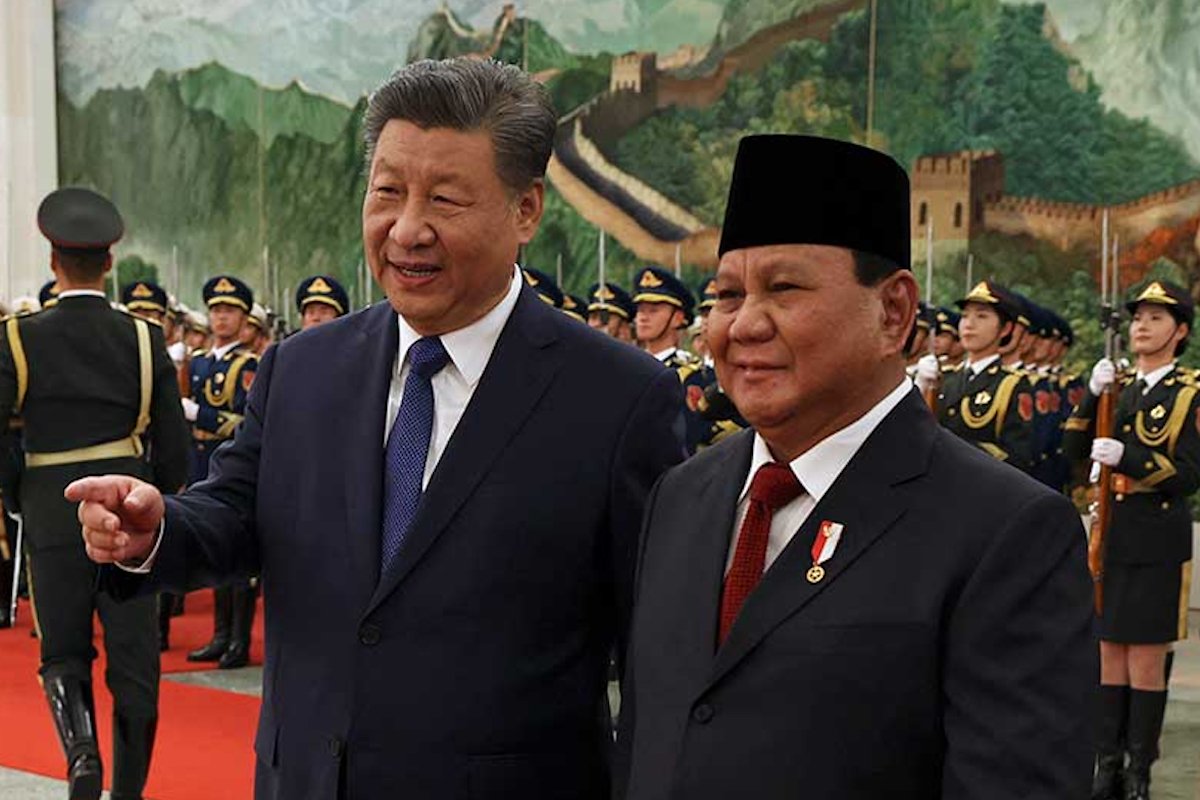
If the negotiating instincts Indonesian officials bring into those rooms were shaped by a program designed and delivered by the very government they most need leverage against, it is fair to ask whose interests that shapes over time. It is worth noting that Wang Lutong is not a bystander here. He is the same ambassador who said the point of the negotiator-training program was to build trust for a long-term strategic partnership, and the same envoy fielding questions about the Whoosh debt talks. Trust, in this context, is easier claimed than earned.
Indonesia can judge whether the cooperation was worth it by a simple test: Does the trade deficit shrink? Does ownership of the nickel supply chain diversify? Does the Whoosh repayment schedule actually hold? And are future fiscal incentives negotiated on terms that favor Indonesia as much as they favor whoever is lending or investing?
Indonesia holds real cards: a large market, vast mineral reserves, and a strategic location. The question isn't whether Indonesia can or should take negotiation lessons in China. Rather, it's whether it can afford to take instruction from the one country it most needs to negotiate with. For more on Indonesia's economic challenges, see this analysis of its investability problem. And for broader context on China's economic influence, check how Beijing is reshaping corporate credit.