When Donald Trump returned to the White House, he promised to avoid another Middle Eastern "forever war." After the costly experiences of Iraq and Afghanistan, that pledge resonated with an American public weary of prolonged military intervention.
For a brief moment, it appeared that this promise might be realized. The memorandum of understanding (MoU) signed by the US and Iran on June 17 seemed to offer a pathway away from escalating confrontation. Markets stabilized, regional tensions eased, and there was cautious optimism that Washington and Tehran had stepped back from the brink.
That optimism has proved remarkably but unsurprisingly short-lived. US military strikes have resumed, and Iran has retaliated against American and its allies across the Gulf. Iran's proxy allies, the Houthis, have declared themselves ready to close the Red Sea chokepoint at the Bab-el-Mandeb Strait, which has provided an alternative transit route for some oil exports, particularly from Saudi Arabia.
Washington continues to combine military pressure with calls for renewed negotiations. But rather than representing the collapse of an isolated peace initiative, these developments may confirm the reality of grey zone conflict – where diplomacy manages war rather than ends it.
Different Kind of Forever War
When Americans think of forever wars, Iraq and Afghanistan understandably dominate the discussion. Those conflicts were characterized by invasions, prolonged occupations, attempts at nation-building, and the deployment of hundreds of thousands of troops over many years. Their enormous political, financial, and human costs eventually became impossible to sustain.
The confrontation with Iran is fundamentally different. It is unlikely to require the occupation of territory, and no serious or sustained attempt to directly remake the Iranian state. Instead, it is fought through air strikes, cyber operations, sanctions, maritime confrontation, intelligence activity, and proxy warfare. Military escalation is followed by diplomacy, diplomacy gives way to renewed confrontation, and each episode is presented as a separate crisis.
Viewed collectively, these episodes are better understood as the latest phase of a strategic confrontation that began with the 1979 Iranian Revolution rather than as isolated crises. The conflict has evolved over the years through sanctions, proxy warfare, covert operations, and cyber conflict into a more direct military confrontation.
The repeated breakdown of de-escalation efforts is often attributed to mistrust or diplomatic failure. Both undoubtedly matter, but they do not fully explain why the MoU has unraveled so quickly. Many of its core provisions have become sources of dispute. Israel has continued military operations in Lebanon, despite expectations that regional hostilities would subside. Washington initially signaled greater economic flexibility towards Iran, including easing restrictions on oil exports and discussions surrounding Iranian assets. Yet sanctions have subsequently expanded, and further economic measures have been introduced.
From Tehran's perspective, these actions represent a breach of the spirit – and, in some cases, the letter – of the agreement. From Washington's perspective, they are responses to continued Iranian activity that it considers destabilizing.
The Strait of Hormuz illustrates how quickly ambiguity can become renewed confrontation. Article 5 of the MoU envisaged Iran facilitating the safe passage of commercial shipping through the waterway. Commercial traffic initially increased following the agreement. But disagreement soon emerged after Oman – in coordination with the International Maritime Organization and with US backing – established a temporary maritime corridor closer to the Omani coast. Tehran viewed this as inconsistent with the agreed framework and argued that it undermined Iranian responsibility for administering safe passage. Washington rejected that interpretation, maintaining that additional security measures were necessary to protect international shipping. The competing interpretations rapidly became another source of escalation.
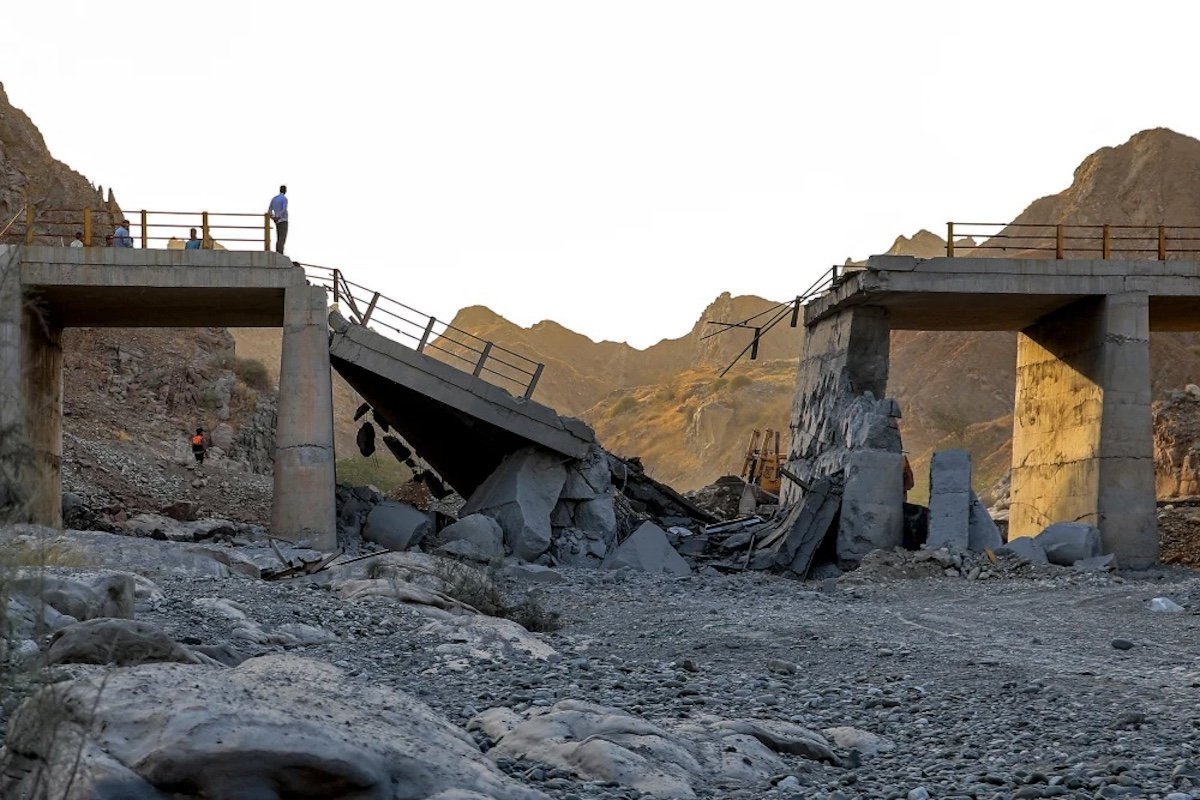
The conflict itself has also evolved. What began largely as strikes against military infrastructure has increasingly extended to facilities with direct consequences for civilian life. This has included energy infrastructure and desalination plants that are essential to freshwater supplies across parts of the Gulf. Transport infrastructure, including bridges, has also been targeted. This has prompted debate among military analysts about whether operational objectives are expanding beyond coercive signaling – using limited military force to pressure or influence an opponent's behavior – towards broader military aims. It has also raised questions about whether some attacks could violate international humanitarian law and, depending on the circumstances, amount to war crimes.
While the expansion of US strikes in this way does not in itself demonstrate that a US ground offensive is imminent, it reflects a widening conflict whose effects increasingly reach civilian populations.
Diplomacy Managing Conflict, Not Resolving It
The deeper problem is that the strategic objectives of the main players here remain fundamentally incompatible. The US continues to insist that Iran's nuclear program and regional influence must be constrained. Iran regards those same capabilities as essential to its security and deterrence. Israel continues to view a strategically stronger Iran as an unacceptable security threat. These objectives cannot all be achieved simultaneously. As a result, diplomacy struggles – not because negotiators lack skill, but because they are attempting to reconcile goals that remain at odds. The MoU temporarily reduced tensions, but it did not alter the structural realities driving the conflict.
This has important implications for how the current crisis should be understood. Much of the debate focuses on whether the latest escalation is a failure of Trump's strategy or a necessary response to Iranian provocations. But that framing misses the point. The US-Iran conflict is not a series of crises that can be resolved through better diplomacy or smarter tactics. It is a structural confrontation that has become self-sustaining. Each round of escalation generates the conditions for the next, and diplomacy functions as a mechanism for managing the conflict rather than ending it.
For the broader Indo-Pacific region, this has significant implications. The Strait of Hormuz remains a critical chokepoint for global energy supplies, and instability there affects markets from Tokyo to New Delhi. As the US becomes more entangled in the Middle East, its capacity to focus on strategic competition with China in the Indo-Pacific may be diminished. Meanwhile, Asian powers like India and Japan must navigate their own energy security concerns while maintaining relations with both Washington and Tehran.
The Iran conflict is becoming the forever war Trump promised to avoid – not through invasion and occupation, but through a grinding, ambiguous confrontation that shows no signs of resolution. For the people of the Gulf region, and for the global order that depends on stability in the Strait of Hormuz, this is a war that may never end.