As Americans cast their ballots in the midterm elections on November 3, Tehran quietly revealed which nations would be allowed to use the Strait of Hormuz. Amir Hayat Moqaddam, deputy chairman of the Iranian parliament's National Security and Foreign Policy Committee, stated that vessels from India, China, Iraq, and Qatar would be exempt from transit restrictions. These ships, he said, "pass freely," and "the Americans do not intercept them either." The remarks, made in a parliamentary interview rather than a formal decree, follow a pattern set in March when Iranian Foreign Minister Abbas Araghchi designated China, Russia, India, Iraq, and Pakistan as "friendly nations" for transit.
The announcement came on the eve of the US midterm vote, as American forces conducted fresh strikes on Iran following a month of record attacks on shipping near the strait. President Donald Trump had promised the war would end "immediately after" the election, yet US pump prices have remained above $4 a gallon since June. On November 4, Brent crude fell 0.7% to $102.87 a barrel as markets weighed the Democrats' sweep of Congress against the risk of renewed strikes. Front-month futures for Brent dropped around 6% coincident with Vice President JD Vance's tweet attributing the Republicans' loss largely to the Iran war, signaling a possible shift toward de-escalation.
A licensing regime based on nationality
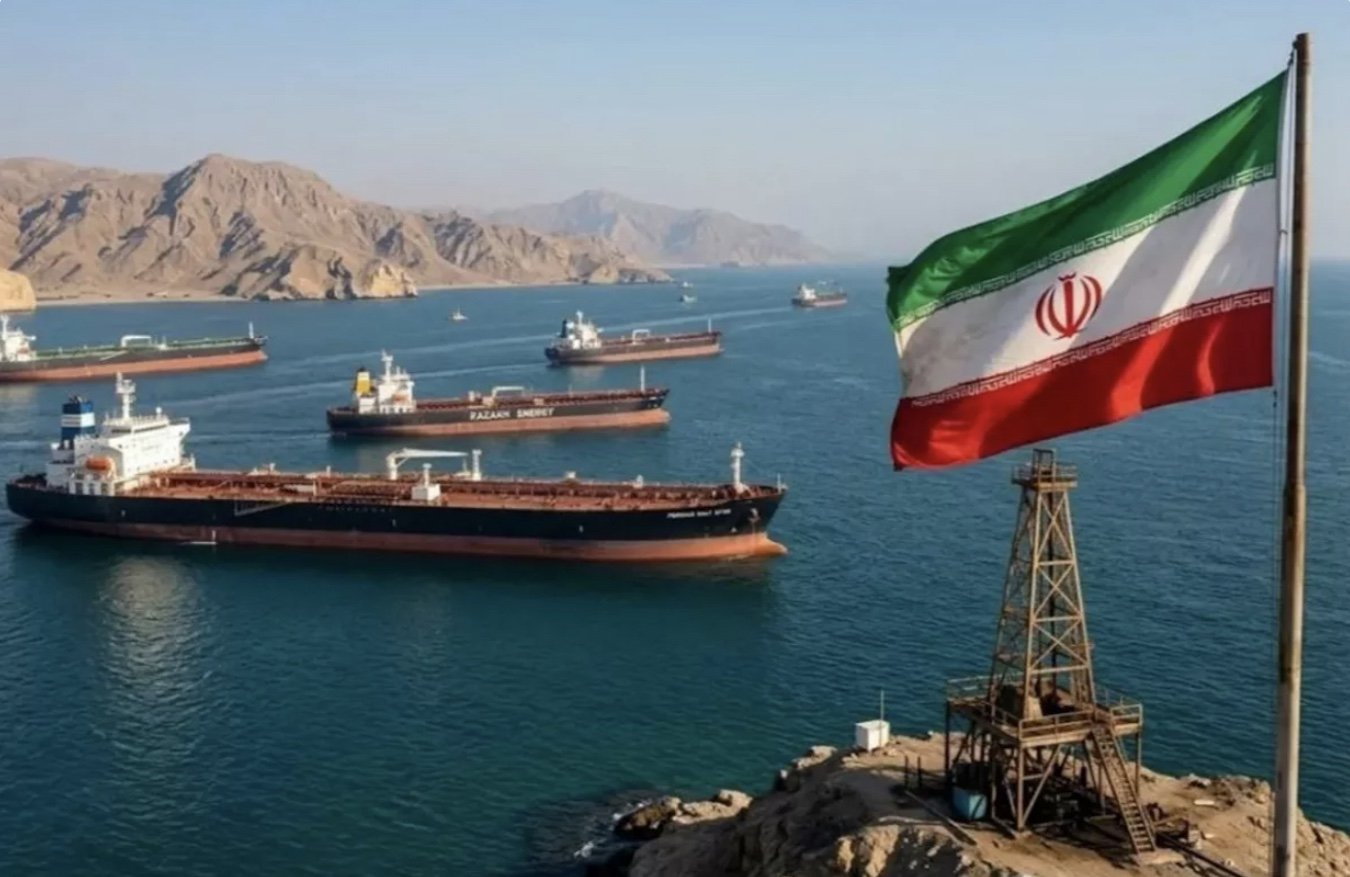
For Asian governments, the strategic question extends beyond whether Washington chooses escalation or negotiation to who retains access to Hormuz in the interim. Iran's stated exemptions convert a wartime blockade into a licensing regime based on nationality. Since May, Iran's Persian Gulf Strait Authority has issued transit permits only upon payment, with ships reportedly paying up to $2 million per transit in Chinese yuan.
Moqaddam was explicit about what each exemption secures for Tehran. The Indian exemption facilitates Iran's medicine imports, while the Chinese exemption is intended to secure Beijing's political support. Indian and Chinese vessels pay transit fees, while Qatari ships cross free of charge. Tehran frames these charges as payment for navigation and environmental services, invoking the Turkish Straits as a comparable case. The analogy is unpersuasive, because the Montreux Convention is a multilateral treaty that confines charges to specified services. Hormuz, by contrast, falls under the transit passage regime of the UN Convention on the Law of the Sea (UNCLOS), which Iran signed but never ratified.
Washington, the Gulf states, and European governments reject the fees as unlawful. Trump, however, has described a toll arrangement as a "beautiful thing" and at one point even floated a joint venture with Iran. Each paid transit, combined with Washington's mixed signals, risks establishing a precedent for other chokepoints vital to Asian trade, from Bab el-Mandeb to Malacca.
Uneven costs across Asia
The costs of this regime fall hard on Asia, but unevenly. Gulf crude and condensate exports averaged 14 million barrels a day in October, roughly 86% of pre-war levels. Most of these barrels flow eastward, and Iran's list now differentiates among Asian buyers by political alignment rather than need. China lost its discounted Iranian supply once Iranian oil afloat outside the US blockade line fell to zero by mid-October. The exemption therefore matters because Chinese imports from the wider Gulf were on course to exceed 5 million barrels a day in October.
India's Ministry of External Affairs confirmed on November 3 that 23 Indian nationals, including 15 seafarers, have died in the conflict, and Tehran has since reaffirmed the Indian exemption. New Delhi can justify paying for passage as crisis management, although doing so binds India to a fee regime that its closest defense partner rejects. Qatar's free passage safeguards LNG supplies for Indian and East Asian buyers. Iraq's exemption, by contrast, has not restored its export volumes, which fell again in October.
Japan and South Korea, the region's most exposed economies, remain outside the list. Tokyo released national reserves equivalent to about one month of supply in March and a further 20 days of supply from May. Japan's crude imports from Saudi Arabia fell 41.2% between April and July, compared with a 21% decline for South Korea. Both governments endorsed a March joint statement condemning Iran's closure of the strait. Their alignment with Washington now imposes an energy cost that neutral competitors avoid.
Yet this divide is less absolute than Iran's list implies. Seoul secured priority access to 200 million barrels of Saudi crude from June to the end of the year and has contracted October and November supplies at last year's monthly average. The substantive gap therefore lies in cost, certainty, and political exposure. Neutral buyers pay a predictable toll, whereas US allies depend on reserves, rerouting through Yanbu and Fujairah, and case-by-case bargaining.
Neither Tehran nor Washington holds as strong a position as this arrangement suggests. Iran itself is not exporting oil because of the US blockade, so transit fees partly compensate for lost revenue. Its seven conditions for reopening the strait, including sanctions relief, suggest that the permit system is a bargaining instrument rather than a durable order. Washington, for its part, blockades Iranian ports while maintaining that the strait remains open. Allowing exempted ships to pass keeps oil flowing for an administration that has just lost Congress partly over high fuel costs.
If Moqaddam's account is accurate, the toll regime is a calculated lever to exploit the political weakness of the Trump administration. For Japan and South Korea, the message is clear: their loyalty to Washington carries a price. As the war grinds on, Asian capitals must weigh the cost of alignment against the unpredictability of a president who once praised the very tolls now punishing his allies. The coming months will test whether the region's energy security can survive the intersection of US politics and Iranian brinkmanship.