On May 5, an oil tanker from the Sakhalin-2 project docked at Taiyo Oil's refinery in Imabari, Ehime Prefecture, a routine delivery that nonetheless made headlines across Japan. The voyage, tracked in real time by Marine Traffic, underscored Tokyo's ongoing dependence on Russian energy even as it deepens military ties with Ukraine.
Just a week earlier, Tokyo-based Terra Drone announced plans to invest in WinnyLab, its second Ukrainian drone partner. Interceptor drones developed with its first partner, Amazing Drones, are already operational in Ukraine—a move the Russian Foreign Ministry has labeled “openly hostile and detrimental to our country’s security interests.”
Diplomatic Overtures and Russian Demands
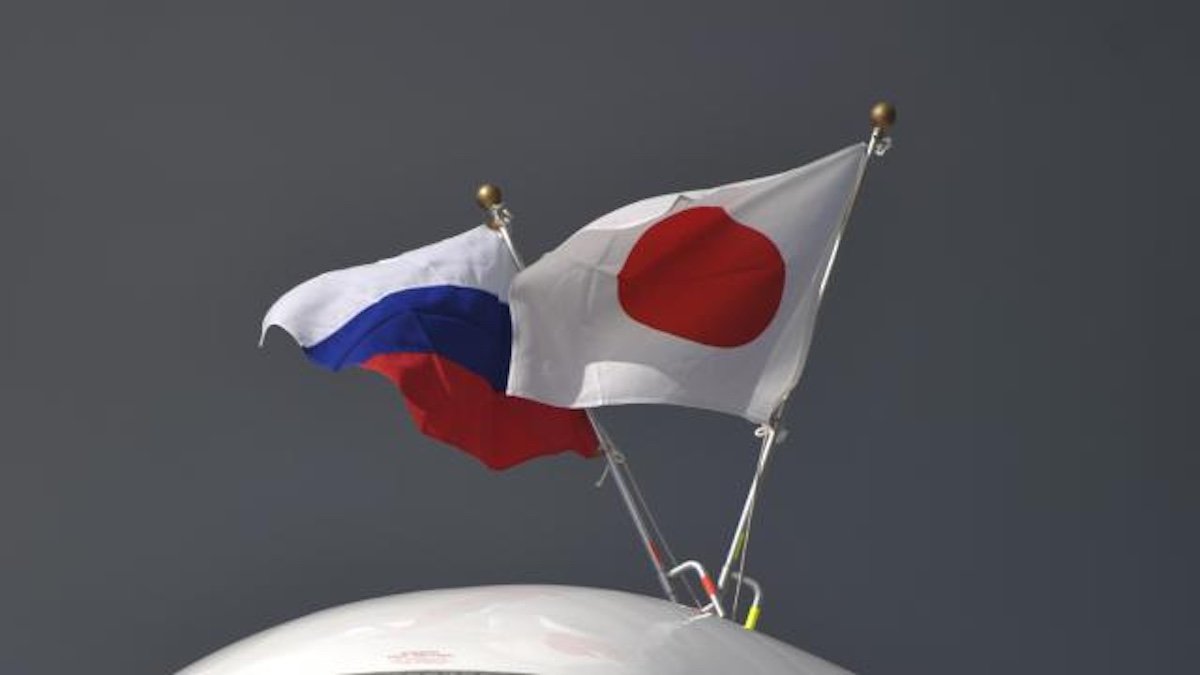
Japanese parliamentarian Muneo Suzuki, a senior Diet member from Hokkaido and a veteran of Japan-Russia relations under former Prime Minister Shinzo Abe, traveled to Moscow this week. He met with Russia's Deputy Foreign Minister Andrey Rudenko, who signaled that a meeting between Japanese Foreign Minister Toshimitsu Motegi and his Russian counterpart Sergei Lavrov could take place alongside ASEAN events in the Philippines in July—but only if Japan takes “concrete measures” to abandon its “hostile policy” toward Russia.
“I very much want to restore Japan-Russia relations to the state they were in under Abe and President Putin,” Suzuki told Grigory Karasin, head of the Russian Federation Council Committee on International Affairs. Suzuki also claimed that Prime Minister Takaichi, whom he described as a follower of Abe, is “very well aware of the importance of Japan-Russia ties.” He added that he has “consistently taken a negative view of the fact that Japan, at the request of Biden, has adopted cold ties with Russia.”
Suzuki did not say Takaichi is ready to shift policy, but as a staunch Abe ally, she might. Any such move would face opposition from hardliners, but as Suzuki noted, the threat to Japan's oil supply did not come from Russia.
Energy Calculus: Sakhalin-2 and Beyond
Sakhalin-2, in which Mitsui & Co. and Mitsubishi Corp. hold 12.5% and 10% stakes respectively, supplied about 9% of Japan's LNG in 2025 and a small share of its oil. Gazprom owns 77.5% of the project. The United States exempted Sakhalin-2 from sanctions on Russian energy due to its importance to Japan's economy, and last December extended that waiver until June 18, 2026. A “take-or-pay” clause means Japan must pay for its contracted LNG share even if it does not take delivery.
Last October, US Treasury Secretary Scott Bessent told Japanese Finance Minister Katsunobu Kato that the Trump administration expected Japan to phase out Russian energy imports in coordination with the G7, but Tokyo resisted. Now, Japanese officials are exploring increased imports from Sakhalin-1, where a Japanese consortium including JAPEX, Itochu, Marubeni, and Inpex holds 30%, while Rosneft companies own 50% and India's ONGC Videsh holds 20%.
Russia supplied less than 1% of Japan's oil last year, making it an obvious candidate for diversification away from the Persian Gulf—a strategic priority highlighted by recent disruptions in the Strait of Hormuz. As Asia fractures into energy security haves and have-nots, Japan's ability to tap Russian crude offers a hedge, albeit one entangled with geopolitical risk.
Defense Ambitions and Drone Technology
Japan is simultaneously building up its military, with drones high on the Defense Ministry's list of priority technologies. The goal is self-sufficient domestic production, and Terra Drone is the most promising venture pursuing that objective. Founded in 2016 and headquartered in Tokyo, the company has expanded into agriculture, industrial inspection, surveying, and unmanned traffic management. In March 2026, it announced a “full-scale” entry into the defense market, a strategic investment in Amazing Drones, and plans to establish a US subsidiary, Terra Defense.
In April, the investment in WinnyLab was announced, and the “Terra A1” interceptor drone, developed with Amazing Drones, began operational deployment in Ukraine. The first successful interception of a “long-range unmanned aerial threat” was reported at the end of the month. This activity dovetails with Japan's broader defense realignment, including the Japan-Australia frigate deal that cements a new defense axis in the Indo-Pacific.
How Tokyo will reconcile its energy needs with its defense buildup—and how much ambiguity it can sustain—should become clearer over the summer. The choices Japan makes will reverberate across the region, as other Asian importers watch closely how one of the world's largest LNG buyers navigates the collision of energy security and geopolitical alignment.