In April, Japanese combat troops joined the Balikatan exercises in the Philippines for the first time since World War II, a concrete step in defense cooperation between two US allies. That move offers a useful lens for assessing the much-discussed “middle-power moment” of 2026.
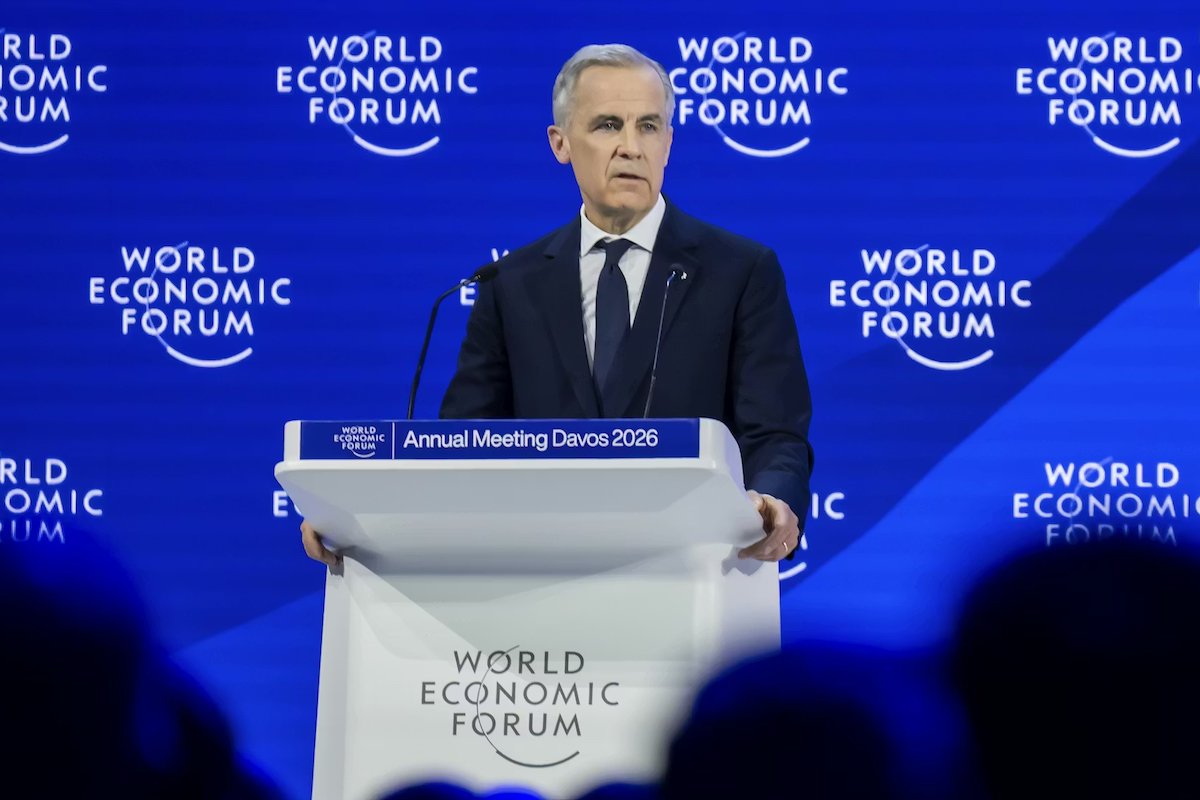
The Lowy Institute’s 2026 Asia Power Index delivers a sober verdict: the moment remains largely rhetorical. Canadian Prime Minister Mark Carney told the World Economic Forum in January that the rules-based order had ruptured, urging middle powers to form flexible, issue-based coalitions rather than rely on superpowers. Eleven months later, Lowy finds little action to match the talk, with the regional balance still “markedly bipolar.”
That conclusion might suggest middle powers are stalling. A closer look reveals two distinct tracks. US allies have built real defense ties among themselves, while Southeast Asia’s non-aligned states have held their capability but lost diplomatic voice.
Allies move, non-aligned hold
Lowy was looking for a coherent bloc of middle powers able to displace the US. Carney has advocated for something looser, and so far it has come mainly from US allies, not from across the divide between allies and non-aligned states.
The Index’s numbers move less than headlines suggest. The biggest mover is at the top: the US recorded the largest drop, and its lead over China is down to 5.3 points. Lowy ties this mainly to the war with Iran, which began in February and drained US long-range missile stocks and diplomatic standing.
Below the superpowers, change was marginal. Japan, Australia, and South Korea slipped slightly, and Southeast Asia’s middle powers each moved by 0.2 points or less. India, classed as a major power at 40.5 points, sits a tier above the middle powers.
Three features of the Index are worth noting. Scores are relative: Lowy’s distance-to-frontier method places each country against the best and worst performers, meaning a middle power can slip because others have moved. Lowy has also raised the bar for counting as a middle power, so part of the decline is on paper. And the Index measures national capacity with no direct measure of collective action, making it a blunt instrument for judging coalitions.
The one consistent loss was diplomatic. Australia, Japan, and South Korea—the three countries Carney named—all lost “diplomatic influence” on the survey.
Alliance track: filling the gap
The clearest middle-power action of 2026 ran inside the US alliance system as Washington’s own power waned. The US Defense Networks score fell to its lowest level since the Index began, due to fewer joint exercises and dialogues with allies and partners.
America’s allies have been filling part of the gap for several years. Australia’s exercises with the Philippines held without the US rose from four in 2022 to 11 in 2025, and 2026 built on that trend. Japan’s Balikatan deployment leveraged a new Reciprocal Access Agreement with Manila, similar to the one the Philippines shares with the US. Australia agreed to buy Japanese Mogami-class frigates, Tokyo’s largest defense export in the postwar era.
Lowy reads this as the spokes linking the regional security architecture. That is fair, but the same moves work as insurance: America’s allies are reportedly worried about a possible US military withdrawal from the Pacific under Trump. An ally that trains, bases, and buys with other allies is less vulnerable if Washington’s attention remains in the Middle East and the Iran war. This is the issue-based cooperation Carney called for, built in defense ministries but rarely announced as a coalition.
Southeast Asia: resilience without voice
The second track, in Southeast Asia, tells a different story. Its middle powers barely moved on comprehensive power, and Lowy credits the region with “modest resilience” through tariffs, supply-chain disruption, and South China Sea tensions. But nearly every Southeast Asian state lost diplomatic influence.
The allies in the first track lost it too, so hedging alone cannot explain the decline. Indonesia is the outlier. Its diplomatic influence dropped 5.5 points, the region’s steepest decline. Only the US lost more overall power than Indonesia on the survey. Lowy links this to expert doubts about President Prabowo Subianto’s foreign policy, which it sees as “undermining Indonesia’s long-held commitment to non-alignment.”
Vietnam’s comprehensive score edged up, yet its “resilience” score fell the most in the region. Lowy puts this down to its heavy dependence on global trade, with China accounting for nearly a third of it and amid unknown amounts of transshipment.
The Indonesian case shows why these Asian states don’t exactly meet Carney’s middle power call. For Jakarta and Hanoi, non-alignment is part of national identity as well as strategy, and it has long shaped how others read them. Vietnam’s 2019 Defence White Paper rules out military alliances and siding with one country against another. Joining a coalition pitched as like-minded middle powers rallying against disorder risks looking like picking a side. And Indonesia’s drift shows that perceived straying from non-alignment may carry a cost in standing.
Economics adds to the region’s reluctance to join a coalition of US allies. Regional governments have hedged on trade. At the October 2025 ASEAN summit, Malaysia and Cambodia signed trade deals with Washington, and several days later, ASEAN upgraded its free trade agreement with China. That hedging reflects a desire to keep options open, not to commit to a bloc.
The Lowy Index’s verdict is clear: the middle-power moment is more rhetoric than reality. But the two tracks show that action is happening, just not in the form Carney envisioned. US allies are building practical ties, while Southeast Asia’s non-aligned states are preserving their autonomy, even at the cost of diplomatic influence. Whether that changes depends on whether the region’s leaders can turn shared interests into collective action—without abandoning the non-alignment that defines their identity.