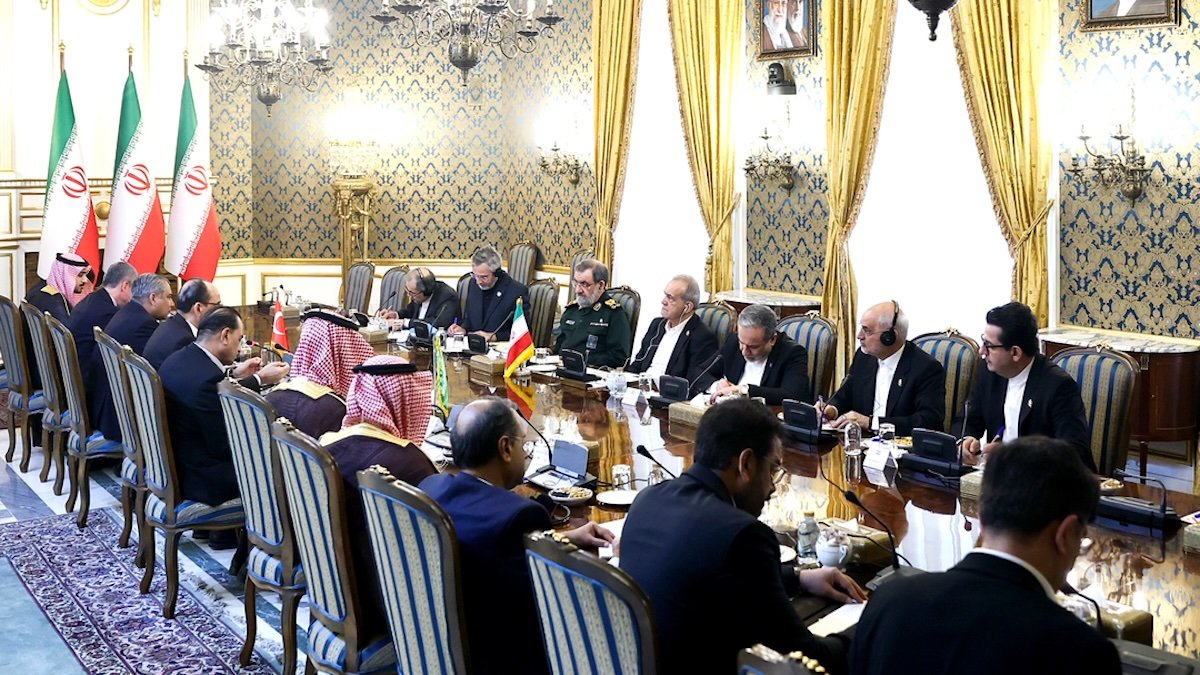
On Monday, the Mecca Joint Defense Agreement did something a defense treaty is not usually built to do: its members went to Tehran to talk. Saudi Defense Minister Prince Khalid bin Salman, Pakistan’s Army Chief Field Marshal Asim Munir, and Turkey’s intelligence chief Ibrahim Kalın met President Masoud Pezeshkian and Supreme National Security Council Secretary Mohsen Rezaei. The four sides agreed to continue dialogue on regional peace and security, with Iranian state television calling it the first joint meeting of the four since Yemen’s Houthis intensified attacks on Saudi Arabia.
The attacks did not pause for diplomacy. The same day, the Houthis claimed drone strikes on Saudi pipeline pumping stations and Riyadh’s King Khalid airport. That is the real tension: three countries that treat an attack on one as an attack on all are negotiating with Tehran while Iran-aligned forces hit one of them.
The clock
The timing is hard to ignore. The meeting came a day before Israelis voted and eight days before the US midterms. Israel’s election left the country deadlocked, according to exit polls, with neither Benjamin Netanyahu nor Gadi Eisenkot near a majority. In Washington, Donald Trump said on October 23 that the US may do “another little Epic Fury,” his military’s name for the war that began in February. Earlier this month he said there would be no attack before the midterms. Now the Wall Street Journal reports that Washington has told Gulf states to prepare for a short, intense campaign after November 3. Trump has not made a final decision, but he is reportedly leaning toward a large operation, with a negotiated deal as the alternative.
Gulf states would absorb the consequences. Iran has warned it would strike economic and civilian targets across the region, as it did earlier in the war.
Deterrence and diplomacy are not opposites
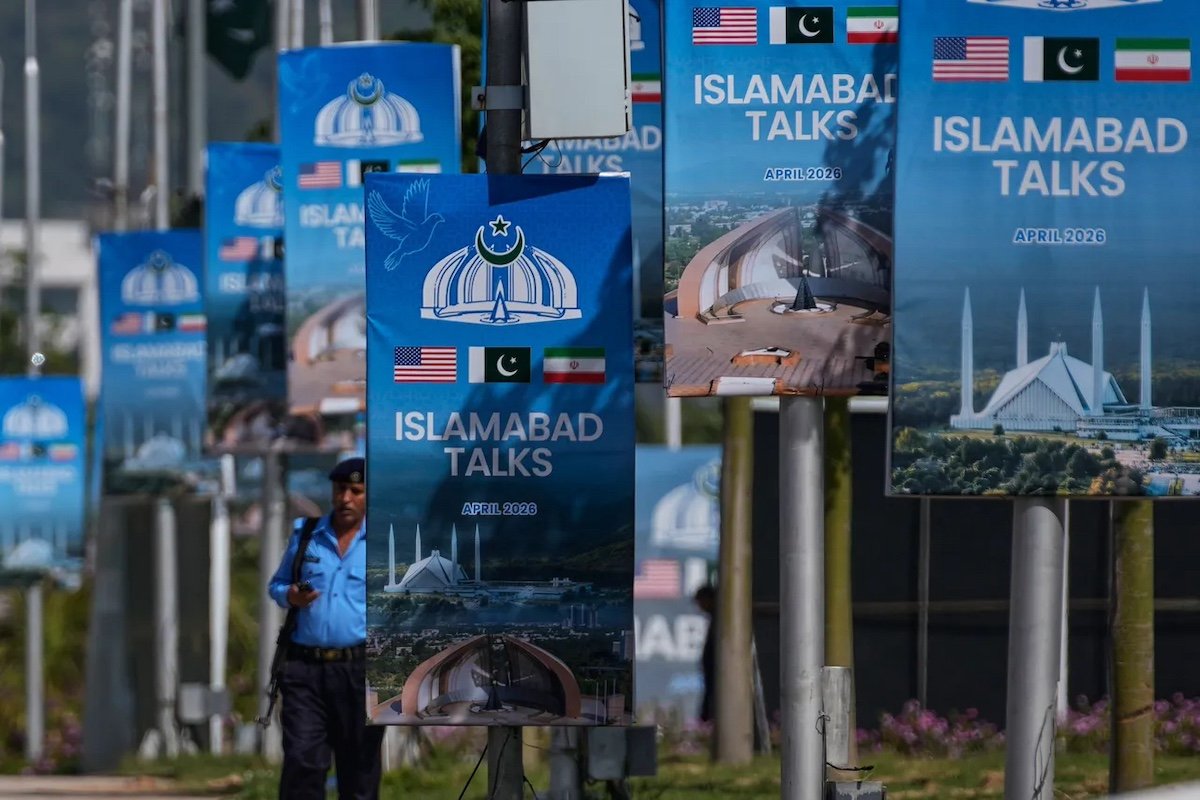
Some will call it contradictory that a defense pact is courting Iran. There’s no real contradiction. Alliances routinely show they can defend themselves and then show they would rather not have to. The sequence fits. On October 5, the pact’s committee met in Riyadh after attacks on Saudi Arabia and moved toward implementing collective defense. Three weeks later its members were in Tehran, a day after Qatari mediators had been there. Riyadh says the visit supports the mediation led by Qatar and Pakistan.
The pact also has a built-in brake. Turkey’s foreign affairs committee chair says the collective-defense clause would not automatically trigger military action, and any Turkish deployment would need separate parliamentary approval. Foreign Minister Hakan Fidan has said the alliance is not directed against Iran. That is why Tehran can talk to it at all.
Where it can fail
- The Houthi front. If attacks on Saudi Arabia continue, Riyadh’s patience and the pact’s commitments will be tested, and the diplomacy will look like cover.
- Competing readings. After the meeting, Rezaei said regional security should be homegrown, with foreign intervention prevented. Tehran will want that treated as a shared position. Washington, and NATO-member Turkey’s own politics, may read it very differently.
- Ratification. Saudi Arabia and Pakistan have completed theirs. Turkey’s full assembly has not voted, and its opposition warns the pact could drag Ankara into others’ wars. A bloc with a member still ratifying has less weight in Tehran.
- Hormuz. Ship attacks in the strait hit a record in October, according to Reuters. A fresh round of strikes would make that worse, and energy importers across Asia – Pakistan included – would pay for it.
What the pact could do now
First, make Houthi de-escalation the opening ask. Request a time-limited halt to attacks on Saudi infrastructure, paired with a reciprocal step that Riyadh is willing to take. Second, work as one channel with Qatar and Pakistan rather than as a rival one. Third, publish what collective defense means in practice, including thresholds. Ankara’s assurance that it is not automatic should be a public commitment, not a committee remark, so nobody in Tehran, Tel Aviv or Washington has to guess. Fourth, offer a Hormuz incident-prevention arrangement that Washington and Tehran can both join, with independent verification.
Monday was not a breakthrough. The gaps between Washington and Tehran on sanctions, the nuclear program and the strait remain wide. But the pact has told both sides it wants to be useful before it is tested. The measure of this alliance will not be how many missiles it can intercept. It will be whether Riyadh, Ankara and Islamabad can make a negotiated outcome look better than another round of war.