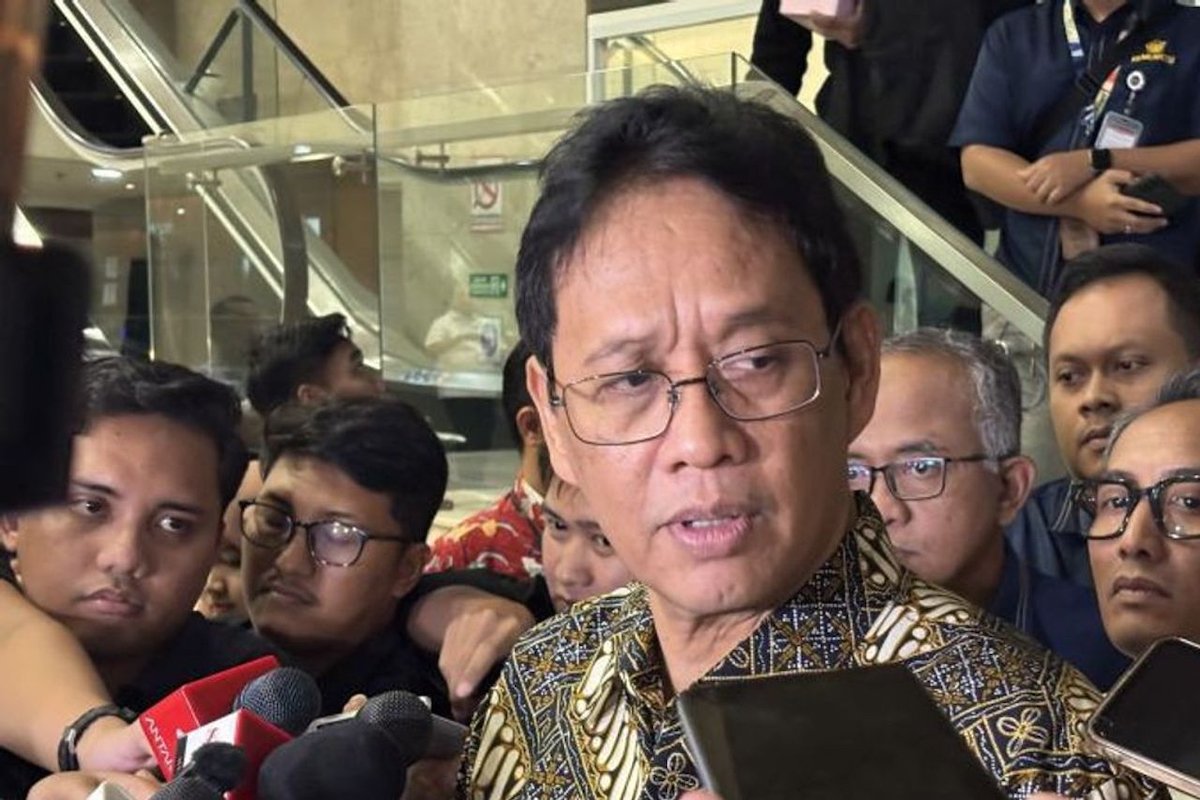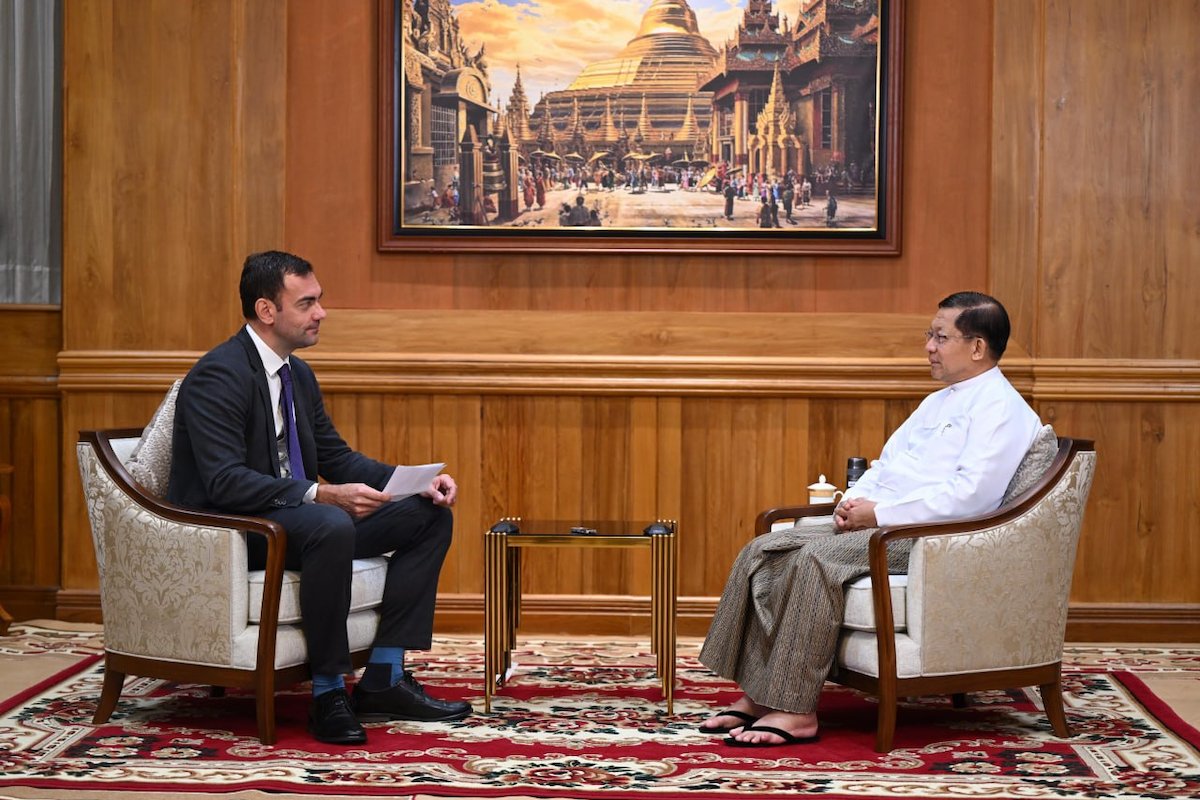
When Adam Castillo walked free after more than three months in detention, it was easy to read his release as a concession by Myanmar's junta. Castillo, a former president of the American Chamber of Commerce in Myanmar who had lobbied for sanctions relief in exchange for US engagement, was freed in the same week that Time magazine published an interview with Senior General Min Aung Hlaing in Naypyitaw. The coup leader, who now styles himself president after the sham elections of December and January, told the magazine he had treated Aung San Suu Kyi “extremely leniently” and urged Washington and other Western capitals to rethink their sanctions.
The interview was his first with a major Western outlet since the 2021 coup. To its credit, Time did not soften the picture: it described the military dictatorship in plain, critical terms. But the very fact that the interview happened carried more weight than its content. A general who toppled a democracy and still struggles for legitimacy at home and abroad was presented as “president” in one of America's best-known publications.
The Time exclusive did not occur in a vacuum. Since July 2025, the junta has retained the Washington lobbying firm DCI Group on a US$3 million-a-year contract to burnish its image. Foreign Agents Registration Act filings this year showed Roger Stone, a longtime confidant of Donald Trump, receiving $50,000 a month through that arrangement to help “rebuild” relations with Washington. How those funds have been used to coax favorable coverage in US outlets remains unclear, but the release of an American citizen and the interview are pieces of a wider Naypyitaw campaign to reopen doors in Washington.
Pressure without disengagement
Since the coup, Washington has taken meaningful steps to punish Myanmar's military. The BURMA Act passed with bipartisan support, and sanctions and assistance programs for the anti-coup opposition expanded. Yet the resistance still has not received some of the non-lethal technology it has repeatedly sought, including advanced early-warning systems against airstrikes and broader protective equipment.
Diplomatically, Washington lowered its in-country representation below ambassador level. Commercially, however, the relationship never disappeared. Some American brands remain visible, and trade continues even though government-to-government engagement under the Trade and Investment Framework Agreement is suspended. In 2025, US-Myanmar trade in goods and services still totaled $1.1 billion despite the sanctions.
The deeper issue is geography. Myanmar borders China, links Southeast Asia with South Asia, and opens onto the Bay of Bengal and the Indian Ocean – a location whose resources and trade routes matter to both Beijing and Washington. American policy, then, cannot be read through the lens of democracy and human rights alone.
That tension between strategic interest and democratic principle dates to the Cold War. In the early 1950s, the CIA backed Kuomintang remnants operating from Shan State against communist China, creating a sovereignty crisis for then civilian leader U Nu's government and driving Burma to the United Nations. Washington later pressed the KMT forces to leave, but the episode showed how quickly and easily Burma could become part of a larger strategic contest.
After Ne Win seized power in a 1962 coup, relations with the US cooled but did not disappear. President Lyndon Johnson received him at the White House in 1966. A declassified State Department memorandum described the visit as a “gesture of support” for Burma's neutrality and independence, while noting that a small US military-assistance relationship had continued since 1958.
Then came the drug war. Under a 1974 narcotics-control agreement, Washington supplied six Bell 205 helicopters to Burma, officially for drug suppression. The program expanded over the following years and ended after the military's bloody crackdown on democracy protesters in 1988. The helicopters were not simply a symbol of cooperation: accounts from the period say they were also used in military operations against ethnic armed groups fighting for autonomy.
The pattern changed after the 8-8-88 crackdown. Washington imposed sanctions on the SLORC and later the SPDC, the successive military juntas, while the Drug Enforcement Administration kept a narrow channel of cooperation open. A 1998 State Department report said the DEA shared intelligence and carried out joint investigations with Burmese counternarcotics authorities. The same report noted that the country's drug-control apparatus was effectively under the Directorate of Defense Services Intelligence, then headed by spymaster Khin Nyunt.
There was no full normalization and no material aid or training at that stage, but operational cooperation endured. After political reforms began in 2012, those channels quickly widened. By 2015, the Obama administration had issued a national-interest waiver allowing counternarcotics assistance and direct engagement with Burmese police.
From armed struggle to reform
The 1990s also brought another kind of American influence. Gene Sharp, the scholar of non-violent resistance, worked with Burmese activists on the Thai border and wrote “From Dictatorship to Democracy” at the request of Burmese exiles. His ideas later traveled far beyond Myanmar.
By the 2000s, Western support had increasingly shifted toward civil society, humanitarian work, capacity building, and NGO-based politics rather than armed struggle. Among many border-based activists, that shift changed the character of the opposition: it strengthened the non-violent political space but did not dislodge a military that remained strong on the battlefield and well positioned geopolitically.
Then, in what became known as the reform era, Washington shifted course. After the 2008 Constitution and the 2010 election, Washington moved from isolation toward what some called constructive engagement. That path ultimately led to the lifting of most sanctions and a wave of investment that ended with the 2021 coup.
Today, the junta's overtures to Washington are part of a broader effort to break its isolation, as seen in its growing axis with Russia and its failed UN gambit. But the US response remains caught between strategic interests and democratic principles. The release of Castillo and the Time interview suggest that Naypyitaw believes it can exploit that tension. Whether Washington will hold the line or drift back into engagement remains an open question, one that will shape not only Myanmar's future but the wider Indo-Pacific balance.