Myanmar's protracted internal conflict, spanning nearly eight decades, is entering a potentially decisive phase. A significant realignment among opposition forces is presenting the military junta with its most coherent and formidable challenge in generations.
A Fractured History Gives Way to Coordination
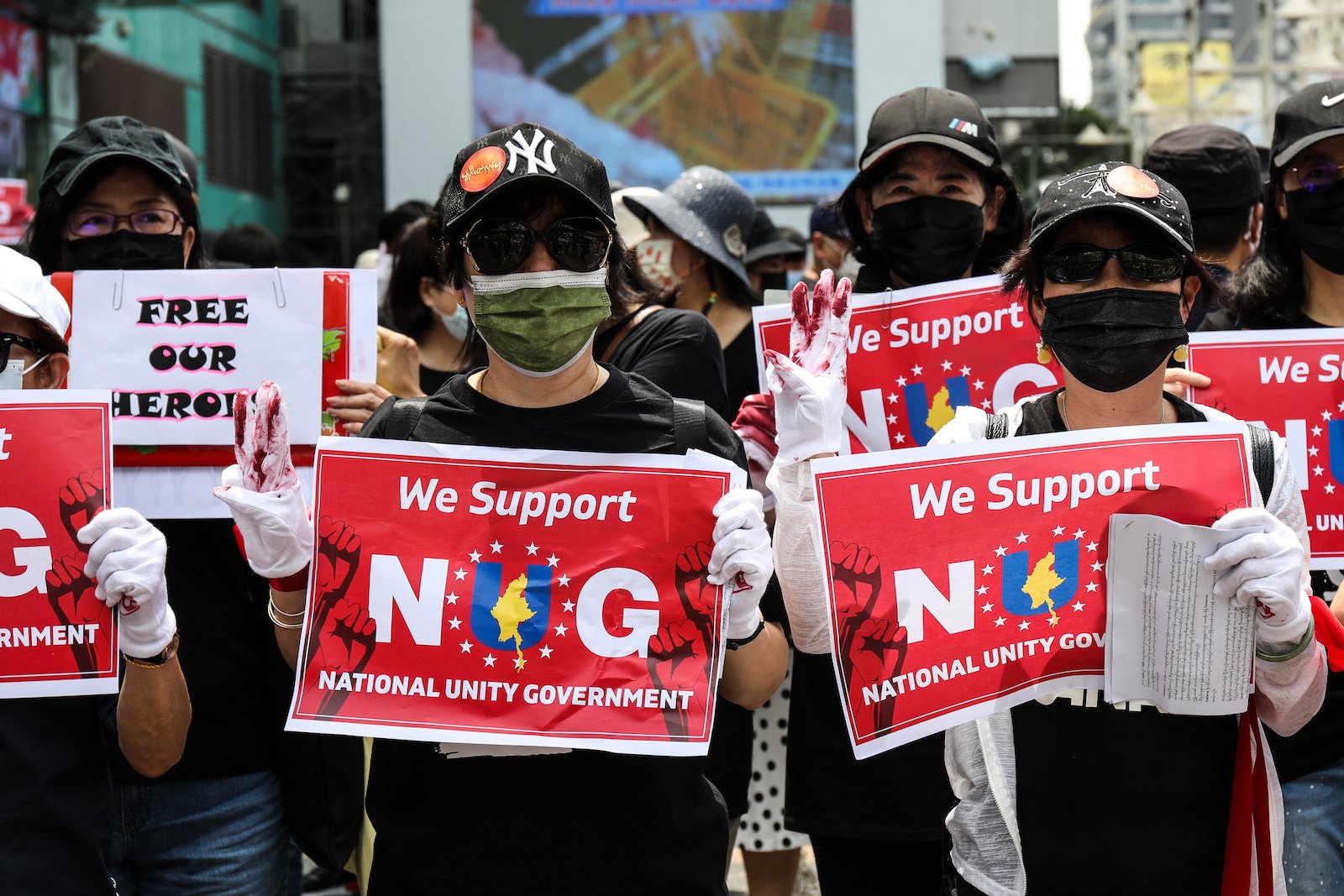
For most of its long history, Myanmar's civil war has been defined by fragmentation. Dozens of ethnic armed organizations have fought the central state, largely independently, from their respective regions. The military's seizure of power in February 2021, ousting the civilian government led by Aung San Suu Kyi, initially did little to change this dynamic. The democratic resistance, embodied by the National Unity Government (NUG), held moral authority but limited military power, while the battle-hardened ethnic armies controlled territory but pursued their own strategic goals.
This longstanding weakness is now being addressed through the formation of the Steering Council for the Emergence of a Federal Democratic Union (SCEF). This coalition brings together major ethnic armed groups—including the Kachin Independence Organization, Karen National Union, Chin National Front, and Karenni National Progressive Party—with the NUG. Reports also indicate the participation of the powerful Three Brotherhood Alliance, which comprises the Arakan Army, the Ta'ang National Liberation Army, and the Myanmar National Democratic Alliance Army.
The SCEF's structure is critical: it grants operational military authority to the ethnic groups while establishing a formal platform for joint planning. This represents a pragmatic recognition that building a federal democracy must begin with how the resistance itself is organized, not merely remain a post-victory promise.
The Junta's Precarious Position
Facing this newly unified front is a State Administration Council, as the junta styles itself, that is increasingly beleaguered. Senior General Min Aung Hlaing's regime has failed to consolidate control since the 2021 coup, suffering significant battlefield losses and enduring near-universal international condemnation. Its recent efforts to stage a sham election and have Min Aung Hlaing assume a civilian presidency are widely seen as political theater designed to create a veneer of legitimacy.
The regime's survival is underpinned by a network of pariah state support. Iranian oil shipments sustain its air force, while drone technology flows between Naypyidaw and Tehran. Iran's deepening regional engagements thus have a direct impact on Southeast Asian security. Meanwhile, China is assisting Myanmar's Central Bank in building parallel financial infrastructure to circumvent U.S. sanctions, protecting Beijing's substantial investments in the country.
This reliance on external patrons like China, Russia, and Iran highlights the junta's isolation and the geopolitical dimensions of economic decoupling playing out in conflict zones.
Proving the Power of Unity: Operation 1027
The potential of coordinated resistance was vividly demonstrated in late 2023 by the Three Brotherhood Alliance's 'Operation 1027'. This offensive rapidly seized large areas of northern Shan State, overrunning dozens of military outposts and marking the Tatmadaw's most significant territorial losses since the coup. The success proved that a unified military effort could achieve what fragmented campaigns could not.
The inclusion of the Arakan Army in the new alliance is particularly consequential. This group has established de facto control over much of Rakhine State on Myanmar's western coast, even creating direct channels with neighboring Bangladesh. Its control extends to areas hosting critical Chinese infrastructure, including the Kyaukphyu deep-sea port and pipelines that carry oil and gas from the Bay of Bengal to China's Yunnan Province.
By successfully pressuring junta forces around these Chinese-funded projects, the Arakan Army has demonstrated that Beijing's patronage of the military regime has practical limits. Well-organized forces with local support can challenge Tatmadaw control even at the heart of China's strategic Belt and Road Initiative investments.
A Long Road Ahead
Historical precedents advise caution. The junta will actively seek to exploit any divisions within the SCEF, and the challenges of governing a post-conflict, federal Myanmar are immense. However, the current moment presents a unique convergence: a weakened military regime stretched thin across multiple fronts, responsible for a collapsing economy, versus a resistance movement that is more organized, experienced, and politically aligned than at any point since the coup.
The formation of the SCEF is not a spontaneous development but the result of years of deliberate negotiation by seasoned political and military leaders. Its existence suggests that the diverse forces opposing the junta understand that their best chance for victory—and for building a stable, democratic federal union—lies in sustained cooperation.
The international implications are clear. A shift in Myanmar's conflict alters security calculations across Southeast Asia, affecting neighbors from Thailand to India and challenging the interests of external powers like China. The alliance's ability to withstand pressure and maintain unity will likely determine whether Myanmar's long war finally moves toward a resolution, or descends into further fragmentation and authoritarian control.