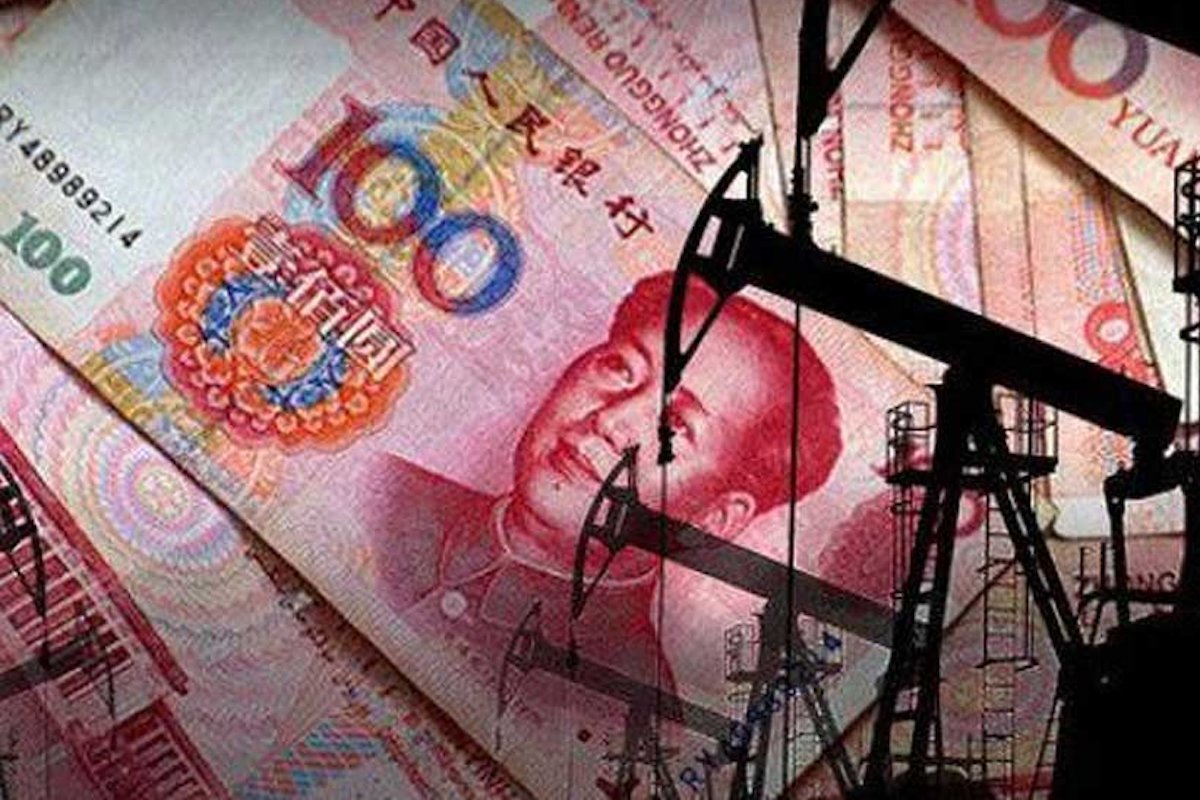
The internationalization of China's currency for settling oil and gas trades—commonly termed the petroyuan—is often framed as a slow, structural challenge to US dollar dominance. A closer examination of market mechanics reveals a different trajectory. The yuan's role in energy markets will mature not through steady, linear growth, but in sharp, crisis-driven bursts that incrementally reshape the global financial landscape.
The Mechanics of Necessity, Not Ideology
While reducing reliance on the dollar is a strategic goal for some nations, the immediate driver for yuan-based energy settlement is operational necessity under pressure. The distinction is critical. Current data shows the dollar still commanding roughly half of global payments and a dominant share of foreign reserves, with the yuan lingering in low single digits. These figures, however, capture the system's stable core, not its behavior under strain.
Energy markets exist at this volatile edge. Asia depends on the Middle East for roughly half its crude imports, with a fifth of global supply transiting the Strait of Hormuz. When that flow is disrupted—by conflict, sanctions, or shipping constraints—the primary question for buyers and sellers shifts from currency preference to transaction viability. Which currency can clear the deal?
Recent moves provide a blueprint. Indian refiners, navigating US sanctions, have settled payments for Iranian oil in yuan. Financial institutions in Africa are establishing direct yuan clearing channels to bypass dollar routes. These are pragmatic, not political, decisions. They signal that the petroyuan's growth will be episodic, tied directly to geopolitical friction points.
Crisis as Catalyst
The next significant phase could materialize within a year. A fresh disruption to Gulf energy supplies—whether from a tightening of sanctions, military escalation, or shipping constraints—would force a portion of oil trades outside long-term contracts into alternative settlement channels. In such a scenario, yuan usage would spike noticeably in specific flows and pricing behavior.
This surge would likely fade as tensions eased and dollar liquidity returned, creating an illusion of reversion. That reading would be mistaken. Each crisis leaves a residue: more counterparties willing to transact in yuan, more banks capable of intermediating in the currency, and more corporations comfortable holding yuan balances. The financial infrastructure quietly expands. Regional tensions, such as those involving Iran, directly test these alternative financial pathways and accelerate their development.
The system will not flip overnight but accumulate capacity through repetition. The result is a pattern markets are poorly prepared for: intermittent, crisis-driven surges in petroyuan usage, each establishing a higher baseline than the last.
Altering the Stress Transmission
Currency markets are moved by marginal flows. If even a small share of energy trade diverts from the dollar during a crisis, the mechanism through which financial stress transmits globally changes fundamentally. In a standard oil shock, dollar demand spikes uniformly as importers scramble for funding, hedges are placed, and banks tighten liquidity. The dollar strengthens broadly and predictably.
The existence of a parallel settlement channel like the petroyuan fractures this uniformity. While many transactions will still require dollars, a growing subset will not. Demand becomes uneven; part of the system clears through alternative channels. The effect is not a dollar collapse, but a distortion. Dollar rallies become less clean, funding pressure less synchronized, and pricing less predictable. The first real impact will be felt in market behavior during stress, not in reserve statistics.
There is a more profound second-order effect. Once a financial workaround proves effective in a crisis, it becomes embedded in standard practice. Corporate treasury functions do not revert to a single-currency model after discovering a viable alternative. They retain the option, build flexibility into contracts, and diversify settlement pathways. This is how temporary adjustments become permanent features.
The petroyuan does not need to dethrone the dollar to become consequential. It needs to function reliably when the dollar system is constrained. This threshold is lower than many assume. A protracted stalemate in Middle Eastern conflicts provides precisely the kind of enduring pressure that normalizes these alternative routes.
The New Market Reality
Within the next three years, this process should become clearly visible. Energy supply shocks will no longer produce a single, immediate surge in dollar demand. The financial response will be staggered and fragmented, complicating risk assessment and pricing for traders and policymakers alike. That fragmentation marks the petroyuan's real arrival as a systemic factor.
This evolution occurs alongside other strategic competitions, such as the US-China race to build future energy supply chains in fields like fusion. Together, they point to a financial and energy landscape where resilience is increasingly defined by having options, and where Asia's economic heavyweights are methodically constructing their own.
The petroyuan will mature through repeated episodes of geopolitical stress. Each crisis expands its practical footprint. Each period of calm obscures the underlying gain. The cycle repeats, lifting the baseline higher each time, quietly reshaping how Asia and the world pay for energy.