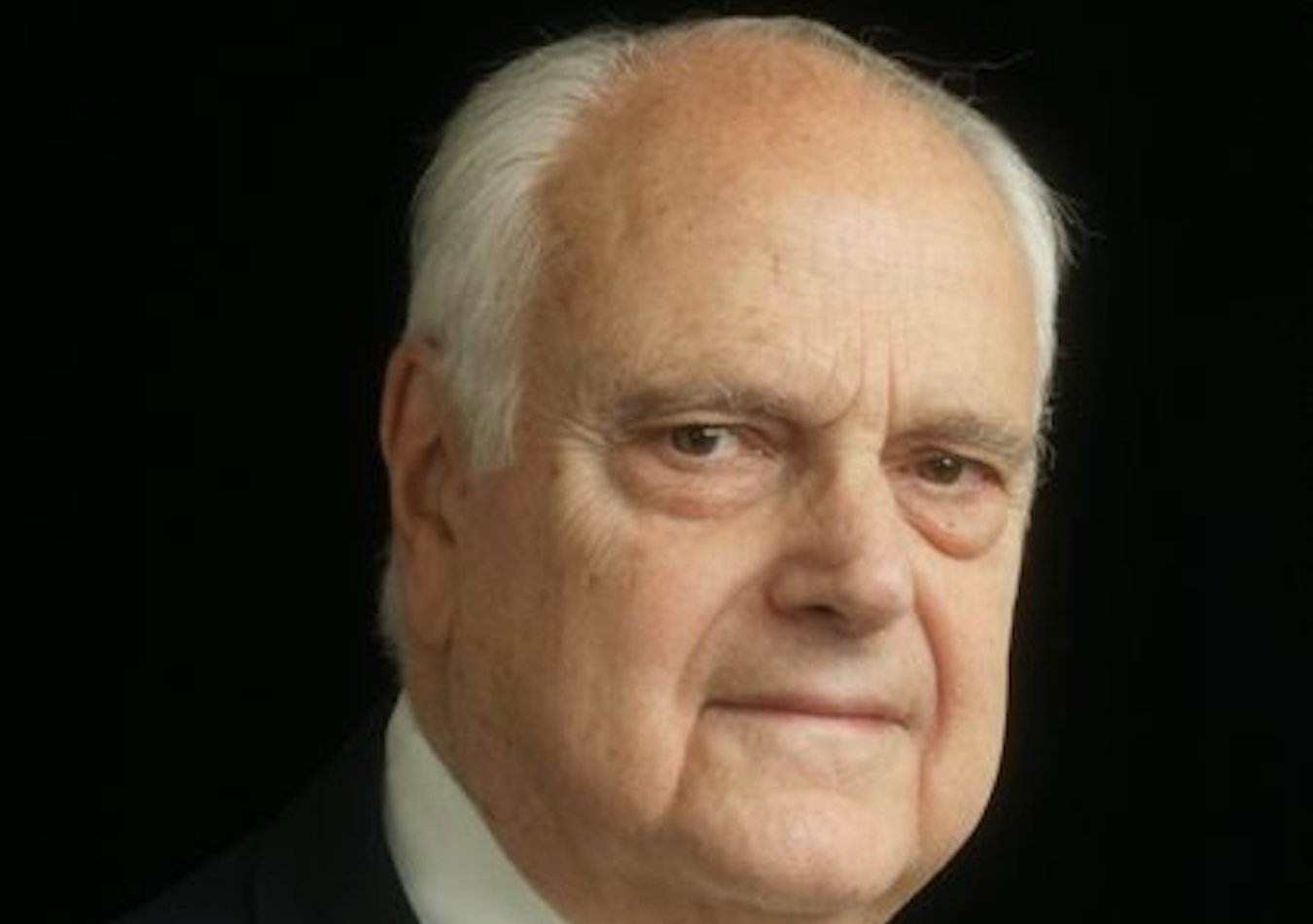
Dr. Norman A. Bailey, a distinguished economist and national security adviser who played a pivotal role in the Reagan administration's strategy to win the Cold War, died on August 18 in Greensboro, North Carolina, after a long illness. He was 95.
Bailey was part of a small, visionary team at the National Security Council that defied the prevailing Washington consensus of the early 1980s. While many experts, including Henry Kissinger, predicted a Soviet victory, Bailey and his colleagues believed that a combination of economic recovery, military buildup, and technological innovation could bring down the Soviet Union without a hot war.
In 1981, Bailey told a young colleague that the Reagan administration would achieve an economic recovery and military buildup that would topple Communism by 1987. He was off by two years, but his audacious prediction proved remarkably prescient. The Soviet Union collapsed in 1989, and the Cold War ended without a shot fired between the superpowers.
Champion of missile defense
Bailey was a strong advocate for the Strategic Defense Initiative (SDI), the missile defense program proposed by President Reagan in 1983. Although SDI was years from practical implementation, its psychological impact on Moscow was enormous. It demonstrated that the United States had the resources and will to invest in frontier military technology far beyond the Soviet Union's capacity.
Reagan, influenced by physicist Edward Teller, saw SDI as a way to shift the nuclear agenda from offense to defense. He even offered to share the technology with the Soviets, a move that helped pave the way for the Intermediate-Range Nuclear Forces Treaty in 1987.
Bailey also steered US policy through the Latin American debt crisis of 1982-1983. Fluent in Spanish and Portuguese, he recognized the strategic risks of sharply rising US interest rates and worked to prevent economic collapse in the region. His efforts anticipated the Brady Bonds debt restructuring under the second Reagan administration.
After leaving government in 1983, Bailey founded a strategic consulting firm and later returned to public service at the Office of the Director of National Intelligence from 2006 to 2007. He taught at the Institute of World Politics in Washington and the University of Haifa, sharing his deep knowledge of history and economics with a new generation of national security professionals.
Bailey was a man of remarkable erudition. He spoke five languages fluently and was the authorized English translator of Luigi Pirandello's plays, which remain in theatrical use today. His passion for Byzantine history led him to write and lecture extensively on the subject. In his 80th year, he converted to Judaism and remained observant for the rest of his life.
His death marks the passing of a key figure in a transformative era. As the world now faces new strategic challenges, from Taiwan's security dilemma to great-power competition, Bailey's legacy serves as a reminder that bold thinking and a deep understanding of history can shape the course of nations.
Bailey is survived by his wife of 25 years, attorney and epidemiologist Dr. Susan Bailey, and their family.