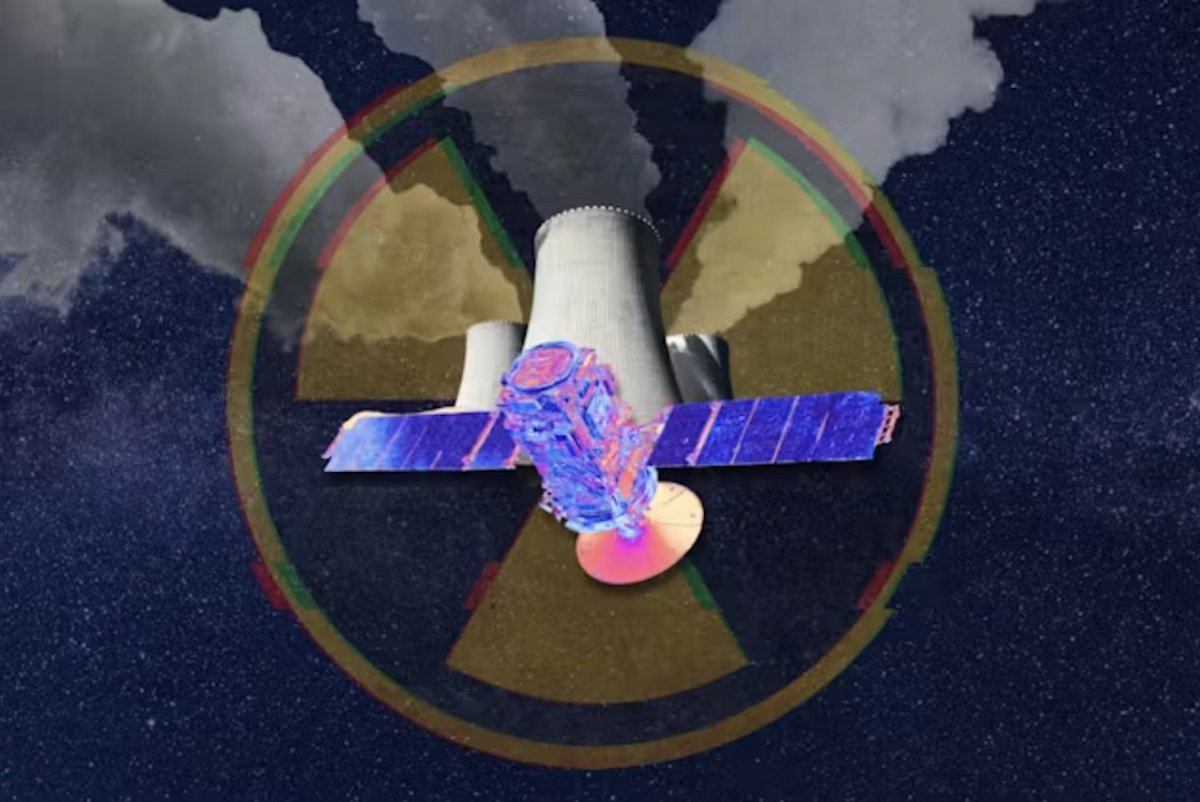
Interplanetary travel to Mars aboard nuclear-powered spacecraft is moving from science fiction to engineering reality. NASA's Space Reactor-1 Freedom mission, scheduled for launch by December 2028, is designed to explore Mars using a fission reactor for propulsion. The agency calls it "the first nuclear-powered interplanetary spacecraft." Under the Artemis program, NASA also plans to deploy a small nuclear reactor on the Moon by 2030, though lunar reactors will be far smaller than terrestrial power plants. The White House has launched a National Initiative for American Space Nuclear Power to coordinate these efforts.
The United States is not alone. A growing list of national and regional space agencies, private companies, and research institutions across Asia and the Indo-Pacific are pursuing nuclear power in space. China, Japan, and India have all announced plans for lunar bases and deep-space missions that rely on nuclear energy. This is not merely a technological competition; it is a strategic race with implications for energy security, deterrence, and international law.
Why Nuclear Power in Space Now?
Nuclear power sources in space serve different purposes. Radioisotope power systems, which generate electricity from the natural decay of plutonium-238, have powered Mars rovers like Curiosity and Perseverance, as well as the Voyager spacecraft now in interstellar space. Fission reactors, which split atoms to release heat, can be converted into electricity for lunar bases or propulsion systems. On the Moon, where a day-night cycle lasts about 29.5 Earth days and darkness stretches for two weeks, solar power alone is insufficient for a permanent human presence.
Space Reactor-1 Freedom will use a fission reactor to generate electricity for thrusters, potentially cutting travel time to Mars and reducing astronauts' exposure to cosmic radiation. The idea of nuclear power beyond Earth is not new. During the Cold War, the United States launched SNAP-10A into orbit, and the Soviet Union deployed nuclear-powered radar ocean reconnaissance satellites (RORSATs) to monitor US Navy vessels. But the scale and ambition of current plans are unprecedented.
Asia's space programs are accelerating. China's Chang'e missions have demonstrated lunar landing and sample return capabilities, and Beijing has announced plans for an International Lunar Research Station. Japan's JAXA is developing nuclear thermal propulsion concepts, while India's ISRO has outlined a roadmap for a crewed lunar mission and a space station. These efforts are part of a broader Asia's space race that challenges US dominance.
Safety Risks and Lessons from the Past
Any discussion of nuclear futures in space must reckon with past failures. In 1978, the Soviet RORSAT Kosmos 954 made an uncontrolled re-entry over Canada's Northwest Territories, scattering radioactive debris across 600 kilometers. The debris reached the traditional lands of Dene, Inuit, and Métis communities, triggering a major cleanup. No community should bear such risks again.
Launch failures pose another danger. Rockets can explode at takeoff, though space nuclear systems are designed to limit radiological consequences. Fission reactors must withstand extreme temperatures, radiation, and vacuum. Researchers at the Massachusetts Institute of Technology are studying how materials and reactor designs perform under harsh conditions. End-of-life planning also raises questions about decommissioning, disposal, and intergenerational responsibility.
These risks have prompted legal and policy responses, but gaps remain. The Outer Space Treaty of 1967 prohibits placing nuclear weapons in orbit or on celestial bodies, but it does not ban nuclear power sources. After Kosmos 954, the United Nations adopted the Principles Relevant to the Use of Nuclear Power Sources in Outer Space in 1992. These principles call for safety assessments before launch, notification and international assistance if re-entry risks arise, and recognize state responsibility and liability of launching states. Reactors should not be made "critical" before reaching their operating orbit or interplanetary trajectory.
In 2009, the UN Committee on the Peaceful Uses of Outer Space and the International Atomic Energy Agency jointly developed a broader safety framework covering launch authorization, emergency preparedness, and end-of-service phases. However, these principles and frameworks are non-binding. Safety assessments and launch authorizations remain largely matters for individual states, leaving a patchwork of domestic regulation and varying risk tolerance. The consequences of an accident could cross borders, as Kosmos 954 demonstrated.
Governance Challenges Ahead
As more public and private actors develop space nuclear capabilities, states need to strengthen multilateral governance. The current system relies on voluntary compliance, which may prove inadequate as the number of nuclear-powered missions grows. China, Japan, and India are all members of COPUOS, but their domestic regulatory approaches differ. For example, China's space nuclear program operates under state secrecy, while Japan's JAXA follows transparent safety protocols. India's ISRO has yet to publish detailed safety assessments for its planned nuclear missions.
The intersection of nuclear power and space also touches on broader security dynamics. India's nuclear buildup sharpens deterrence as Pakistan and China probe below the threshold, as our analysis has shown. Space nuclear reactors could be misperceived as weapons platforms, increasing the risk of miscalculation. The United States and its allies, including Japan and Australia, are working on norms of responsible behavior in space, but these efforts remain nascent.
Nuclear power in space offers immense potential for exploration and energy, but it also demands responsible governance. The lessons of Kosmos 954 and the Cold War should not be forgotten. As Asia's space programs expand, the region must lead in developing binding safety standards and transparency measures. The alternative is a fragmented system where accidents become inevitable, and trust erodes.



