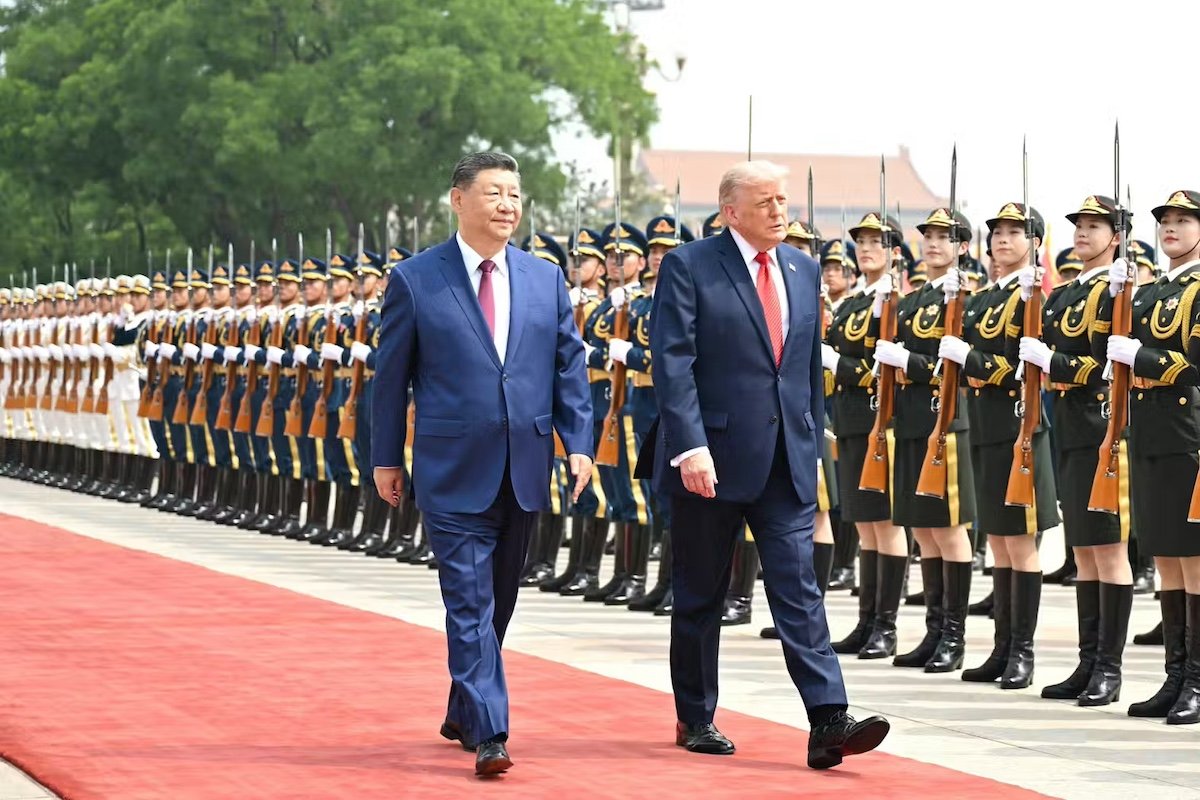
Last month, Jensen Huang, CEO of Nvidia, the world's most valuable company, boarded Air Force One in Alaska as a last-minute addition to President Donald Trump's delegation to Beijing. His mission: to sell Nvidia's H200 chips, recently cleared for export by Washington. But Beijing said no.
Instead, Chinese authorities are pushing domestic firms to adopt alternatives from Huawei and other local suppliers. The result has been dramatic: Nvidia's market share in China plummeted from 95% to essentially zero over the past year.
The summit was framed as a negotiation over what China would buy from America—planes, soybeans, chips. Yet the Huang episode reveals Beijing's actual priority: technological independence, then supremacy. Trade, markets, and profitability are secondary considerations.
China's Technological Leap
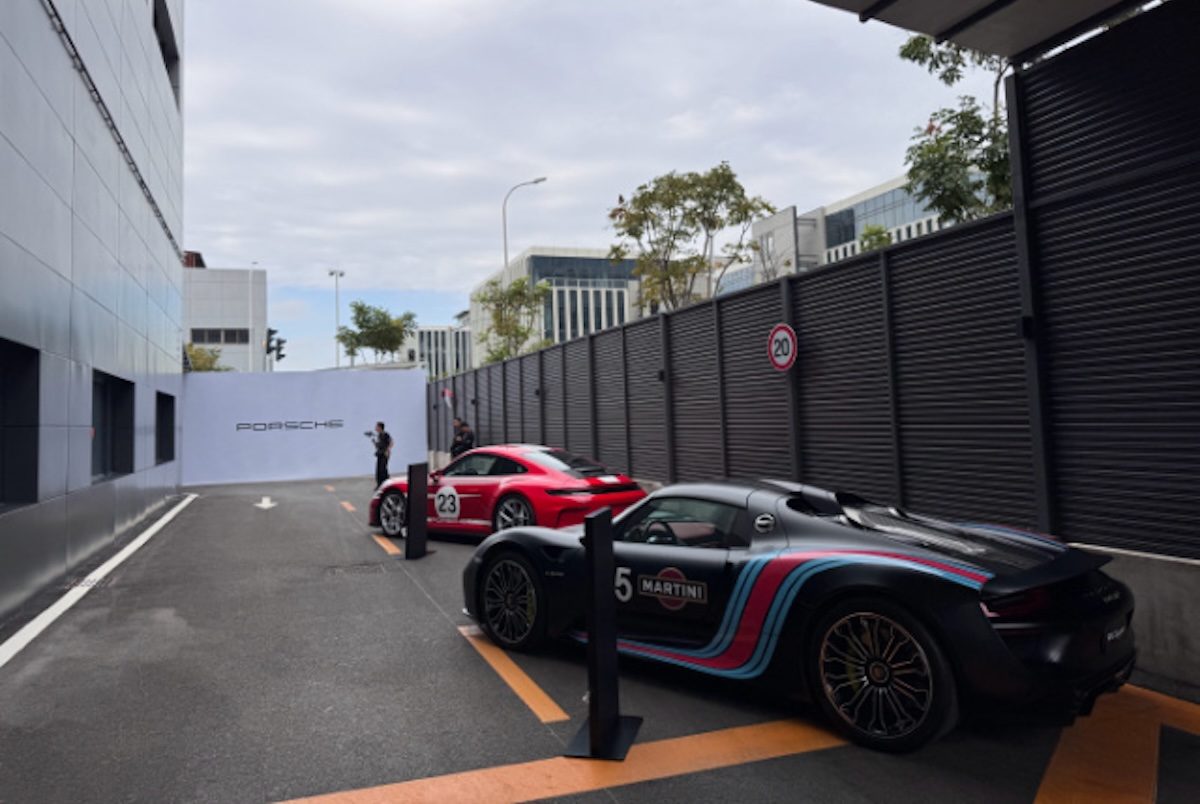
As China reaches parity and even overtakes the West in more technologies, the direction of technology transfer is reversing. Early signs are already visible. Over a third of the new molecules licensed by Western pharmaceutical companies last year originated in China. T1 Energy, which calls itself the leading US solar manufacturer, was built by acquiring China's Trina Solar factory and operates on licensed Chinese intellectual property. Ford is licensing and learning Chinese battery technology from CATL to build its Michigan plant. And Porsche just opened, in Shanghai, its first integrated R&D hub outside Germany.
For decades, the global economic order operated under a comfortable paradigm: the West would invent and China would manufacture. This is now inverting. Over the coming decade, Western companies will increasingly need to license and learn Chinese technology to remain competitive.
The scale of the shift is striking. Just last month, the Australian Strategic Policy Institute found that China now leads in 69 of 74 key technologies. China's universities now hold eight or nine of the top 10 spots for highly-cited scientific research, depending on who's ranking. The USA still dominates in aerospace and semiconductor design, but China already leads in electric vehicles, batteries, drones, and robotics and industrial automation. China recently reached parity with the European Union in pharmaceuticals, and on artificial intelligence, the performance gap between the best American and Chinese AI models has collapsed to 2.7%.
Why China Is Winning the R&D Race
Two factors are critical for research and development: the quantity of quality talent, and the speed of iteration and learning. The latter depends on the speed of experimentation and prototyping. In the realm of atoms, that relies on the speed of an industrial supply chain. Nowadays, it is two to five times faster to iterate in China compared to the USA. This was already true for consumer electronics a decade ago, but it is now increasingly true in deep tech, from novel battery chemistry to robotics to new drugs. China now has equivalently talented engineers and scientists, too, albeit they are three to seven times cheaper. So, for the same R&D budget, China is more than ten times more productive than the USA.
This is no accident. Beijing's openly stated priority is self-sufficiency in technology and what President Xi Jinping calls the "Real Economy" (Shi Ti Jing Ji), relative to what he believes is the United States' "Finance Economy" (Jin Rong Jing Ji). Xi's warning for China might as well be his critique of the US: "China's financial sector must keep to its proper role of serving the real economy and driving high-quality development; it must never shift from the real to the virtual."
Hence, STEM became the north star in China. Thirty-four percent of Chinese college students major in engineering, versus just 7% in the USA. China graduates almost five times more college engineers and scientists than the USA and twice as many STEM PhDs. China also has more than ten times more technical and vocational graduates—the technicians, machinists, and electricians essential not just to manufacturing but to technology development itself. The end result is an industrial workforce of 70 million, the largest in the world.
The Cost of Ambition
However, China's approach comes at a severe cost. Both Beijing's and local governments' incentives to prioritize production over profit have led to an economy in deep malaise. Their push for technological independence by definition builds redundancy, or overcapacity, leading to price wars and unprofitable firms. Corporate margins often evaporated in race-to-the-bottom competition between each province's tech champion. Venture-backed startup formation collapsed by roughly 99% from 2018 to 2024. Recently, China has even faced the specter of deflation.
This very friction—the causal combination of imminent Chinese technology parity and its economic malaise—is creating an arbitrage opportunity that businesses will find impossible to ignore. China's tech leaders, facing cutthroat domestic markets, are desperate to sell their innovations in the West, where margins are healthy. But as China leaps ahead, their innovators face increasingly protectionist Western policies, as well as ramping export controls from Beijing itself, and many won't be allowed to enter Western markets alone.
Thus, firms will emerge to bridge the geopolitical divide, taking the role of local partner to bring Chinese tech into Western markets through structures that proactively satisfy both governments. Western companies will likely increasingly partner with Chinese innovators not just on manufacturing but on R&D itself, especially in non-defense categories like medicine, clean energy, and advanced materials. For more on how the US is struggling to keep pace, see our analysis of US clinical trial reform.
If the West is to maintain its past leadership, it must produce more engineers, more scientists, and faster industrial capacity. In parallel, those who move past reflexive competitive fears and harness a world with much more innovative capacity will see transformational benefits. After all, would it be so terrible if China invented five more cancer cures than the West does?