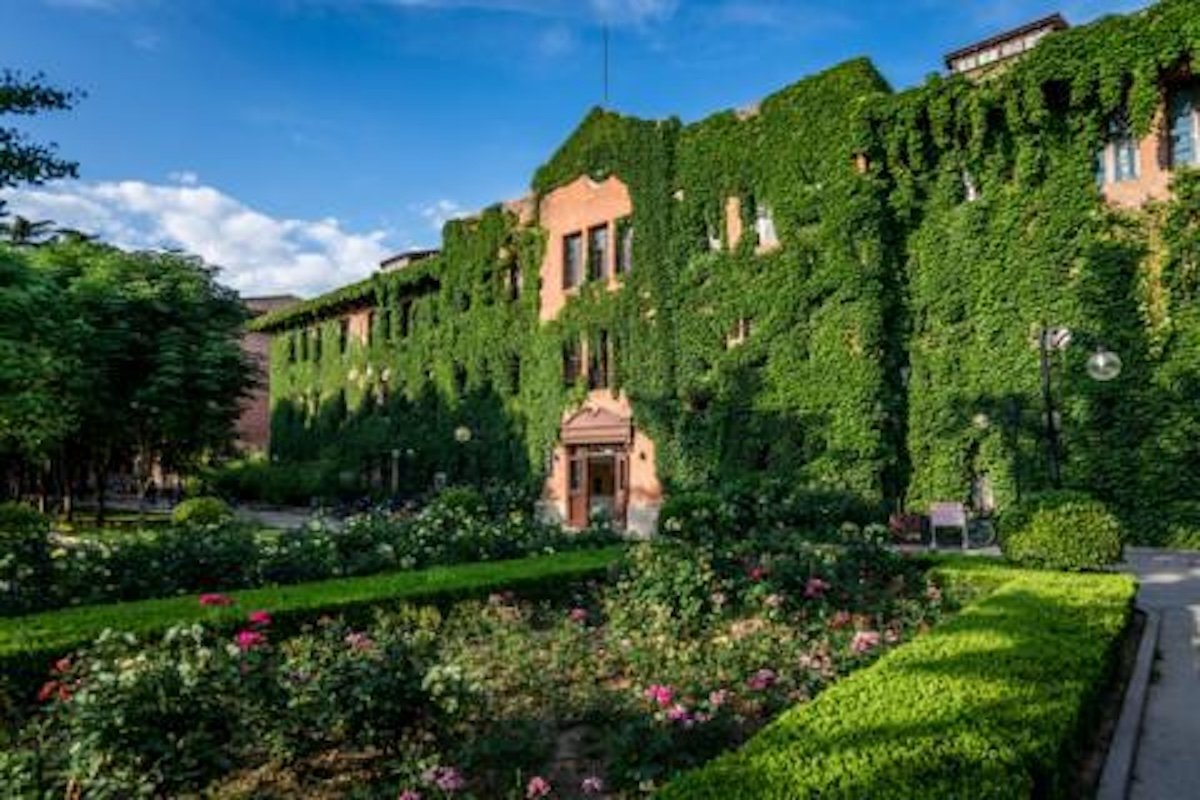
For many Hong Kong families, the path to higher education runs through familiar territory: Ivy League schools in the United States, Oxbridge in the United Kingdom, or their near peers. Chinese universities, even elite institutions like Tsinghua University in Beijing, rarely feature on the list. But one family decided to chart a different course, sending their son—a graduate of an international school in Hong Kong where English was the default language—to Tsinghua. It was a decision that raised eyebrows and sparked doubt.
“Do you have a plan B?” a family friend asked. The answer was no. The son, referred to here as Han Feizi Junior, had credentials typical of an Ivy League aspirant but little else. His Mandarin was functional at best, a product of diaspora roots rather than mainland schooling. Tsinghua’s admissions criteria for students from Hong Kong, Macau, and Taiwan are less rigorous than for mainland applicants—no gaokao, the world’s largest annual standardized test, is required—but the challenge of keeping up with China’s top students loomed large.
A recent Peking University graduate offered a sobering perspective: “We give international students a chance. But they have to prove themselves.” Non-gaokao admits often walk around campus with an asterisk, their bottom-quartile class rankings confirming the gap. The father, however, was undeterred. He told his son, “You will learn so much more at Tsinghua—not just computer science, but you’ll get the equivalent of a Chinese language and Asian studies major as byproducts.” It was a hope, not a certainty.
The Long and Winding Road
The first year was miserable. After two weeks of COVID-19 quarantine, Han Feizi Junior’s mother dropped him off at the gates of Tsinghua. The father feared they had made a horrible mistake. But gradually, things improved. Mandarin fluency grew in step changes. A secret girlfriend helped. The gaokao mutants—mainland students who had aced the exam—chilled out. He learned to work the system. Professors opened their labs, and he published his first SCI paper. By senior year, he strutted campus like he owned the place.
Tsinghua’s approach to student life is, for better or worse, paternalistic. Dorms are gender-segregated. Students have academic advisors. Sleep is enforced with a midnight lights-out policy. Hong Kong, Macau, and Taiwan students have their own administrative office with additional resources, as do international students. Counseling and mental health support are readily available. Social life revolves around student clubs, intramural sports, high-speed rail trips, and dinners with friends. Nobody is falling off a frat-house roof after a keg stand. While video games are a menace, nobody is holed up in their rooms with massive bongs for days on end.
Academically, Han Feizi Junior overcame first-year struggles by leveraging personal strengths—organization and time management—and because high-strung Tsinghua students loosened up as gaokao trauma receded. Professors were generous with undergraduate research opportunities, and he published his first AI conference paper. The gamble paid off. He graduated this past weekend, a testament to the power of taking an unconventional path.
This story resonates beyond one family. It reflects a broader trend: Chinese universities are increasingly attracting international students, including those from Hong Kong, as they invest in research and global partnerships. For families considering this route, the lesson is clear: the road may be winding, but it can lead to unexpected success. As the father reflected, “It all went according to plan. Shockingly well.”
For more on China's tech ambitions, see our coverage of Fujitsu's push for AI chip sovereignty. And for insights into Beijing's financial strategy, read about its parallel system approach.