Viktor Orbán's electoral defeat has been widely analyzed for its impact on European politics and the war in Ukraine. But for Beijing, the loss carries a more specific strategic cost: the removal of its most reliable ally inside the European Union.
For over a decade, Hungary under Orbán functioned as China's back door into the EU. Leveraging the bloc's unanimity rules on foreign policy, Budapest repeatedly blocked or watered down EU statements critical of Beijing—on Hong Kong, human rights, and trade. Orbán's government was the first European country to join the Belt and Road Initiative, and it became a manufacturing hub for Chinese electric vehicle and battery companies, including BYD, which announced a new plant in Szeged in December 2024.
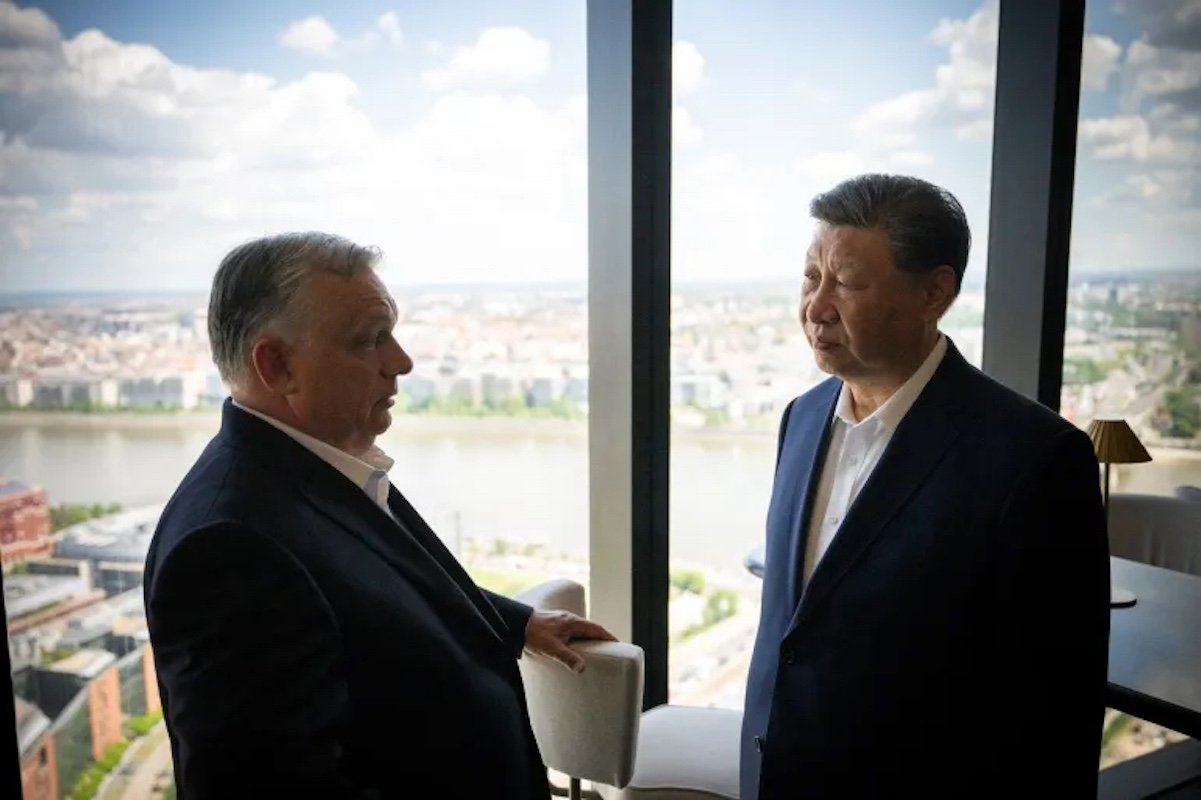
China's strategy toward Europe has long been one of divide and conquer: maintaining stable economic ties with Brussels while cultivating bilateral relationships with member states willing to deviate from the consensus. Orbán's Hungary was the linchpin of this approach, combining political alignment with deep economic interdependence. During Xi Jinping's visit to Budapest in May 2024, the two sides signed 18 agreements and elevated their relationship to an "all-weather comprehensive strategic partnership," a rare designation in Chinese diplomacy.
A Strategic Node Weakens
Orbán's departure raises an immediate question: what happens when this node of resistance weakens or disappears? The rise of Peter Magyar, who is seen as more aligned with EU mainstream positions, suggests a possible recalibration. Even incremental shifts—such as Hungary becoming less willing to block EU initiatives on China—could alter the balance of decision-making in Brussels.
One likely outcome is greater cohesion in EU policy toward China. Without a reliable veto player, efforts to coordinate responses on trade, technology, and human rights may face fewer obstacles. This does not mean the EU will suddenly adopt a uniformly hardline stance; divisions among member states will persist due to differing economic interests and strategic priorities. But the removal of an active spoiler lowers the threshold for collective action.
For Beijing, this represents a less favorable operating environment. China's investments in Hungary—more than 20,000 jobs in electric vehicles, batteries, and infrastructure—were designed to anchor its presence within the European market. If Budapest aligns more closely with Brussels, those investments could become less strategically valuable.
The shift also has implications for the broader Indo-Pacific. As the EU becomes more cohesive on China, it may be more willing to coordinate with the United States, Japan, and Australia on technology controls and supply chain diversification. This could accelerate trends already visible in the region, such as the Japan-Australia frigate deal and the US Navy's drone swarm strategy.
Orbán's defeat does not spell the end of China's influence in Europe. But it closes a back door that Beijing had used to great effect. The question now is whether China can find another entry point—or whether the EU's internal divisions will prove resilient enough to sustain Beijing's strategy.