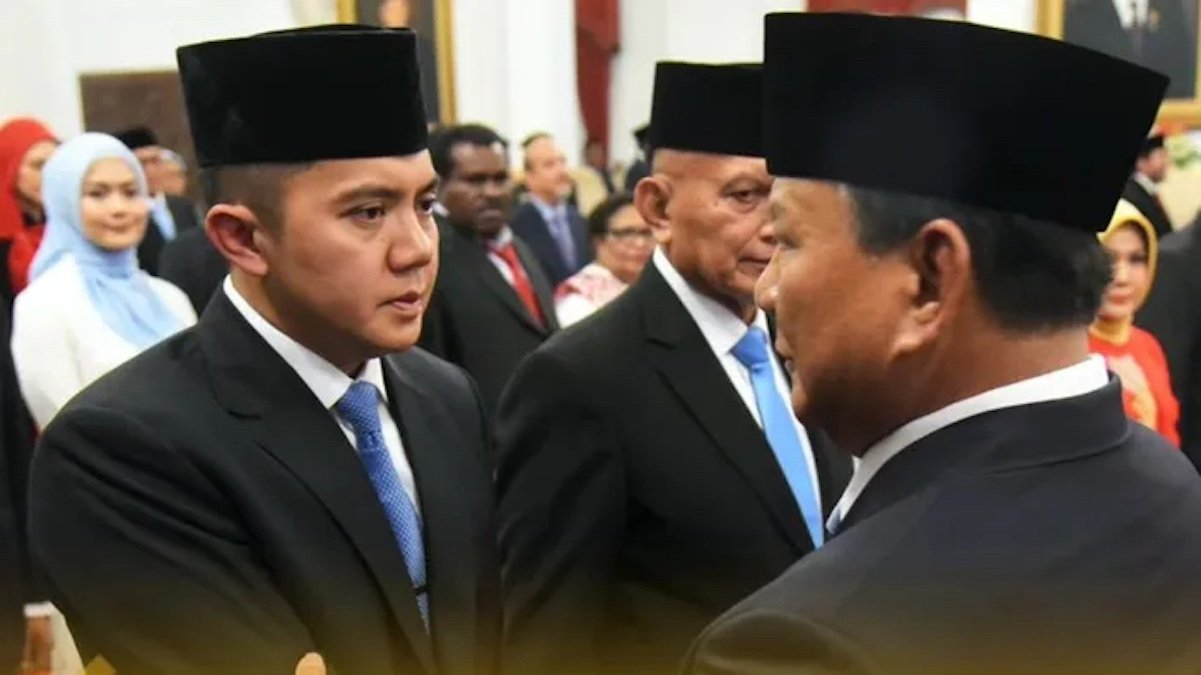
In April, a video surfaced showing Indonesian President Prabowo Subianto applauding as a birthday cake was brought out for his close personal aide, Cabinet Secretary Lieutenant Colonel Teddy Indra Wijaya, at the Four Seasons George V in Paris—a hotel where the most expensive suites cost US$30,000 a night. The clip, posted on Teddy's official Instagram account and surprisingly not deleted, quickly went viral. At a time when many Indonesians are feeling the pinch and government budgets are being slashed in the name of efficiency, the reaction was decidedly negative.
The backlash escalated on April 30 when Amien Rais, former leader of the influential Muslim organization Muhammadiyah and head of a small political party, posted a YouTube video making hot allegations about Teddy and his relationship with Prabowo. In a socially conservative Muslim country, the claims were explosive. Rais urged Prabowo to assert his warrior spirit and distance himself from Teddy. The video was swiftly deleted after the Minister of Communication and Digital Affairs, Meutya Hafid, condemned it as defamatory, but clips of its most provocative sections continue to circulate online. Rais has stood his ground, inviting Teddy to sue him over the allegations.
Elite Disquiet Over Prabowo's Leadership
Some may dismiss this as another scurrilous episode in Indonesian politics, but the fact that these allegations were made reflects growing elite unease about Prabowo's leadership. Indonesia's presidency has long had a regal element, and the 37-year-old Teddy occupies the often unfortunate role of royal favorite—someone whose trusted personal relationship with the de facto monarch has propelled them to power and influence far beyond their usual status, sparking resentment.
Prabowo rose to power in 2024 on promises of strong economic growth, predicting 8% GDP expansion that would fund social programs like free school meals and elevate Indonesia's global standing. Instead, in 2025, growth has remained stubbornly around 5%, government revenues have fallen, and cost-of-living issues are biting. Sweeping cuts to departmental budgets to free up money for the school meals program have ruffled bureaucratic feathers, while Indonesia's oligarchs face mass confiscation of land allegedly acquired corruptly and pressure to subscribe to “Patriot Bonds” at 2% interest. In August, the country saw its worst riots since 1998, when the dictatorial President Suharto—Prabowo's former father-in-law—was forced to step down.
Being too critical of the president carries significant risks. With little real opposition in parliament, former vice president Jusuf Kalla had become an unofficial spokesman for loyal criticism. Last month, he was suddenly reported to the police for alleged blasphemy over anodyne comments in a speech to university students. Other critics have been jailed and then showily granted presidential pardons. But even if they won't voice it publicly, many in elite circles feel the country is adrift and blame Prabowo's leadership style.
The president, many find, is hard to reach, especially for those bearing bad news or unwelcome views. Access is governed by a tight-knit circle of young male aides, hand-picked and patronized by Prabowo. Teddy is the most prominent of these. A promising young officer in Indonesia's military, he served as an aide to former president Joko Widodo and then from 2020 to Prabowo, then the defense minister. When Prabowo assumed the presidency, Teddy's professional trajectory went meteoric, raising eyebrows along the way. He was appointed Cabinet Secretary—a position usually reserved for veteran political wranglers—and was promoted from major to lieutenant colonel in a process that contravened military regulations governing promotions.
This rise would have always raised hackles. Combined with his status as gatekeeper to presidential access at a time of growing disquiet about the country's leadership, plus alleged personal lines of attack and attitudes towards him in some quarters, the atmosphere is positively sulfurous. Malicious rumor and innuendo proliferated behind closed doors, then in internet comment sections, until finally bursting into the public domain.
Under different circumstances, such rumors might not matter. In neighboring Malaysia, Prime Minister Anwar Ibrahim has long been subjected to similar attacks by opponents, but time has taken away their sting, and his political grip is such that he has been able to shrug them off. However, in Indonesia, things are shakier. If economic conditions continue to worsen, if privileged groups—not just the poor—begin to feel squeezed, if the executive continues to be seen as out of touch, and if open criticism of Prabowo is seen as risky, then popular anger is going to settle on a soft target.
This episode also echoes broader regional trends. As global fragmentation reshapes Asia's economic future, Indonesia's internal strains could have wider implications for Southeast Asia's largest economy. Meanwhile, the contrast with other Asian leaders' handling of similar challenges—such as Japan's economic recession—highlights the varied pressures facing the region.