The recurring question in Washington — is Qatar friend or foe, ally or adversary? — reveals more about American foreign policy assumptions than about Doha itself. A generation after the Cold War and a quarter-century into the war on terror, the US still struggles to accommodate states that refuse to fit neatly into moral categories.
Qatar simultaneously hosts Al Udeid Air Base, the largest US military installation in the Middle East and the hub for operations from the Levant to the Hindu Kush, while also hosting — until recently — the political office of Hamas, opened in 2012 at Washington's explicit request. It is a major non-NATO ally and has been investigated for permissive treatment of terror financing. After Israel bombed a Doha residential building in September 2025 in an attempt to kill Hamas leaders — the first Israeli strike on a Gulf Cooperation Council state — Qatar publicly reaffirmed its partnership with the US while privately demanding to know why Washington had not restrained its closest regional ally from attacking another.
This produces op-eds asking “Whose side is Qatar really on?” The honest answer — that Qatar is on Qatar's side, as nearly all states are — is treated as evasive when it is actually the starting point for useful analysis.
Geography Dictates Strategy
Qatar is a peninsula of roughly 300,000 citizens, sitting atop one of the world's largest natural gas fields, shared with Iran, and bordered by Saudi Arabia, which blockaded it for three and a half years starting in 2017. A country in that position does not choose camps; it hedges, mediates, and cultivates relationships with every actor that might help or harm it. This is not Qatari cunning but standard operating procedure for small states wedged between giants — from the Hanseatic cities to Finland to Singapore.
What is striking is how much of Qatar's supposed double-dealing has been done at American invitation. The Taliban office in Doha that hosted negotiations for the US withdrawal from Afghanistan — Washington asked for that. The Hamas office that channeled hostage negotiations after October 7 — successive administrations from Bush to Biden used it. The back channels to Tehran, prisoner exchanges, and Gaza reconstruction architecture all run through a country the US periodically denounces for talking to the people it asked Qatar to talk to.
In realist terms, the US has outsourced its diplomatic ambiguity. Qatar performs functions Washington wants performed but does not wish to be seen performing. The cost is that Qatar maintains relationships the US finds distasteful, including with movements hostile to American interests and Israel. The benefit is a phone number to call. This is a bargain with costs and benefits that should be weighed openly, not litigated as a question of Qatari character.
Genuine concerns are not imaginary. The Qatar Investment Authority's footprint in American universities, think tanks, and lobbying firms is a legitimate subject of inquiry — not because foreign investment is sinister, but because the US is unusually casual about influence operations through legal channels. Qatari permissiveness on terror financing has improved since the mid-2010s but remains imperfect, per Treasury assessments. Al Jazeera Arabic's coverage of Hamas has at times been hard to distinguish from advocacy. None of this is dispelled by calling Qatar an ally; none justifies calling it an enemy.
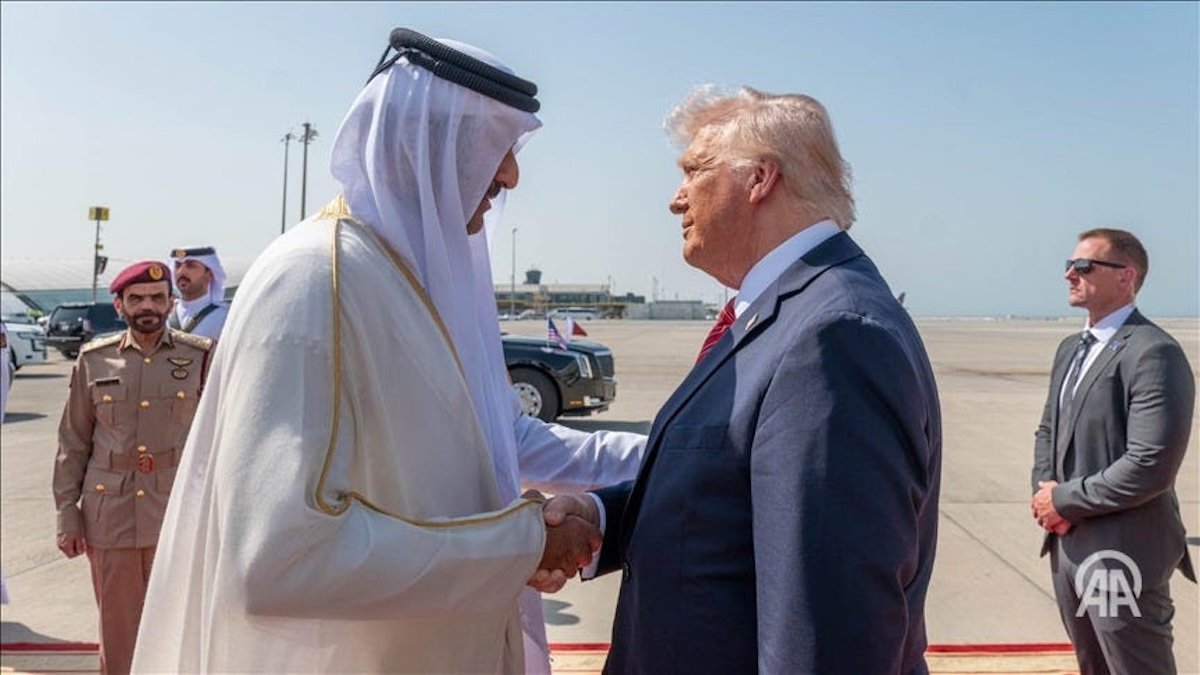
The right policy response is neither embrace nor rupture but defining American interests narrowly and stating redlines clearly. What does Washington want from Qatar that only Qatar can provide? Mediation with adversaries, basing rights, energy market stability, and capital. What can it not tolerate? Specific categories of terror financing, specific kinds of influence purchasing, and specific gestures of solidarity with Iran during open hostilities. The Trump administration's $1.2 trillion economic agreement suggests Washington is choosing breadth of partnership over precision about limits — a strategic judgment that should be defended as such, not laundered through the language of friendship.
Friend or foe is the wrong question because it presumes other states owe the US a posture rather than a calculation. Qatar owes a calculation, and the US owes the same. The sooner the binary is dropped, the sooner the real argument can begin: not whether Qatar is good, but whether what the US is getting is worth what it is paying. For Asian readers watching this dynamic, the lesson is clear — small states from Singapore to Bangladesh are increasingly adopting multi-alignment strategies, as noted in our analysis of Bangladesh's need for strategic multi-alignment. Meanwhile, the fragility of US military readiness, highlighted in the Iran ceasefire driven by weapons depletion, underscores why hedging remains rational for regional players.