For years, Russian officials warned that Taliban-ruled Afghanistan would become a sanctuary for extremists. Now, Moscow is signing military cooperation agreements with the very government it once denounced. The contradiction highlights a growing tension between Russia's ambitions for regional influence and its own security concerns.
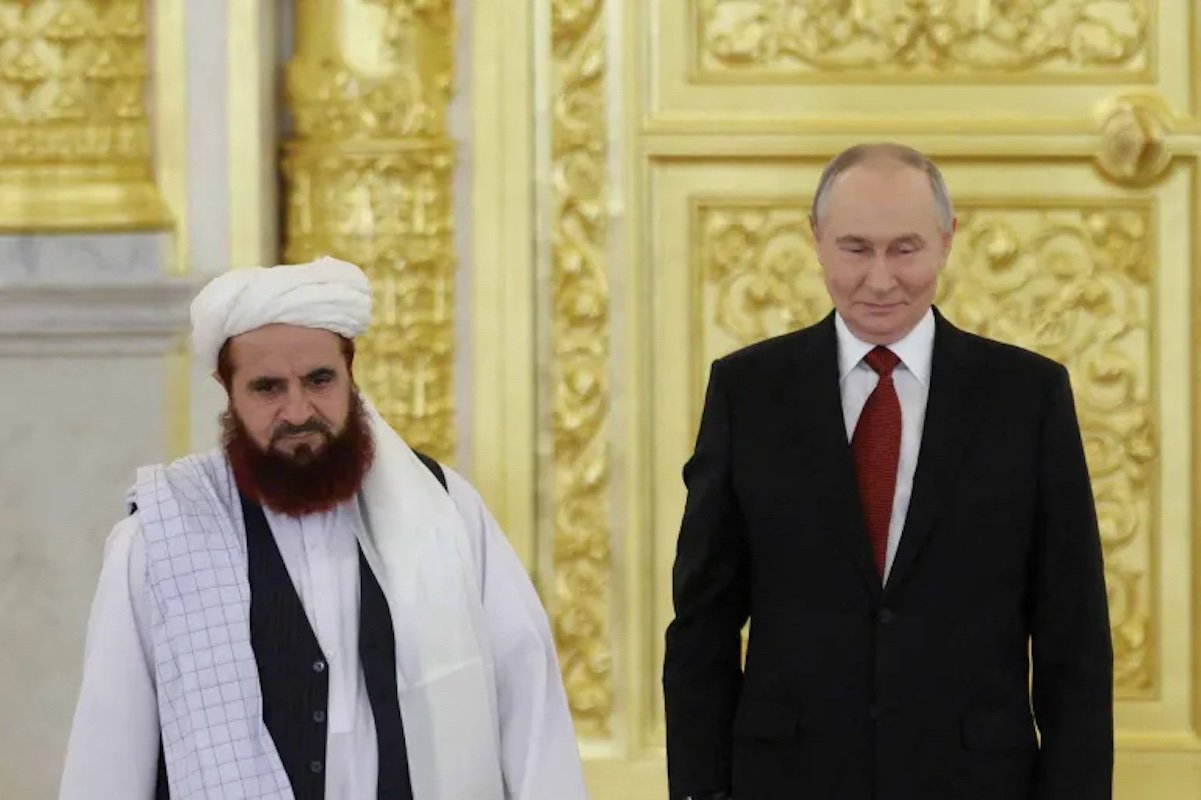
In a recent meeting in Moscow, Russian Security Council Secretary Sergei Shoigu and Taliban Defense Minister Mohammad Yaqoob formalized a military-technical cooperation pact. Though the details remain undisclosed, the symbolism is unmistakable: Russia has removed the Taliban from its list of banned terrorist organizations and recognized the Taliban government in 2025. These steps go beyond mere political engagement; they signal Moscow's intent to integrate Afghanistan into its broader Eurasian strategy.
Geopolitical and Economic Drivers
Russia's pivot to the Taliban is not solely about counterterrorism. The withdrawal of U.S. forces from Afghanistan created a vacuum that regional powers are eager to fill. For Moscow, Afghanistan sits at a strategic crossroads linking Central Asia, South Asia, and the Middle East. Influence in Kabul offers leverage across multiple theaters.
Economic calculations are equally compelling. Bilateral trade exceeded $530 million in 2025 and continues to grow. Discussions on infrastructure, energy, transport connectivity, and mineral development have accelerated. Russian policymakers increasingly view Afghanistan not as a peripheral security problem but as a potential component of their wider Eurasian integration strategy.
The Trans-Afghan Corridor is a key project, aiming to connect Central Asia to Pakistani ports via Afghan territory. Russian planners see it as an extension of broader Eurasian transport networks, with projected freight volumes reaching several million tonnes annually. Such routes help Moscow diversify trade and reduce dependence on Western-controlled corridors, especially amid sanctions and geopolitical fragmentation.
Afghanistan's untapped reserves of copper, lithium, and other critical minerals add to its appeal. While Russia has its own mineral wealth, securing influence over extraction projects offers both economic opportunities and strategic advantages in a competitive global market.
Moscow also wants to ensure that post-American Afghanistan does not become exclusively dependent on Chinese economic power. Beijing's investments and connectivity initiatives in Afghanistan are expanding, but Russia aims to remain an indispensable political and security actor. The goal is not to compete directly with China but to prevent any single external power from monopolizing influence across the heart of Eurasia. This balancing act is part of a broader effort to maintain relevance in the evolving Eurasian order, a dynamic explored in China and Russia: A Strategic Partnership Strained by Mutual Suspicion.
The Security Paradox
Yet the deeper Russia becomes involved in Afghanistan, the harder it becomes to reconcile engagement with its own security assessments. Days before the military agreement was signed, senior Russian officials publicly warned about the deteriorating terrorist landscape. Federal Security Service Director Alexander Bortnikov noted that Islamic State-Khorasan (ISIS-K) was actively recruiting across Central Asia and among migrant communities linked to Russia. Shoigu separately stated that between 18,000 and 23,000 militants affiliated with more than 20 extremist organizations remain active inside Afghanistan.
These warnings align with repeated assessments by the United Nations and regional security organizations documenting the continued presence of ISIS-K, al-Qaeda, Tehreek-e-Taliban Pakistan, the Islamic Movement of Uzbekistan, and other groups operating from Afghan territory. Moscow apparently believes that engagement offers the most practical means of managing these threats. In the Kremlin's view, the Taliban remains the only force capable of preventing a complete security vacuum and limiting the expansion of ISIS-K. International isolation has produced few positive results, and a collapse of Taliban authority could generate even greater instability across Central Asia.
However, Russia's strategy rests on an uncomfortable assumption: that the Taliban can simultaneously serve as a partner in countering extremism while governing a territory that continues to host a broad ecosystem of militant organizations. While the Taliban has shown determination in confronting ISIS-K, it has been far less successful in addressing wider militant networks that concern neighboring states, including China.
Moscow's engagement also grants the Taliban greater international legitimacy despite persistent concerns over militant activity. This dynamic echoes historical patterns where great powers have found themselves entangled in Afghanistan's internal conflicts, often with costly consequences. As Russia deepens its involvement, it risks repeating the mistakes of previous interventions, where strategic ambitions collided with the harsh realities of Afghan politics and security.