Russia is pursuing a delicate balancing act in Central Asia: it extends diplomatic recognition to the Taliban while simultaneously arming Tajikistan, the Taliban's northern neighbor. This dual approach, which Moscow hopes will secure its influence in Kabul and reassure its Central Asian allies, is increasingly difficult to sustain.
In July 2025, Russia became the first nation to formally recognize the Taliban government, a diplomatic milestone that opened channels for counterterrorism cooperation and economic engagement. Yet just months later, Moscow is rushing military equipment and border technology to Tajikistan through the Collective Security Treaty Organization (CSTO), the Russian-led military alliance.
Security commitments vs. diplomatic outreach
On October 16, Russian Foreign Minister Sergey Lavrov reaffirmed Moscow's pledge to supply Tajikistan with weapons, military equipment, and border-protection technology via the CSTO. A week later, CSTO officials outlined a timetable: Russia, Kazakhstan, Kyrgyzstan, and Belarus would deliver initial shipments before the end of 2026, as part of a five-year border-security program approved in November 2024.
CSTO Secretary General Taalatbek Masadykov stressed that the effort was not aimed at Afghanistan. The distinction is crucial: Moscow wants to strengthen Central Asia's frontier defenses without alienating Kabul. But the question remains whether Russia can honor its security commitments while fighting a prolonged war in Ukraine and cultivating closer ties with the Taliban.
Afghan border tests
Tajikistan shares more than 1,300 kilometers of mountainous border with Afghanistan, a frontier marked by remote valleys, rough terrain, and limited surveillance infrastructure. These vulnerabilities became starkly evident in November 2025, when two attacks launched from Afghan soil killed five Chinese nationals in Tajikistan. Beijing subsequently urged Chinese businesses and personnel to leave the affected areas.
The attacks underscored risks beyond national security. Chinese investment, transport links, and infrastructure projects all depend on stability along a frontier where militants and traffickers remain active. Russia, which maintains a substantial military presence in Tajikistan, has long cast itself as Central Asia's chief security guarantor.
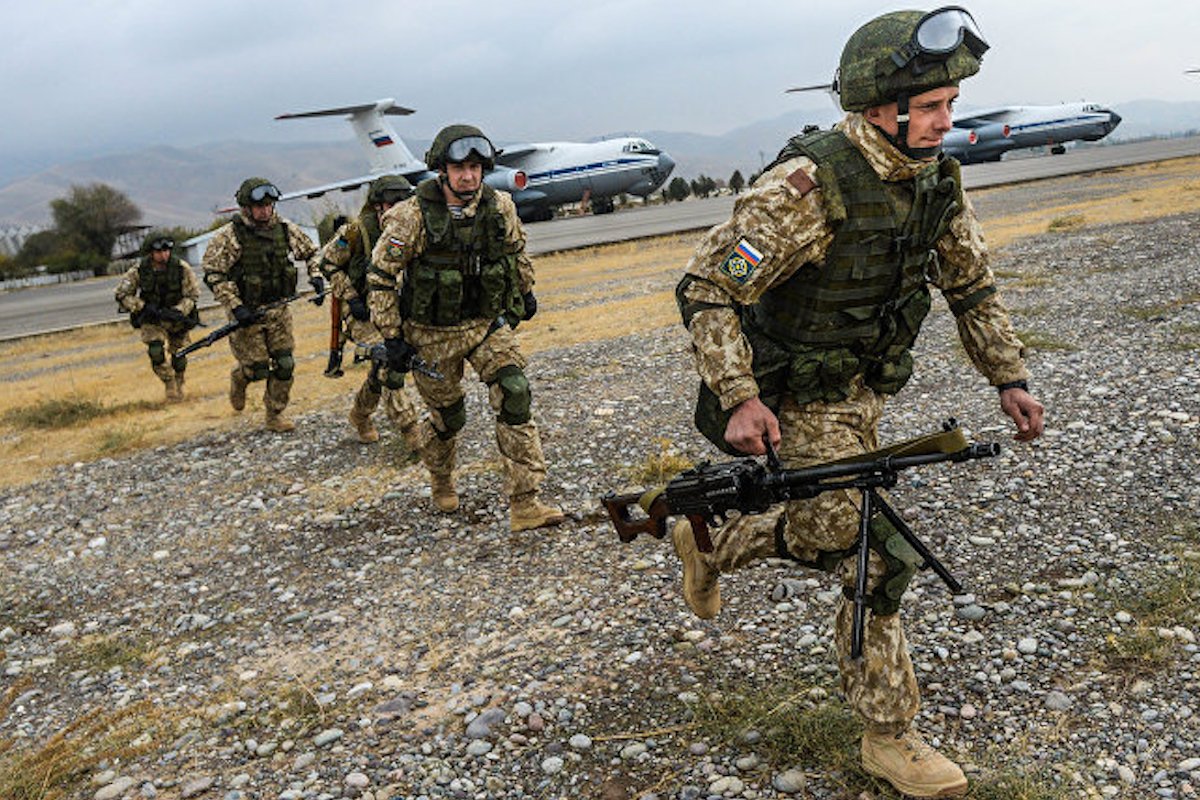
The CSTO's Cobalt-2026 exercises, held in Tajikistan from October 18 to 23, involved special-purpose units rehearsing operations against armed groups and criminal networks. But military drills cannot demonstrate whether border forces possess the intelligence, surveillance technology, and sustained operational support needed to respond to a real attack—a distinction that increasingly matters to Moscow's standing in the region.
Access, not security
Recognition of the Taliban provided Moscow openings to deepen counterterrorism cooperation and expand economic engagement. Yet diplomatic access has not erased Russia's security concerns. At a conference this month, Lavrov warned that militant groups maintained positions in Afghan areas bordering Central Asia. He called the Islamic State Khorasan Province (ISKP) a major threat and alleged that militants were trying to cross borders disguised as civilians.
These are Russian official assessments, and the extent of militant infrastructure and infiltration is difficult to verify independently. Taliban officials say they are fighting ISKP and reject allegations that Afghanistan threatens its neighbors. In August, Taliban spokesman Zabihullah Mujahid disputed the CSTO's security concerns, calling its underlying information unreliable.
Moscow thus faces a practical problem: recognition facilitates communication with Kabul, but it does not guarantee effective intelligence sharing, border enforcement, or cooperation against transnational militant networks. Bolstering Tajikistan's defenses hedges against these uncertainties, but the challenge is to turn diplomatic access into meaningful security cooperation without eroding the confidence of Russia's Central Asian allies.
China changes the equation
China's growing security footprint in Tajikistan is also testing Russia's traditional role in the region. In March, Tajikistan approved a Chinese-funded project to build nine border facilities along the Afghan frontier, including surveillance and communications infrastructure meant to strengthen Tajik border forces. The initiative reflects Beijing's interest in protecting Chinese citizens, investments, and transportation routes from instability spilling out of Afghanistan.
Russia and China are not necessarily competing for regional power and influence. Moscow has long-standing military partnerships, while Beijing provides money, infrastructure, and technical assistance. Indeed, these roles can complement each other. But influence increasingly depends on who actually delivers. If Chinese-funded facilities improve surveillance while Russian equipment deliveries run late, Tajikistan could become more reliant on Beijing for specific security capabilities.
Dushanbe would not need to break with Moscow for this shift to happen. Diversifying security partners can slowly change the regional balance without a dramatic geopolitical realignment. China need not replace Russia militarily to expand its influence; making itself indispensable in border infrastructure and security technology could be enough. As Central Asia's strategic importance grows, Moscow's ability to balance its Taliban courtship with its security guarantees will be closely watched.