The grim reality of Russia's war on Ukraine is becoming impossible to ignore. This summer and autumn have seen a steady, alarming rise in the deliberate killing of Ukrainian civilians by Russian bombing. Mass casualty events are now a weekly occurrence, with Russian long-range weapons hunting trains, buses, and apartment blocks. This is not collateral damage; it is a strategy of terror aimed at breaking the Ukrainian spirit.
Yet the response from Europe and the United States has been shockingly muted. European leaders often speak as if this war can be settled with a simple deal with Moscow, failing to recognize that what is happening to Ukrainians today could happen to them tomorrow. For Washington, the issue is one of culpability: this rising slaughter is a direct consequence of US policy choices that have emboldened the Kremlin.
A day of horror in Dnipro
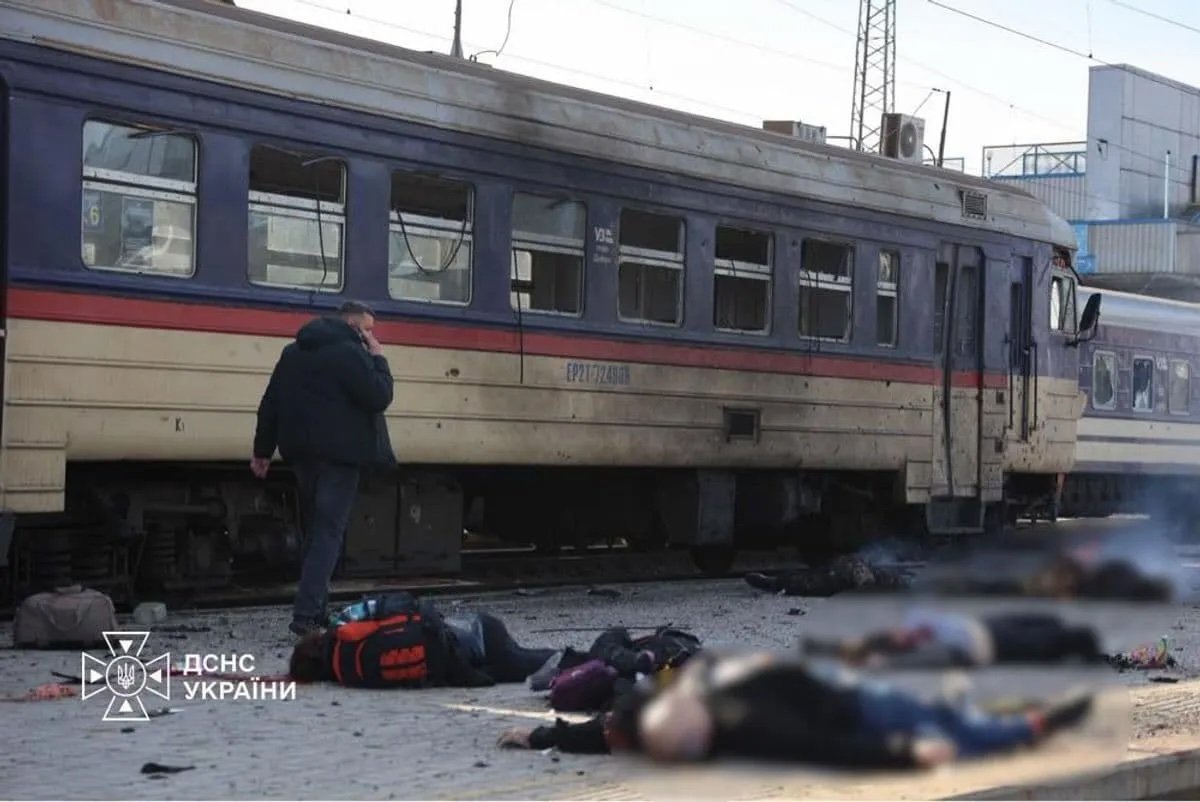
October 29 began as a sunny autumn day in Dnipro. Then, in the late morning, the calm was shattered. Ukrainian air defenses managed to shoot down three of four Russian attack drones, but one slipped through. The result was a massacre on the platform of the main Dnipro train station. Fourteen people were killed instantly, a fifteenth died later in hospital, and nearly as many were wounded, some critically. That same day, across Ukraine, 27 civilians were killed and 128 injured by Russian strikes. It was just another day of atrocity in an atrocity-laden month.
This pattern is not accidental. As the Russian military struggles on the battlefield—its summer offensive having been a costly failure—it is increasingly turning its firepower on the civilian population. The Kremlin's strategy is clear: if it cannot win on the front lines, it will try to break Ukrainian resolve by making life unbearable for ordinary people. This is a deliberate, systematic campaign of murder.
The numbers are sobering. The UN, which has often shielded Russian influence, has at least documented the carnage. Through the end of September, 2,570 Ukrainian civilians had been killed by Russian forces, most by long-range strikes. That already exceeds the toll for every year except 2022, the year of the full-scale invasion. And 2026 is on track to be the deadliest year since then. These figures do not include the indirect deaths caused by Russia's attempts to freeze Ukrainian civilians this winter by destroying power infrastructure and cutting off necessities. The elderly, the young, the sick—those who cannot help themselves—will perish in the cold.
This slaughter is a strategic choice. It is an attempt to break Ukrainian will by killing non-combatants. It is also a primal scream of rage at a people who refuse to bow to Vladimir Putin. The international community must understand this for what it is: a war crime, not a tragic byproduct of conflict.
Yet the response from Western capitals has been dangerously inadequate. French President Emmanuel Macron issued a statement after the Dnipro attack that was a masterpiece of contradiction. He called the targeting of civilians “intolerable” in one breath, then in the next urged Russia to come to the negotiating table. Offering negotiations to a regime that is committing mass murder is not diplomacy; it is appeasement. If Putin reads Macron's words, he will see them as a reward for his brutality.
The United States has been even worse. Neither the president nor the secretary of state has condemned the Dnipro attack. Instead, the president spent the week complaining about those who want sanctions on Russia, saying that “stupid people” wanted him to impose restrictions and that Putin laughed at such measures. This is a shocking abdication of moral leadership.
We are learning a harsh lesson: war crimes get you rewards. They get you pleas to come to the negotiating table. They get you a seat at the table, not a condemnation. The international community must change course before this slaughter becomes the new normal. The Ukrainian people deserve better, and so does the world.