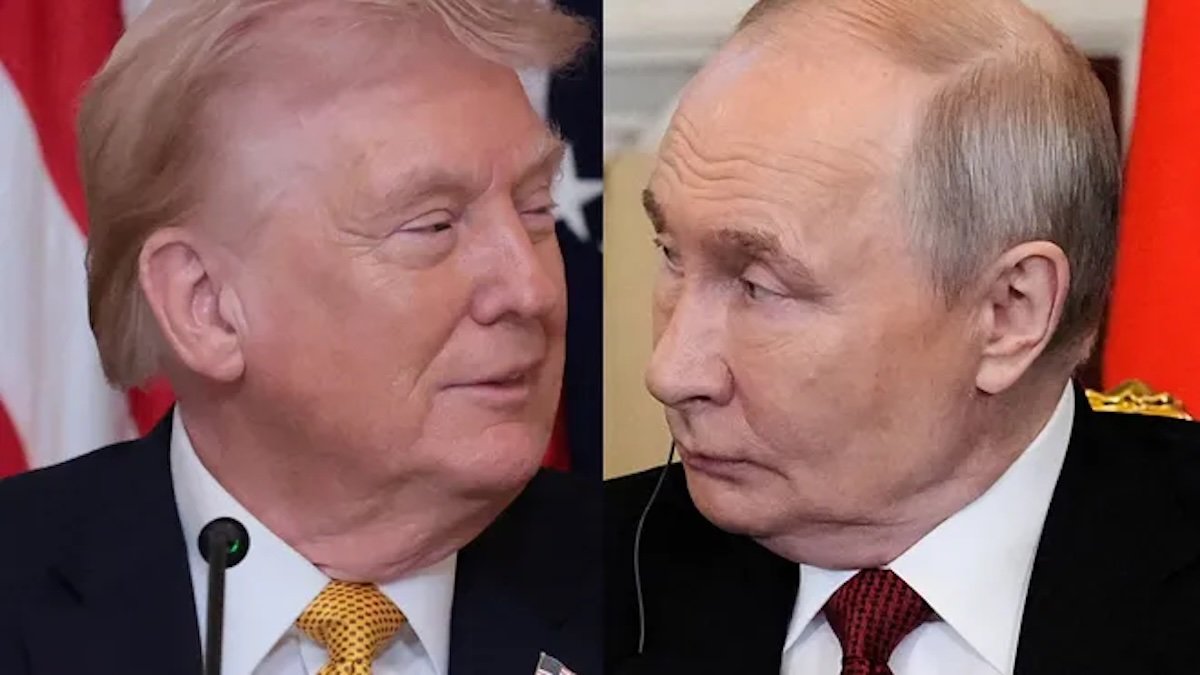
A 90-minute telephone conversation between President Donald Trump and President Vladimir Putin on April 29 has fueled speculation that Russia's Victory Day parade on May 9 could serve as the occasion for a ceasefire in Ukraine. The call, initiated by Moscow, touched on the Iran conflict and Ukraine, with Putin reportedly offering to implement a truce during the annual commemoration of the Soviet Union's victory over Nazi Germany.
According to reports from both sides, Putin noted that the current ceasefire in the Iran war had created space for negotiations. Russia formally offered its mediation services, a move anticipated after Iranian Foreign Minister Abbas Araghchi's recent visit to Moscow. The discussion then turned to Ukraine, likely at Trump's suggestion, with the U.S. president advocating for a ceasefire.
Putin's offer to use the May 9 parade as a backdrop for a ceasefire is notable. The event, which includes the Immortal Regiment march where thousands of Russians carry portraits of relatives lost in World War II, has been boycotted by Western nations since the Ukraine war began. This year's parade will feature no weapons—neither tanks nor missiles—a departure from previous years.
Victory Day in Russia is celebrated on May 9 because the German surrender was signed after midnight Moscow time, whereas Western allies mark VE Day on May 8. Historically, U.S. presidents including Bill Clinton in 1995 and George W. Bush in 2005 attended the parade, but Trump did not receive a formal invitation from the Kremlin this year. Moscow has instead invited allies such as China, Belarus, and leaders from Central Asia and Africa.
Trump's Push for a Deal
Trump has been pressing Putin to reach an agreement on Ukraine, acknowledging that Russia has effectively won the war. An article in the Moscow Times on April 30 noted that both presidents appear to agree that the obstacle to a solution lies in Kyiv and Europe. Trump's position is complicated by the U.S. Congress, which, following King Charles's speech, is inclined to increase military support for Ukraine rather than reduce it. European leaders, including the UK, have shown little interest in a peace deal, preferring continued U.S. military backing even as they criticize American policy in the Middle East.
Despite these tensions, Trump appears focused on a deal. He is reportedly asking Moscow to compromise on territories, ceasefires, and security arrangements for Ukraine, offering in return new nuclear arms agreements and economic support for Russia. The depth of the Trump-Putin engagement remains unclear, but the lengthy phone call and ongoing discussions on economic and strategic matters suggest progress.
If a deal is taking shape, the May 9 parade could be the opening Trump seeks. Some form of U.S. participation would alter the dynamic, though for now, this remains speculative. The event is a potential stage for a breakthrough, pending decisions in both the White House and the Kremlin.
This development has implications for Asia, where countries like India and Indonesia maintain complex relationships with Russia. India, for instance, recently purchased Russian R-37M missiles to counter Pakistan's China-backed air power, as reported in our analysis. Meanwhile, Indonesia's multi-alignment strategy balances U.S. military ties with Russian energy, as explored in this piece. A Ukraine ceasefire could reshape these dynamics, potentially easing Western pressure on Asian nations to choose sides.