Long before the world knew him as a brutal dictator, Saddam Hussein had a side project: film producer. After taking power in 1979, he commissioned a movie about his own past, casting his cousin to play him in The Long Days, a dramatization of a 1959 assassination attempt on Iraq's then-prime minister, Abdul-Karim Qasim.
The film was pure propaganda, presenting Saddam as a fearless revolutionary. In one scene, a young Saddam calmly cuts a bullet out of his own leg with a fire-sterilized razor blade. Journalist Said Aburish, in his 2000 biography, called this story "an exaggeration of serious proportions," noting that Saddam's doctor had only treated him for superficial wounds.
Aburish, who once consulted for Iraq's Ministry of Information, recalled how Saddam used him to hire Terence Young, the director of the early James Bond films Dr. No and From Russia with Love, to edit the production. That was just the beginning of Saddam's cinematic ambitions.
Bollywood on the Tigris
In 1983, Saddam financed Clash of Loyalties, a lavish historical epic about the 1920 Iraqi revolt against British colonial rule. The goal was to link his Ba'ath party to the anti-colonial fighters. The budget was big enough to attract Oliver Reed, who played a British intelligence officer. Reed's behavior was so disruptive—he once urinated into a wine bottle at a Baghdad restaurant and asked a waiter to deliver it to another table "with my compliments"—that Iraqi officials wanted him deported.
Co-producer Lateif Jorephani described Saddam's ambition as "Bollywood on Tigris," envisioning a state-backed film industry producing at least six patriotic blockbusters for international audiences. Domestically, Saddam's grip on media was equally tight. Before his overthrow in 2003, Iraq had just five newspapers, four radio stations, and three television channels, all state-controlled.
My interpreter on a recent trip to Iraq, Malik, remembers childhood television under Saddam. He tried to avoid a segment called "Lest We Forget," which showed footage from the Iran-Iraq war (1980-88). Skipping it meant missing part of the following 30 minutes of cartoons, including Tom and Jerry.
From monopoly to chaos
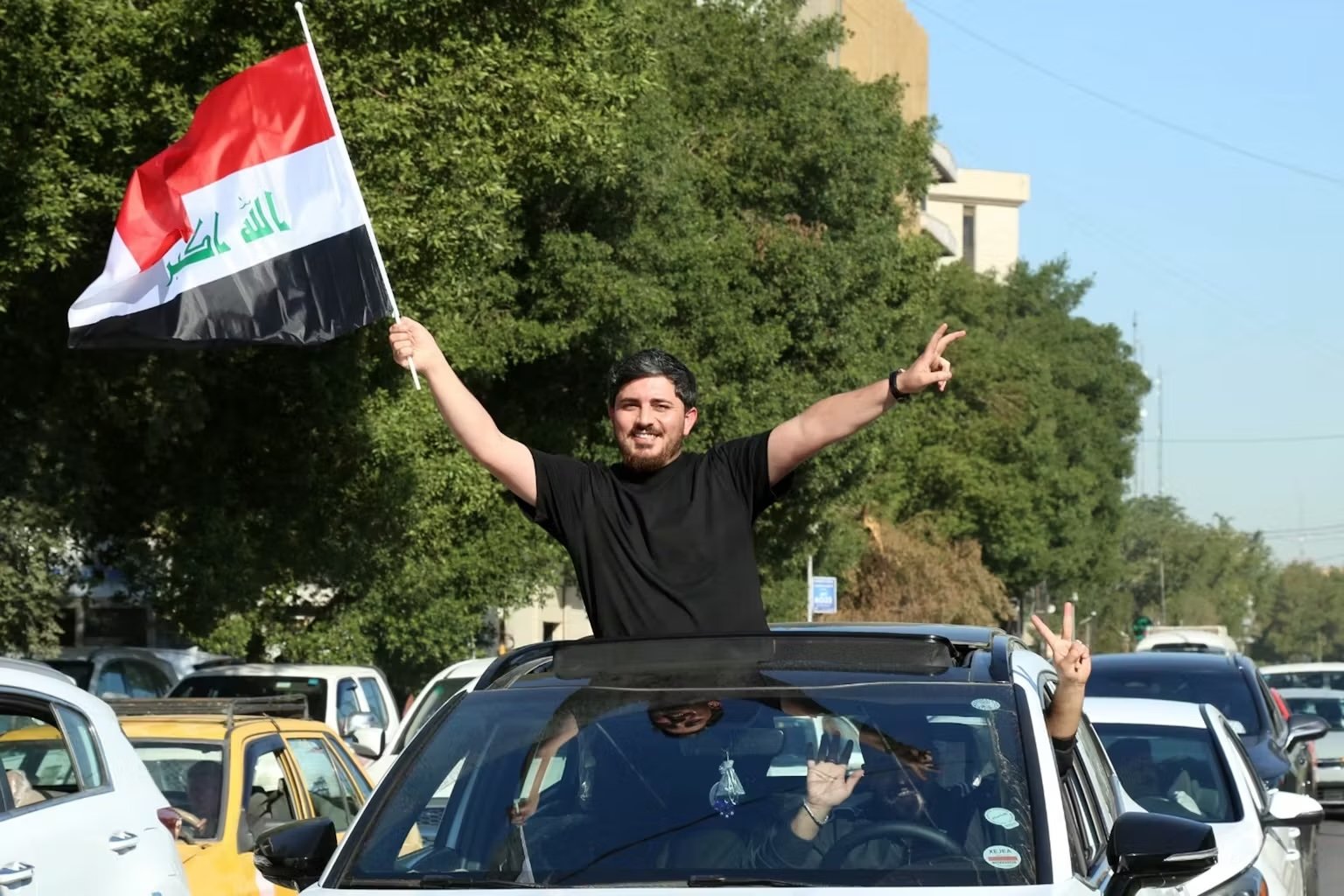
After Saddam's fall, Iraq's media landscape transformed overnight. Within a year, about 80 radio stations and 20 television channels were broadcasting, alongside more than 200 newspapers and magazines. Fewer than half survived a year, but the state monopoly never returned. Today, Iraq has over 100 television channels broadcasting in Arabic, Kurdish, Turkmen, and Syriac.
Political parties, religious institutions, and armed groups have all built their own media operations. In August, I joined an international group visiting Arbaeen, the Shia Muslim pilgrimage that draws over 20 million people annually. At the Al-Abbas Holy Shrine in Karbala, I saw a vast digital archive of films, documentaries, and talk shows. One program resembled an Iraqi University Challenge, with teams answering questions about the Quran. The shrine shares this content online and via live broadcasts, which are used by more than 80 television channels worldwide.
The contrast with Malik's childhood is stark. Under Saddam, choices were few. Now, there is an almost comic abundance. But more media does not mean more truth or freedom. Iraq ranks 162nd out of 180 countries on press freedom, between Sudan and Turkey.
The deeper change is the dispersal of media power among many competing centers, reflecting Iraq's fragmented political landscape. Ten Iran-aligned armed factions command around 50,000 fighters, and Baghdad struggles to control them. Some of these groups run their own channels, like Al-Ahad TV, controlled by Asa'ib Ahl al-Haq.
Saddam once held an iron grip over Iraq and its image—even if Oliver Reed was beyond his control. That monopoly is gone, replaced by a cacophony of voices: parties, shrines, militias, and independent journalists all fighting for space. Yet this abundance is not freedom. It is a new, chaotic reality where power, not truth, shapes the story.