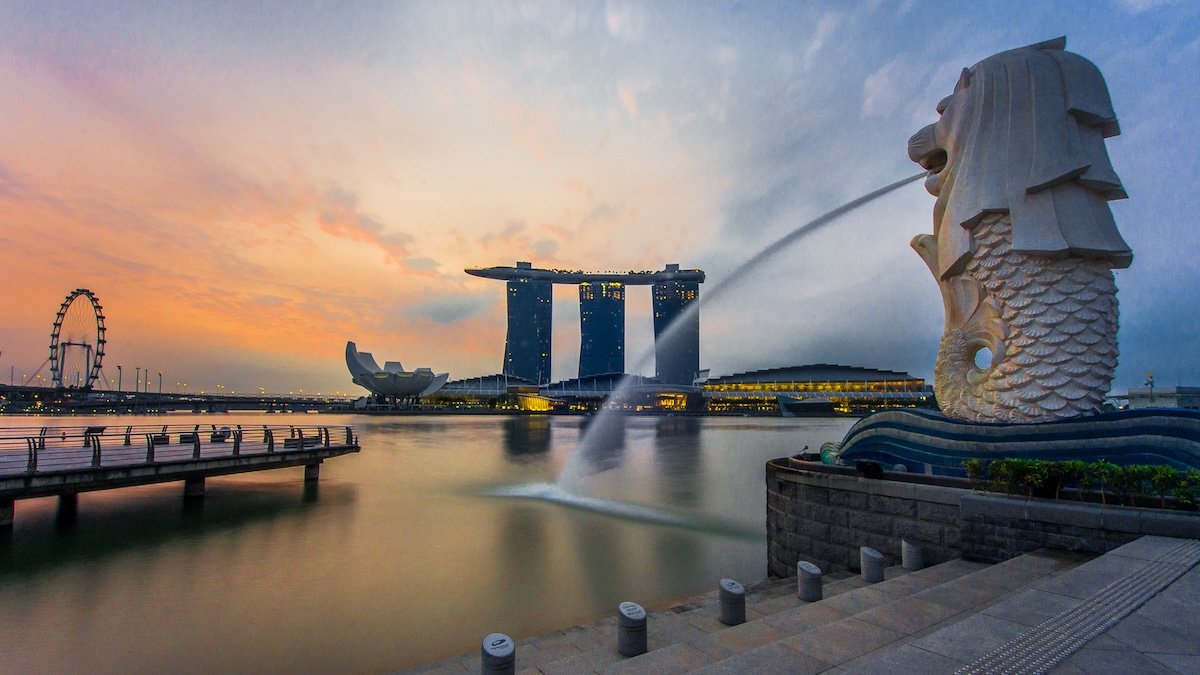
Singapore built its reputation on a rare commodity: neutrality that actually worked. Capital flowed in, companies set up regional headquarters, and deals closed without political interference. That predictability has long been the city-state's core product. But recent events suggest that product is losing its value.
This week, China forced Meta to unwind its US$2 billion acquisition of Manus, a Singapore-based AI startup with Chinese roots. The move goes far beyond a single blocked deal. It signals that incorporation in a neutral jurisdiction no longer shields companies from the geopolitical tug-of-war between Washington and Beijing.
The End of Geopolitical Arbitrage
For years, Singapore allowed founders to relocate, restructure, and access global capital without being forced into one system. Investors could back companies with cross-border exposure and still expect a clean exit. That model is now under direct assault.
Chinese regulators are looking past incorporation and focusing on origin: where the technology was built, who built it, and where it ends up. A Singapore address no longer neutralizes those questions. Washington has already restricted outbound investment into Chinese advanced tech. Beijing is now tightening control over outbound ownership and talent. Both sides are drawing lines, and those lines overlap directly over Singapore.
The scale of what is at stake is enormous. More than US$140 billion in foreign direct investment flowed into Singapore in 2024, one of the highest levels globally relative to its size. Over 80 of the world's top 100 tech firms run regional operations from there. Southeast Asia's AI funding, roughly US$6 billion in 2025, is largely structured through Singapore before being deployed.
Capital still wants to be in Singapore, but the freedom around that capital is shrinking. As the US chases an AGI mirage while China builds practical AI infrastructure, the strategic importance of AI has pushed it into the category of critical infrastructure. Governments are treating it accordingly.
Investors Must Rethink Risk
From an investor's perspective, behavior will shift quickly. Founders may choose sides earlier. Hybrid models—Chinese roots, Singapore structure, Western exit—are becoming harder to execute. Building for both systems at once introduces too much risk.
Valuations will reflect this new reality. Companies sitting between systems will carry a discount because of execution uncertainty. Clean alignment, fully inside one system, will command a premium because the path to exit is clearer. Cross-border M&A in AI is likely to slow, not because deals aren't attractive, but because too many may be blocked. Boards and investors will avoid transactions where approval risk is obvious, and fewer deals attempted means less liquidity across the middle.
Singapore will feel this directly. The city-state's fundamentals remain strong—legal clarity, infrastructure, connectivity—but what is changing is the ceiling on how globally those companies can operate. A Singapore-based company with Chinese founders and US buyers is no longer viewed as neutral.
This leads to a more fragmented system. Global tech is not unwinding completely, but it is splitting into overlapping blocs. AI sits at the center of that split because it touches productivity, defense, finance, and information all at once. As China vows to protect firms after US sanctions, the lines between commercial and strategic assets blur further.
If this plays out, investors need to adjust fast. Understanding where a company sits politically is becoming as important as understanding what it does commercially. Growth still matters, margins still matter, but now alignment does too. Singapore's neutrality is cracking, and the entire region's tech ecosystem will feel the tremors.