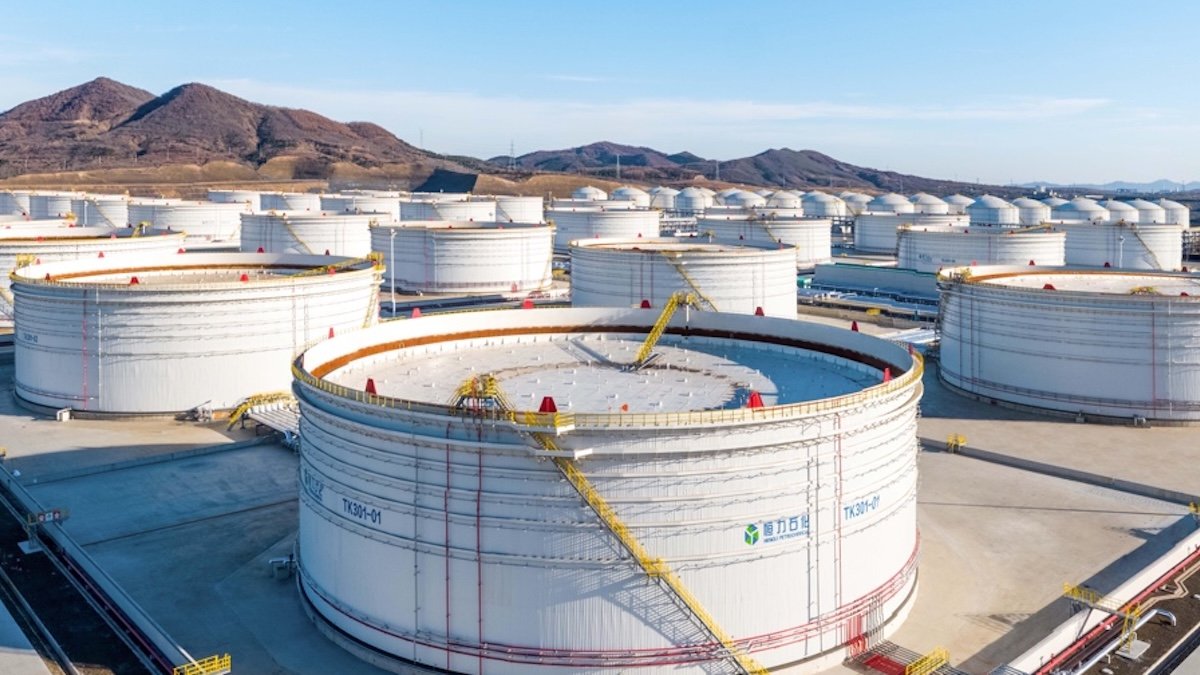
Beijing has pledged to defend Chinese enterprises after Washington imposed sanctions on a major Dalian-based oil refiner and several Hong Kong-registered shipping companies, accusing them of involvement in the Iranian oil trade. The move, announced by the US Treasury Department’s Office of Foreign Assets Control (OFAC) on April 24, adds Hengli Petrochemical (Dalian) Refinery Co Ltd to the Specially Designated Nationals and Blocked Persons List (SDN List). OFAC described the firm as China’s second-largest independent “teapot” refiner and “one of Tehran’s most valued customers.”
According to OFAC, Hengli (Dalian) generated hundreds of millions of dollars for Iran’s military through crude purchases. Since at least 2023, the agency alleges, the company received over five million barrels of Iranian crude from multiple sanctioned shadow-fleet vessels. In parallel, the US sanctioned around 40 shipping firms and vessels operating as part of Iran’s shadow fleet, registered in jurisdictions including Hong Kong, mainland China, the United Arab Emirates, Vietnam, and Malaysia.
Hengli Denies Allegations, Vows Legal Action
Hengli Petrochemical Co, the Shanghai-listed parent company of the sanctioned entity, stated it has always operated in full compliance with applicable laws and regulations. The company said it has never traded with Iran and that all suppliers certify their crude is sourced from jurisdictions not under US sanctions. “The US Treasury’s decision to place Hengli (Dalian) on the SDN List lacks factual and legal basis and constitutes a unilateral sanction. We firmly oppose these groundless allegations and unlawful measures, and will take all necessary steps to safeguard the legitimate rights and interests of the company and its shareholders,” Hengli said in a statement. The firm added that operations remain normal, with high utilization rates, production and sales proceeding as planned, and crude inventories sufficient for more than three months.
Chinese Foreign Ministry spokesperson Lin Jian condemned the sanctions at a regular briefing on Monday. “China opposes illicit unilateral sanctions that have no basis in international law. We urge the US to stop willfully slapping sanctions and using long-arm jurisdiction. China will firmly defend the lawful rights and interests of Chinese companies,” Lin said.
The sanctions come amid broader US efforts to tighten pressure on Iran’s oil exports. On April 15, US Treasury Secretary Scott Bessent warned banks across multiple jurisdictions, including two in Hong Kong, about potential secondary sanctions if they process transactions linked to Iran. The Telegraph reported on April 21 that a US federal court in New York ordered five major global banks—HSBC, Standard Chartered, JPMorgan, Citibank, and Bank of New York Mellon—to hand over documents in a civil case linked to alleged Iran sanctions evasion. The banks are not accused of wrongdoing and are involved only as correspondent lenders.
The refinery at the center of the dispute is owned by Fan Hongwei, widely regarded as one of China’s wealthiest self-made women on the Hurun Rich List. She began in 1994 by acquiring a near-bankrupt textile plant in Suzhou with her husband, Chen Jianhua, scaling it rapidly through capacity expansion and opportunistic equipment purchases during the Asian financial crisis. In 2010, the group won a bid for a large refining and petrochemical project on Dalian’s Changxing Island, beating several state-owned competitors, and built a 20-million-metric-ton complex. In October 2022, Bloomberg named Fan China’s richest woman, overtaking Longfor Group co-founder Wu Yajun.
Hua Xiangming, a Jiangsu-based columnist, noted the timing of the sanctions. “Just as news emerged that the US and Iran might resume peace talks, Washington moved swiftly to escalate sanctions. Many in the international community see this as an attempt to gain leverage at the negotiating table.” He argued that targeting foreign refineries and freezing overseas assets reflects “a typical form of hegemonic politics,” adding that such actions have effectively abandoned any pretense of adherence to free trade or market principles. “The so-called evidence chain is highly ambiguous. The US Treasury claims the sanctions are linked to billions of dollars’ worth of Iranian oil purchases, yet the details remain unclear,” Hua said, warning that the weaponization of the US dollar will prompt more countries to accelerate de-dollarization efforts. “The dollar’s share of global reserves has fallen below 60%, a multi-decade low. Countries now see that relying on dollar settlement risks asset freezes and financial coercion. Alternatives are emerging, from non-dollar oil pricing to new payment channels such as China’s Cross-Border Interbank Payment System (CIPS), accelerating efforts to reduce dependence on the dollar.”
This development underscores the growing friction between Washington and Beijing over energy trade and financial sovereignty. As the US tightens its grip on Iran’s oil exports, Chinese firms like Hengli find themselves caught in the crossfire, while Beijing pushes back against what it sees as extraterritorial overreach. The incident also highlights the broader trend of de-dollarization in Asia, as countries seek to insulate themselves from US financial leverage. For more on regional financial shifts, see China to Issue Sovereign Bonds in Indonesia, Deepening Regional Financial Ties.