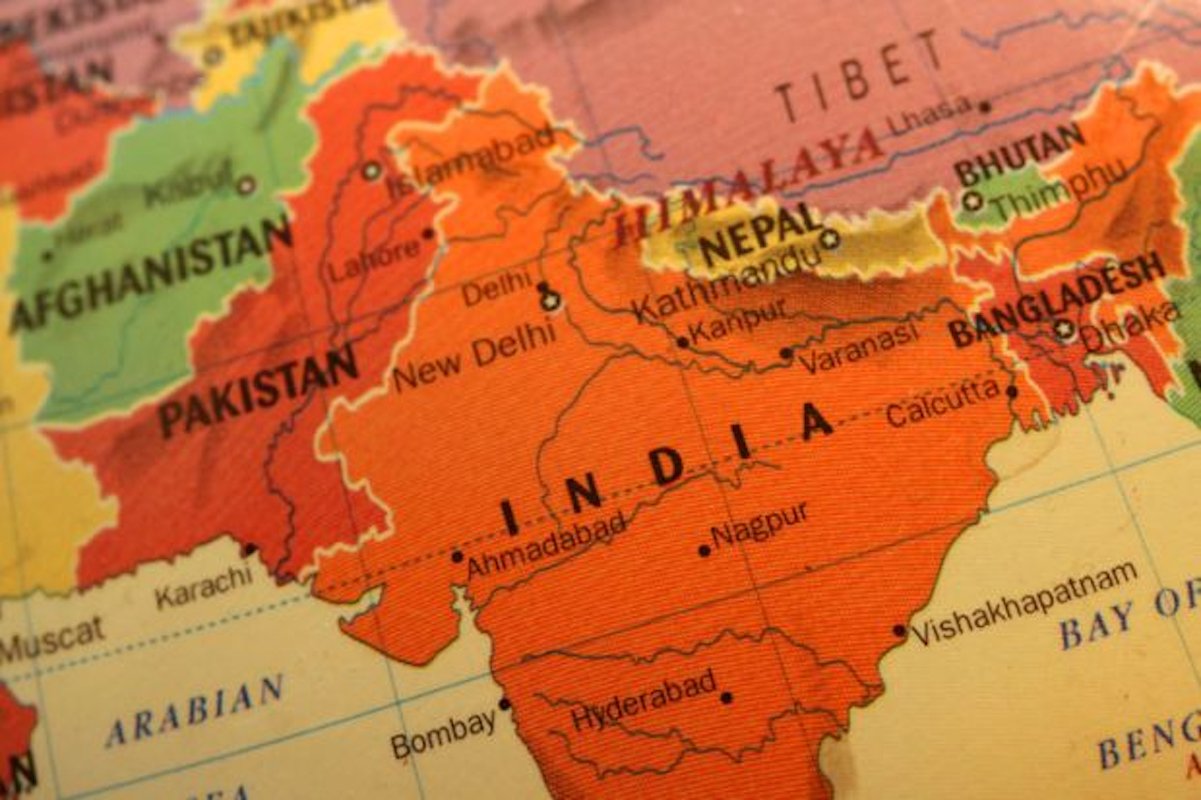
When US President Donald Trump and Chinese President Xi Jinping sit down in Beijing this week (May 14–15, 2026), the agenda is dense: tariffs, AI restrictions, and rare earth minerals. But for South Asia—a region of nearly two billion people stretching from the Himalayas to the Indian Ocean—the real stakes are existential. Neither a full-blown US-China rupture nor a cozy Trump-Xi bargain serves the region's interests.
The shadow of the US-Israel war on Iran looms large. The Strait of Hormuz remains constricted, sending energy price shocks through oil-dependent economies from New Delhi to Dhaka. Any escalation in the Pacific or renewed disruption in the Gulf would transmit immediate economic shockwaves through South Asia's supply chains and shipping routes. As we've noted in our coverage of the Trump-Xi Summit: US Energy Sales to China on Table Amid Hormuz Crisis, energy trade is a key bargaining chip.
India's Balancing Act
India sits at the center of this tightrope. New Delhi has anchored its security posture in the Quad and expanding high-tech defense cooperation with Washington, driven by concerns over Chinese assertiveness along the Line of Actual Control. Yet Indian strategists quietly worry that a transactional "Grand Bargain" between Trump and Xi—perhaps reducing friction over Taiwan—could embolden Beijing elsewhere, including in Arunachal Pradesh. At the same time, a partial easing of the Iran-linked energy shock would provide crucial relief to India's inflation-sensitive economy. For now, New Delhi is likely to hold its course: tightening defense ties with the West while sustaining controlled, transactional economic engagement with China.
Pakistan presents a contrasting, more linear alignment. Deeply embedded in CPEC 2.0, Islamabad is shifting from basic infrastructure to higher-end industrial cooperation—reflected in its recent electric vehicle partnership with BYD and management of 44 new Special Administrative Zones. A more stable US-China relationship would provide the economic breathing room to sustain Chinese investment. For Islamabad, Beijing remains both development lifeline and strategic anchor against India, even as this narrows the scope for meaningful re-engagement with a more protectionist Washington.
Smaller States, Agile Diplomacy
Bangladesh has leveraged shifting supply chains to secure a key 2026 bilateral arrangement fixing US garment tariffs at 19 percent, while simultaneously expanding defense cooperation with Beijing—including a January 2026 agreement with CETC to establish domestic drone manufacturing capacity. Afghanistan, meanwhile, has emerged as a consequential node: with US sanctions still in place, China has moved to secure long-term mining contracts for poly-metallic and critical minerals in Faryab province, effectively integrating Kabul into its resource-security architecture.
The so-called "buffer states" are entering a particularly sensitive phase. Bhutan continues to navigate delicate boundary negotiations with China under its "Three-Step Roadmap," while advancing the Gelephu Mindfulness City—an ambitious special administrative model balancing Indian security concerns with experimental digital finance frameworks. Sri Lanka and the Maldives, both confronting significant debt pressures in 2026, remain locked in cycles of refinancing and renegotiation. Male alone faces over $1 billion in obligations this year. Both countries' survival strategies rest on a familiar duality: securing Chinese debt flexibility—frequently through AIIB-mediated rollovers—while preserving India-first security arrangements.
The Bay of Bengal has quietly transformed into a central theater of this evolving contest. Once treated as strategic periphery, it is now a dense maritime corridor of ports, surveillance infrastructure, and competing influence networks. China's connectivity projects continue to fuel Indian anxieties over encirclement, while the United States increasingly views the region as a counterweight arena.
Technological Fragmentation
Overlaying all of this is a deeper layer of technological fragmentation. The Beijing discussions on AI governance and semiconductor restrictions are likely to raise the cost of industrial upgrading for developing economies further still. As automation reshapes garment production and other labor-intensive sectors, the developmental divide will widen between countries that invest early in digital infrastructure and those that remain locked into low-value manufacturing cycles. Pharmaceuticals, shipbuilding, and IT services are emerging as more durable pathways for those navigating this structural shift.
Expectations from the summit remain deliberately restrained. Limited announcements on agricultural purchases, Boeing aircraft, and energy trade are possible, alongside tentative steps toward Middle East de-escalation. But for South Asia, the real outcome will be measured not in press releases, but in the strategic room to maneuver that remains—or vanishes—in the weeks ahead.