The four-day war between India and Pakistan in May 2025 was fought in the air, on the ground, and at sea—but the most consequential battles took place hundreds of kilometers above the Earth. Fighter jets, drones, and missiles dominated the headlines, yet it was satellites that quietly determined the outcome. This was arguably the first conflict between two nuclear-armed states where space-based systems played a decisive role. Few analysts have acknowledged this, and that silence is dangerous. South Asia is now sliding into a new kind of arms race, one with no rules to restrain it.
A networked kill chain
The opening night of the war, on May 6, offered a lesson that should unsettle far larger air forces than those of India and Pakistan. Pakistan, with a smaller military, fought a tightly networked battle. Its air force fused ground radar, airborne early warning, data links, and satellite navigation into a single kill chain, allowing it to plan and execute attacks with remarkable efficiency. This doctrine had been drilled into the Pakistan Air Force for years.
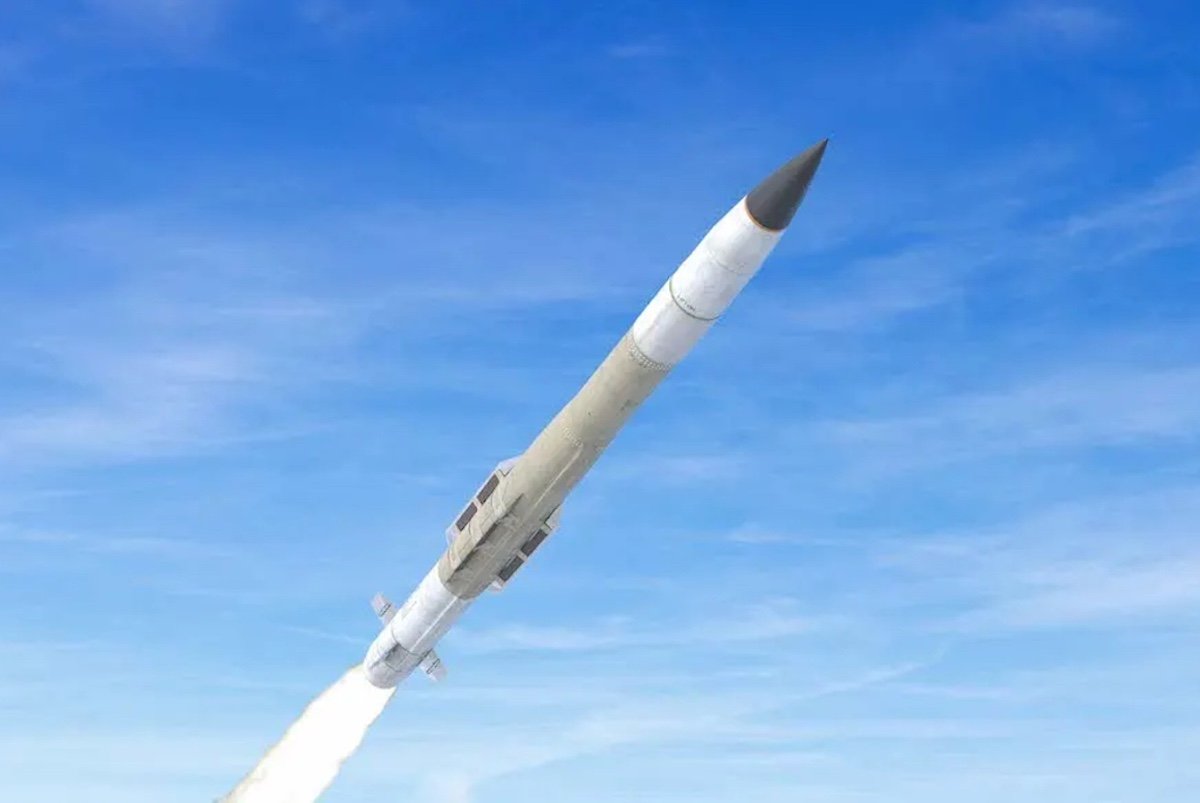
Pakistani officials claimed that one of their Chinese-built J-10C fighters shot down an Indian Rafale with a PL-15 missile at a range of more than 200 kilometers—a beyond-visual-range kill with little precedent in combat. India disputes the account, but its own chief of defense staff later conceded that the air force lost aircraft that day. India regrouped and struck back hard over the following days, but the opening exchange was decided less by numbers or aircraft specifications than by how well each side integrated its radar, early warning, data links, and missiles into one system—and by the training of the crews flying it.
Above all this sat space-based technology. Modern strikes run on satellites: imagery to find targets, navigation to guide weapons, and links to hold the system together. Both sides drew on these capabilities, and both used them to reach beyond their borders.
Dependence on great powers
Despite the strength of India's defense manufacturing industry, New Delhi fell back on imagery bought from US commercial satellite firm Maxar Technologies to assess the damage its strikes had caused. Pakistan leaned on Chinese systems. According to India's own deputy army chief, Beijing fed Pakistan live inputs on Indian deployments—and researchers have described how a BeiDou-enabled satellite network (the Chinese equivalent of GPS) reportedly supplied targeting data during the fighting.
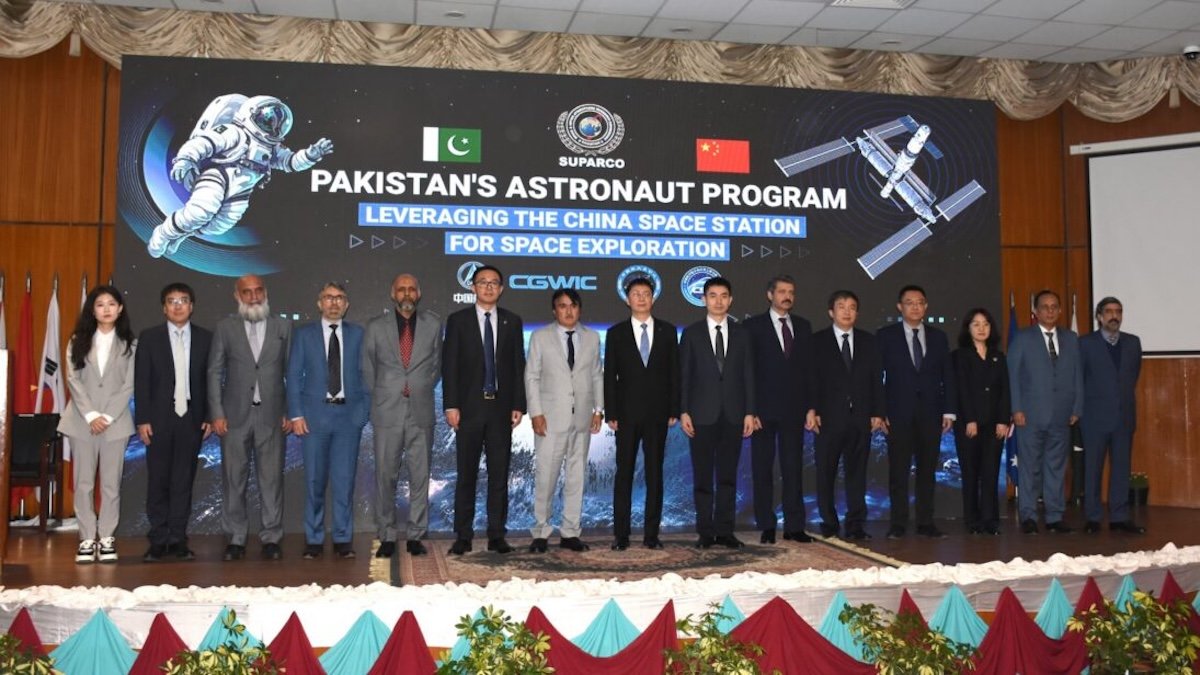
This is where the familiar story about Pakistan's dependence on China needs correcting. Reliance on a great power patron is not peculiar to Pakistan—most countries start out developing their space programs this way. India launched its first satellite on a Soviet rocket in 1975 and built its heavy-lift capability around Russian cryogenic engines, the high-efficiency rocket motors that burn super-cooled liquid fuel to launch heavy satellites, acquired in 1991. China itself began with Soviet missile designs. Pakistan's turn to China, after years of relying on a US system it feared could be switched off in a crisis, is a rational decision of the same kind India once made when it sourced most of its weapons and its first satellite launch from Moscow rather than the West.
Borrowed capability still comes with a cost. Commercial and allied space assets are becoming a strategic equalizer in South Asia, giving a smaller state capabilities it could not achieve on its own. The risk is that this hands a third power a seat inside a bilateral nuclear rivalry and ties a regional quarrel to the wider contest involving Washington, Moscow, and Beijing.
India's response: volume and speed
India has chosen to respond with sheer volume, fast-tracking a home-grown program worth US$3.2 billion for 52 dedicated military satellites to watch Pakistan, China, and the Indian Ocean, plus a new space doctrine and counterspace arsenal. It has already demonstrated its ability to destroy a satellite in orbit in its 2019 Mission Shakti test. Pakistan is likely to respond by deepening its partnership with China.
Compressed decision time
The deeper hazard is not a battle in orbit but the way these systems compress the timing with which operational decisions are made. When commanders can watch an adversary almost in real time and believe a target can be struck within minutes, the pull to move first, before the target slips away, becomes hard to resist. As I have written on the doctrine of limited air wars, nuclear neighbors rarely escalate deliberately. They tend to stumble into conflict under time pressure. Satellites do not make these states reckless. They reduce the margin for miscalculation.
And there is no rule book. The 1967 Outer Space Treaty bans weapons of mass destruction in orbit, but is silent on the conventional, electronic, and cyber tools that actually shaped this war. Fresh norms have stalled. India has abstained from recent United Nations resolutions on responsible behavior in space, wary of a rule-making process it sees as led by the established Western space powers and shaped without India's full say. Meanwhile, Pakistan urges a restraint it cannot yet enforce. Nothing in the space domain resembles even the imperfect hotlines and arms-control treaties that disciplined the Cold War rivalry between Washington and Moscow.
For years, the debate about war in space has focused on the US, China, and Russia. Yet it may be here, between two states partitioned in 1947 that have fought four wars since, that the world first sees what space-enabled conflict between nuclear powers really looks like. Having spent 17 years in the Pakistan Air Force before turning to research, I think the May war is not so much a story about Pakistan's reliance on China as two nuclear rivals racing the same space-enabled technology ahead of any restraint. The tools are advancing fast. The guardrails are not.