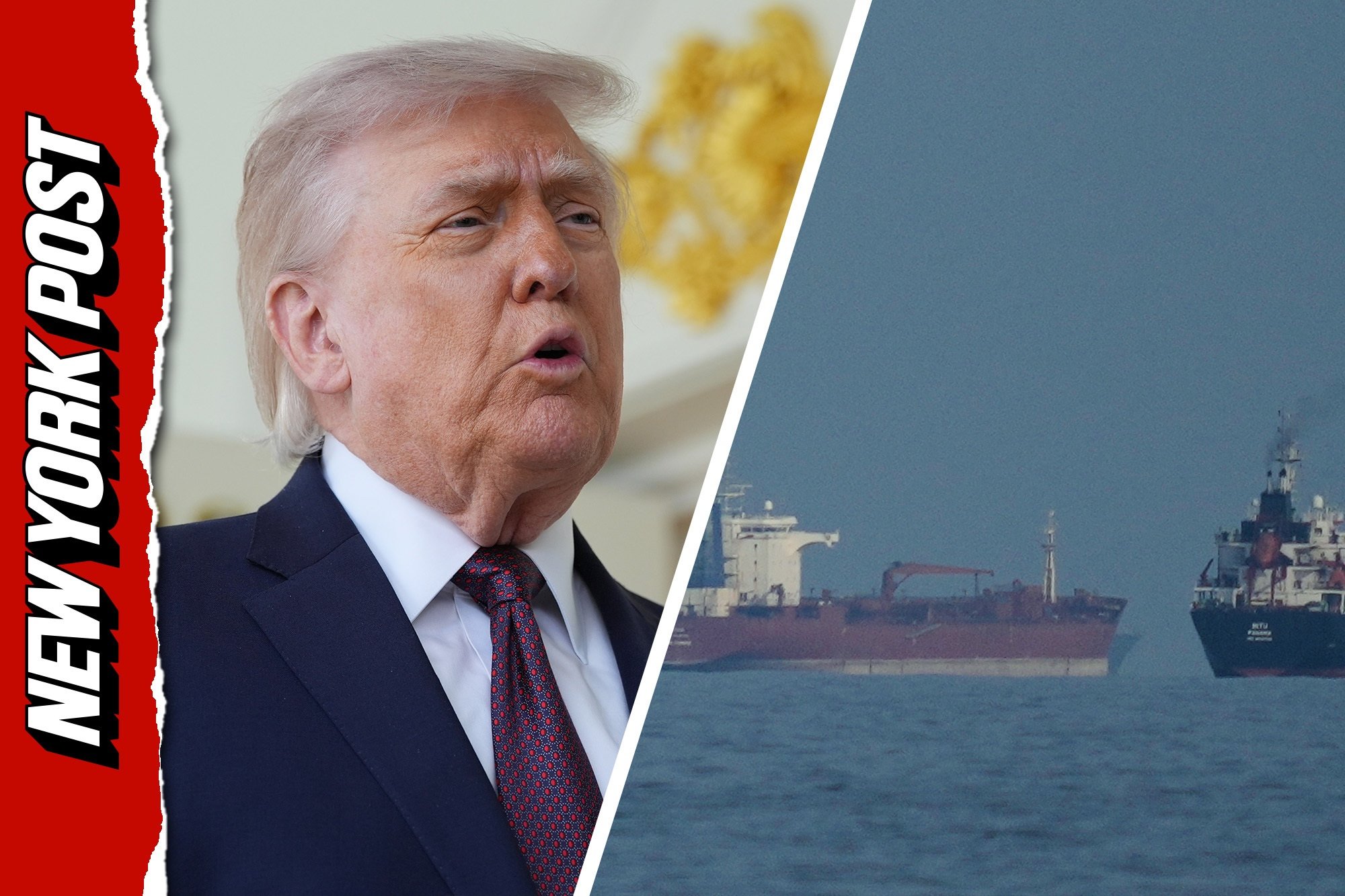
President Donald Trump acknowledged on Wednesday that the U.S.-led blockade of the Strait of Hormuz could persist until September, even as he expressed hope for a diplomatic resolution to the conflict with Iran. In an interview with the New York Post, Trump was asked whether the blockade would continue until Labor Day, which falls on September 7 this year. 'I don't know,' Trump said. 'I mean, I think it could be, but I think it's unlikely.' He added, 'I think this will resolve itself fairly quickly.'
The president has sought to contain oil price spikes by hinting at an imminent end to hostilities, even as the conflict grinds on with no clear ceasefire. The Trump administration insists a truce remains in effect, but reports from CNN and Al Jazeera indicate continued exchanges of fire. According to CNN, Iran launched attacks against U.S. military bases in Kuwait and Bahrain after American forces struck a Botswana-flagged oil tanker heading toward an Iranian port. Separately, Iran conducted drone and missile strikes on Kuwait International Airport, killing one person and injuring dozens, Al Jazeera reported.
Oil supply 'powder keg' as inventories dwindle
The Strait of Hormuz, a narrow waterway between Oman and Iran, is a critical chokepoint for global oil shipments. Its closure has already strained petroleum markets. Patrick De Haan, an oil industry analyst, warned on Tuesday that U.S. distillate inventories are about to fall below 100 million barrels for the first time in over two decades. 'This is a powder keg waiting to go off if a deal to reopen the strait doesn't happen soon,' De Haan wrote on social media.
Ryan Cooper of The American Prospect echoed that concern in an analysis published Wednesday. He argued that the emergency measures used by nations to stabilize prices—such as releasing strategic petroleum reserves—are losing effectiveness. 'As storages dwindle and run out, the only way to match demand to supply will be for the price to rise high enough to destroy something like 10 to 20% of global oil consumption,' Cooper wrote. 'And because a great deal of oil demand is obligatory and therefore not very price-sensitive, that price will likely be north of $150 per barrel.'
Such a price surge would ripple across the global economy, raising costs for gasoline, diesel, and virtually all goods that rely on transportation or plastic packaging. For Asian economies, which are heavily dependent on imported energy, the stakes are particularly high. Japan, South Korea, India, and China are among the largest importers of crude oil from the Middle East, and any sustained disruption in the Strait of Hormuz would directly impact their energy security and inflation outlook.
The Bank of Japan, for instance, is already grappling with inflationary pressures from the conflict, as noted in a recent analysis of how the war is complicating monetary policy in Tokyo. Similarly, India's refiners are scrambling to secure alternative supplies, while China's state-owned oil companies are reportedly increasing purchases from Russia and West Africa to hedge against further disruptions.
The broader geopolitical implications are also significant. The blockade has strained U.S. relations with Gulf allies and tested the cohesion of the Quad, the strategic dialogue between the United States, Japan, India, and Australia. While the Quad has shown structural resilience during Trump's second term, the Iran crisis adds a new layer of complexity to Indo-Pacific security dynamics.
Trump's comments come amid reports of internal tensions within his administration over Iran strategy. A leaked exchange between Trump and Israeli Prime Minister Benjamin Netanyahu, in which Trump expressed frustration over Netanyahu's push for a harder line, has signaled a potential shift in U.S.-Israel ties. Meanwhile, European efforts to mediate have been dismissed by Tehran as appeasement, further narrowing the path to a diplomatic solution.
For now, the world watches as the Strait of Hormuz remains a flashpoint. Whether Trump's optimism proves justified or the 'powder keg' ignites will depend on the next moves in Washington, Tehran, and the capitals of Asia's energy-dependent economies.