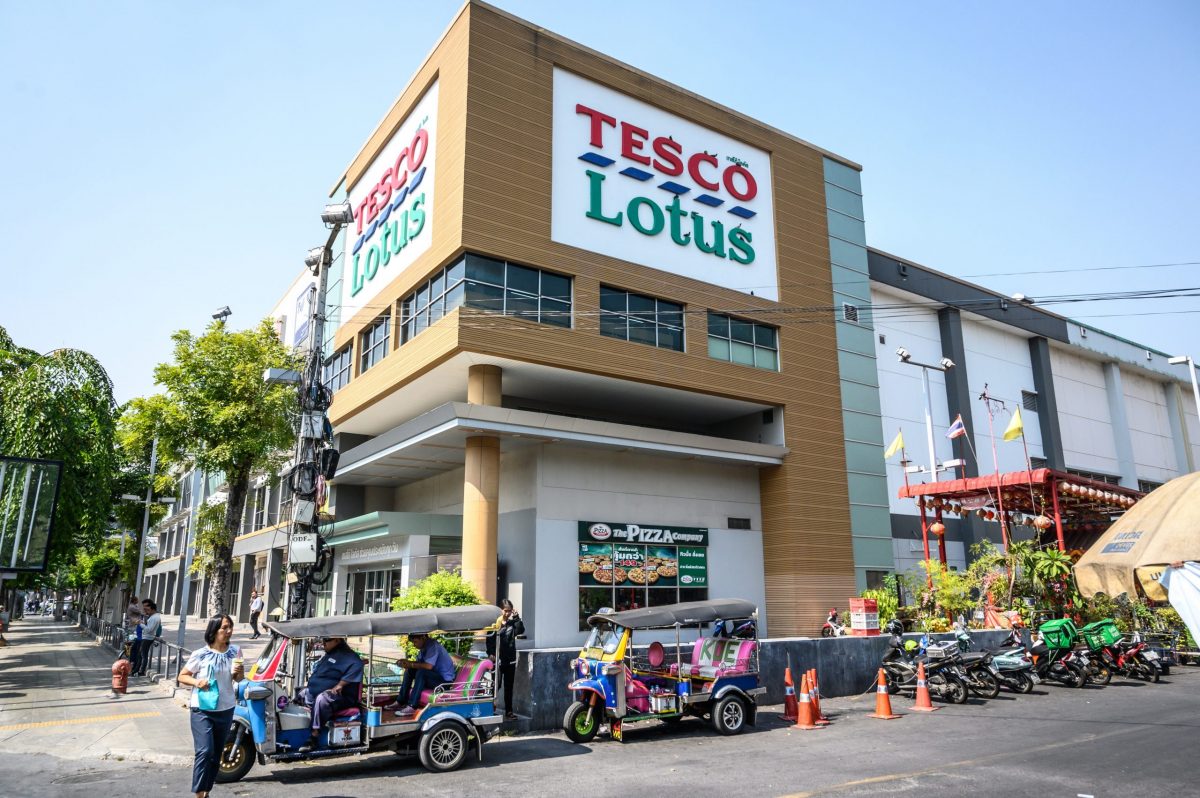
Thailand's competition watchdog has granted formal approval for the country's largest conglomerate, the Charoen Pokphand (CP) Group, to acquire the Southeast Asian supermarket operations of British retailer Tesco for $10.6 billion. The decision by Thailand's Office of Trade Competition Commission (OTCC) clears the final major regulatory hurdle for one of the region's most significant retail transactions in years.
Regulatory Scrutiny and Conditions
In a statement released on Friday, the OTCC acknowledged that the merger could lead to significant market dominance but concluded it would not create a monopoly. "The majority of commissioners agreed that the merger of those businesses (could create) market dominance… but it's not a monopoly," the commission said. To mitigate competitive concerns, the regulator imposed a condition prohibiting CP Group from pursuing any further mergers or acquisitions in the retail sector for a period of three years.
The deal had faced public scrutiny from industry figures, including Somchai Pornrattanacharoen, president of the Thai Retailers and Wholesalers Association. Serving on the OTCC's vetting committee, Somchai had previously voiced concerns, reported by local media, that the acquisition could grant CP Group a monopolistic position in the market.
Tesco, in a brief statement, indicated it is awaiting CP Group's receipt of the formal approval notice and will make a further announcement in due course. CP Group, a sprawling conglomerate with core interests in agribusiness, food, telecommunications, and high-speed rail, has not publicly commented on the regulator's decision.
A Full-Circle Transaction
The sale represents a historic reversal of fortunes. Tesco's extensive network of nearly 2,000 grocery stores across Thailand was originally purchased from CP Group itself during the Asian financial crisis of 1997-1998. The acquisition will return these assets to the control of the Chearavanont family, led by patriarch Dhanin Chearavanont. According to Forbes, the family, which controls CP Group, has an estimated net worth of $27.3 billion, placing them at the top of Thailand's billionaire rankings.
The transaction, first announced in March, encompasses Tesco's entire business in Thailand and its operations in Malaysia. It underscores the strategic value of Southeast Asia's consumer markets and the retreat of some Western retailers in the face of fierce local competition. The deal's scale highlights how regulatory scrutiny is a critical factor for major corporate mergers in the region, mirroring challenges faced by global firms elsewhere.
For CP Group, the acquisition dramatically expands its already substantial retail footprint, which includes the ubiquitous 7-Eleven convenience stores in Thailand through its CP All unit. The move consolidates its position as the undisputed leader in Thailand's food production and distribution ecosystem, from farm to shelf.
Broader Regional Implications
This landmark deal occurs within a complex regional economic landscape. While Southeast Asian nations navigate post-pandemic recovery and shifting supply chains, major economies are forging new trade agreements. For instance, the ongoing negotiations for an EU-India trade deal demonstrate the strategic calculations nations are making to secure economic advantage. Similarly, the CP-Tesco deal reflects Thailand's internal balancing act between welcoming large-scale investment and preserving competitive markets.
The consolidation in Thailand's retail sector also speaks to broader themes of economic sovereignty and the role of domestic conglomerates. As global capital flows reshape Asian markets, the resurgence of a national champion like CP Group reclaiming assets sold during a period of economic vulnerability carries symbolic weight. It highlights the growing financial muscle and strategic ambition of Southeast Asia's homegrown corporate giants.
Furthermore, the transaction's focus on consumer essentials and food security connects to wider geopolitical currents affecting Asia. Stability in key commercial sectors remains paramount as nations assess vulnerabilities, much like the energy security recalculations prompted by tensions in the Strait of Hormuz. Control over food distribution networks is a matter of both commercial and national strategic interest.
The approved sale marks the end of Tesco's over two-decade-long chapter in Southeast Asia, allowing the UK-based retailer to focus on its core home market and pay down debt. For CP Group and the Thai economy, it opens a new one defined by immense scale and the ongoing challenge for regulators to ensure a fair marketplace for consumers and smaller businesses alike.