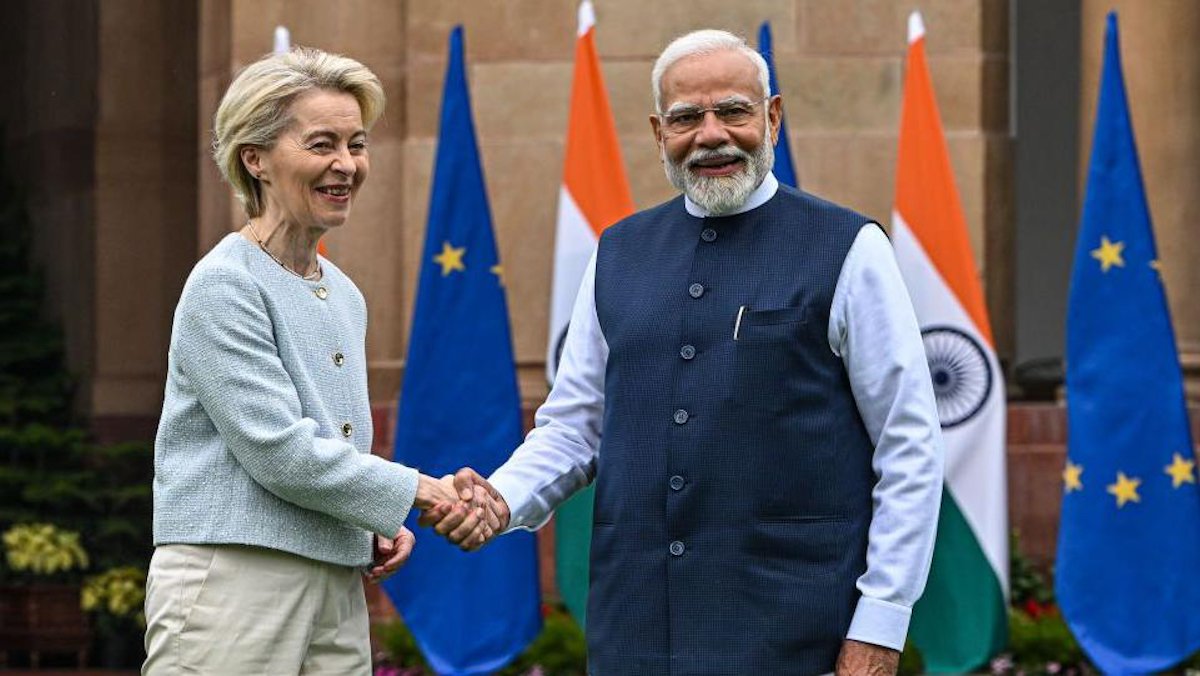
In late March, an 11-member delegation from the European Parliament arrived in New Delhi, signaling a renewed push to conclude one of the world's most consequential trade negotiations. Meetings with Indian Foreign Minister Subrahmanyam Jaishankar and Commerce Minister Piyush Goyal were marked by a shared ambition: to finalize the long-stalled India-European Union Free Trade Agreement (FTA) by the third quarter of 2026, with implementation following in 2027.
Yet beneath the diplomatic optimism lies a fundamental strategic question. Is this the foundation of a deep, enduring partnership between two democratic economic powers, or a pragmatic but limited alignment forged by contemporary geopolitical pressures?
Strategic Drivers on Both Sides
For the European Union, the urgency is clear. The bloc is actively diversifying its economic relationships in response to global fragmentation, tensions with China, and the aftermath of Russia's invasion of Ukraine. European Parliament member Angelika Niebler framed India as a "trustworthy partner," highlighting Brussels' pursuit of "friend-shoring"—shifting supply chains to allied nations. India, with its massive demographic dividend and independent foreign policy, presents a compelling alternative.
New Delhi's calculus is equally strategic. Under Prime Minister Narendra Modi, India's multi-alignment doctrine seeks economic gains without compromising political autonomy. An FTA with the EU, its second-largest trading partner after the United States, offers precisely that: enhanced market access without binding geopolitical entanglements. Bilateral trade in goods surpassed $136 billion in the 2024-25 fiscal year, with services adding approximately $83 billion, underscoring the relationship's substantial scale.
Potential Gains and Deliberate Omissions
The agreement promises significant economic uplift. Analysts project it could increase bilateral trade by 40-60% within a decade, adding tens of billions annually to both economies. India eyes greater access to the lucrative EU single market for its engineering goods, pharmaceuticals, and textiles. Europe seeks diversification from China, tapping into India's vast consumer base and skilled workforce for manufacturing and services.
However, the deal is notably incomplete. Negotiators have deliberately excluded agriculture, a politically volatile sector on both sides. This tactical omission avoids the fierce farmer protests that have complicated other EU deals, like the one with Mercosur, but it leaves a substantial portion of potential trade untapped. The move underscores the pact's character: ambitious in scope yet strategically limited to ensure ratification.
The Regulatory Battleground
While tariff reduction is a primary goal, the more complex conflict lies in regulatory alignment. The EU's stringent frameworks, particularly the Carbon Border Adjustment Mechanism (CBAM), pose a major challenge. CBAM taxes imports based on their carbon footprint, a core element of European climate policy. For India, a rapidly industrializing nation prioritizing growth, such measures risk acting as de facto trade barriers.
This tension highlights a core dilemma: bridging the EU's rules-based, sustainability-driven trade model with India's developmental priorities. Further friction points include intellectual property rights, data governance, and labor standards. As Niebler noted, "the devil is in the details," and the European Parliament's scrutiny process could reshape the final agreement's contours.
The negotiations also unfold against a complex geopolitical backdrop. For the EU, a stronger partnership with India bolsters its Indo-Pacific strategy and supply chain resilience. For India, the deal enhances its global standing as a pivotal economic actor. Yet underlying divergences persist, such as European criticism of India's continued economic engagements with Russia, highlighting where strategic interests do not fully converge.
Domestic Politics and Implementation Challenges
Success is not guaranteed by a signature. In Europe, trade pacts face intense scrutiny from environmental and labor groups demanding robust safeguards. In India, the government must ensure the FTA's benefits reach small and medium-sized enterprises, the backbone of the economy, to maintain broad political support.
The path forward requires both sides to move beyond transactional thinking. Prioritizing regulatory cooperation and building mechanisms to manage inevitable disputes will be crucial. The agreement represents a significant test of whether two major, diverse democracies can craft a trade framework that delivers shared prosperity while respecting their distinct economic models and strategic autonomies.
As global tensions reshape alliances, the EU-India FTA is more than a trade deal; it is a barometer for a new type of international economic partnership. Its ultimate success will depend on navigating the intricate balance between ambition and pragmatism, a challenge that will define the economic diplomacy of the coming decade.