On May 28, 2025, a localized skirmish along the Thailand-Cambodia border escalated into one of the most significant military conflicts in the region in decades. More than a year later, a fragile ceasefire holds, and recent talks—both at the ASEAN Leaders Summit and bilaterally—have raised hopes for a lasting end to hostilities. Yet the diplomatic optimism obscures a harsher reality: peace on paper does not guarantee recovery on the ground.
Human toll remains severe
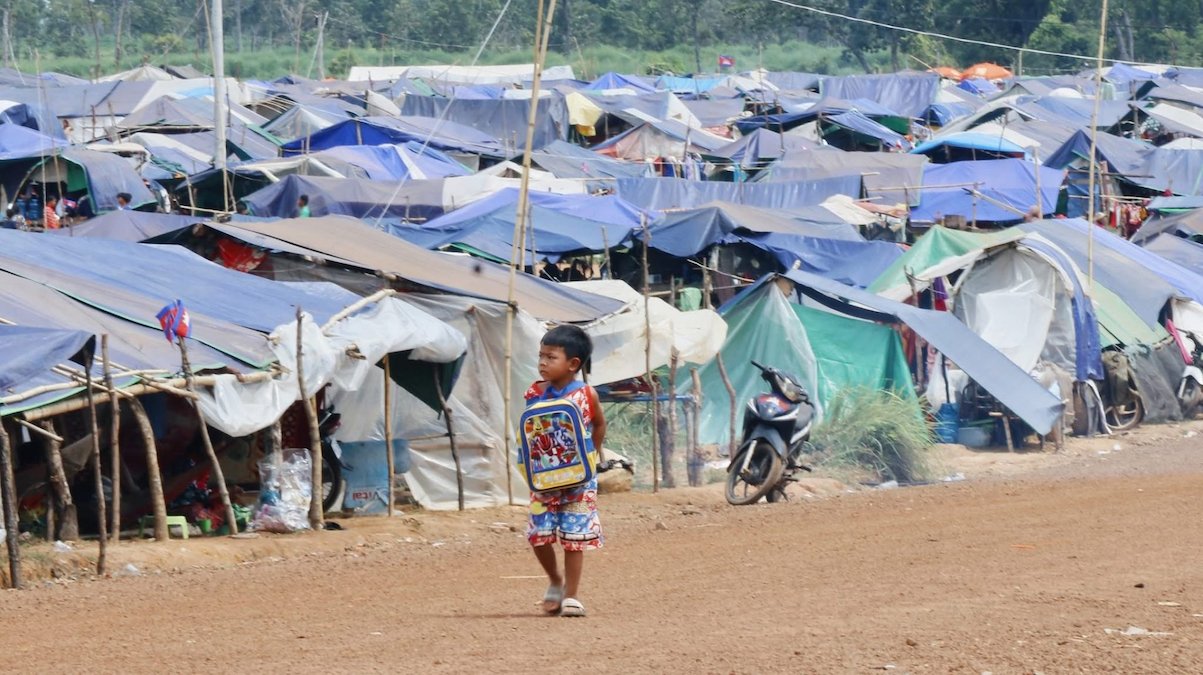
In the first three weeks of the conflict alone, nearly one million people on both sides of the border were displaced. Between May and December 2025, dozens of casualties were recorded, 833 schools closed—disrupting the education of 200,000 children—and more than 50 frontline health facilities shut temporarily. Although bilateral trade has adapted, reaching almost $1 billion in the first four months of this year, average earnings have fallen by 34%. Many families now face the prospect of turning to high-interest microloans as a last resort.
Some facilities have reopened, but the long-term effects of missed education, accumulated household debt, and the frayed relationship between Bangkok and Phnom Penh will not be resolved quickly. The conflict has also exacted an underappreciated political cost, particularly in Cambodia.
Political repression in Phnom Penh
Border conflicts and civil wars have historically triggered crackdowns on political and civil rights—from Myanmar’s ongoing civil war to Iran’s use of internet blackouts. In Cambodia, the government in Phnom Penh has used a state of emergency to weaponize the border conflict, silencing critics and independent journalists. Between January and mid-February 2026 alone, six Cambodian journalists were detained, arrested, or charged with incitement over their reporting. This follows the sentencing of two journalists last year to 14 years in prison for allegedly “supplying a foreign state with information prejudicial to national defense.”
The conflict has also disrupted the movement of Cambodian activists, opposition figures, and civil society actors who historically sought refuge in Thailand. Border closures have halted efforts by groups to help individuals flee persecution. For those who crossed before the closures, rising nationalism in both countries has reshaped not only diplomatic engagement but also human interactions. What was once a joint effort to advance democracy and civil rights has turned into a blame game over which government caused the conflict. Civil rights groups now face public pressure if they endorse one another across the border.
Governments have used incidents of harassment and even assault on the street as fodder for online propaganda, distracting from human rights abuses at home. The result is not only weakened democratic movements within each country but also the erosion of regional networks that long sustained them.
Recovery requires more than diplomacy
The international response must extend beyond diplomatic de-escalation. Regional governments, donors, and multilateral organizations should recognize that post-conflict recovery demands sustained investment in people, not just agreements between states. That means creating safeguards for displaced and indebted households, supporting returning migrant workers, rebuilding education and healthcare systems, and ensuring humanitarian assistance reaches communities still struggling with displacement.
It also means maintaining support for independent civil society organizations, human rights defenders, journalists, and democratic actors whose work may become even more difficult after the conflict. Political freedoms should not become another casualty of a crisis that has already imposed heavy costs on ordinary people.
Recent productive discussions between Thailand and Cambodia are an important achievement. Diplomacy remains essential, and every step away from violence should be welcomed. But a lasting peace is measured not by the signing of agreements alone. It is measured by whether displaced families can rebuild their lives, whether workers can regain their livelihoods, whether children can return to school, and whether citizens retain the freedom to organize, speak, and advocate without fear.
The danger now is not that peace efforts will fail—it is that the region will declare success too early. If governments and international partners focus exclusively on ending the conflict while neglecting the economic and societal impacts, they risk inflicting lasting damage on those most affected. The challenge ahead is to ensure that recovery receives as much attention as diplomacy.
For a broader perspective on maritime disputes, see UNCLOS Conciliation Offers Cambodia and Thailand a Path to Maritime Peace. The region's energy dynamics are also shifting, as explored in US-Iran Peace Deal Shakes China's Energy Calculus and Geopolitical Position.