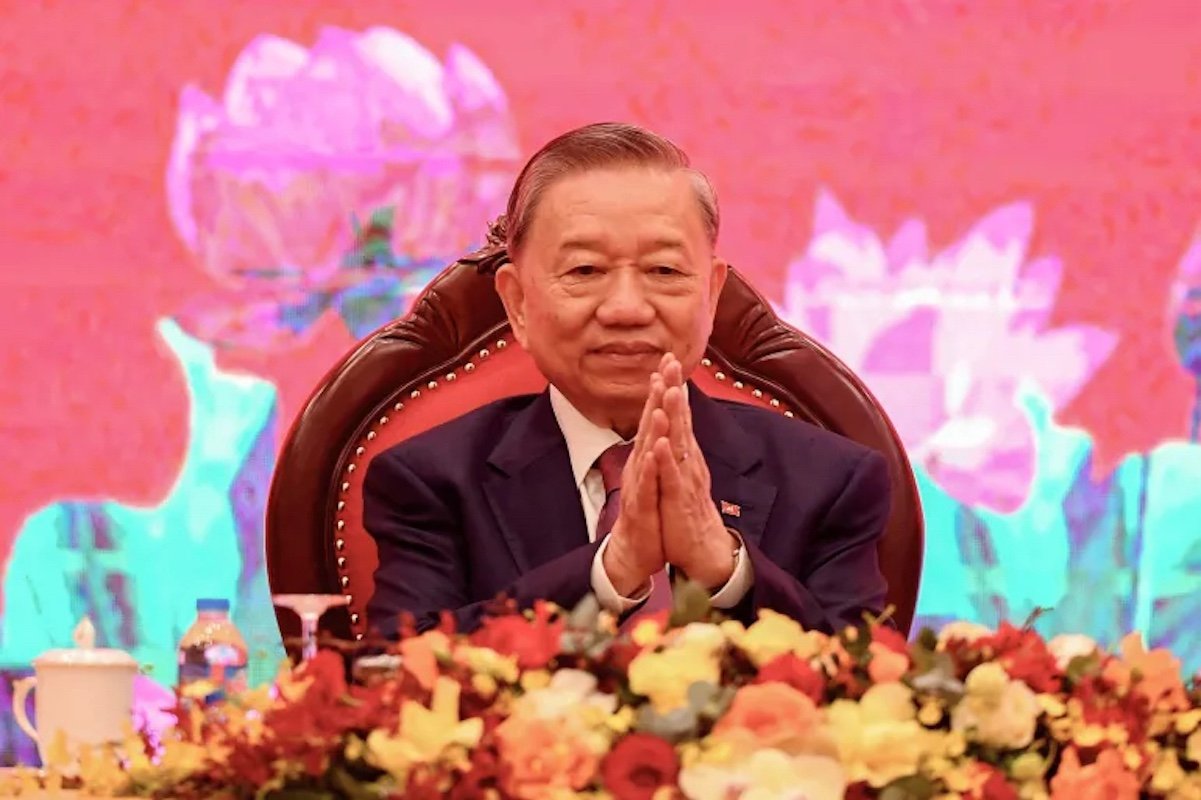
The formal election of General Secretary To Lam to the state presidency of Vietnam marks a deliberate consolidation of power, locking two of the nation's top positions into a single pair of hands for a full five-year term. While previous instances of dual-role leadership were interim arrangements, this move represents a calculated structural shift within the Communist Party of Vietnam (CPV). It reveals an evolving political architecture where party authority is increasingly concentrated, with significant implications for Hanoi's domestic governance and international posture.
A Deliberate Departure from Collective Norms
To Lam's assumption of the presidency is not without precedent. His predecessor, Nguyen Phu Trong, held both roles from 2018 to 2021, and To Lam briefly combined them following Trong's death in 2024 before handing the presidency to Luong Cuong. The critical distinction is intent. Earlier consolidations were seen as circumstantial; the current arrangement is a settled, long-term strategy. It reflects a conscious decision to streamline leadership at the highest level, moving away from the distributed, collective model that has characterized Vietnamese politics for decades.
It would be an overstatement to declare Vietnam's system of collective leadership entirely dismantled. In 2024, the CPV formalized a "five pillars" structure through Regulation No. 368, which elevated the standing member of the secretariat—now Tran Cam Tu—alongside the traditional four pillars: general secretary, state president, prime minister, and National Assembly chair. With To Lam holding two of those five roles, the system has adapted into five pillars occupied by four individuals. However, this adaptation is telling. Two of the four holders now occupy strictly party-internal roles: To Lam as general secretary and Tran Cam Tu as a standing member of the secretariat. This represents a shift from a structure that previously balanced party and state institutions more evenly.
The center of political gravity has moved decisively toward the CPV apparatus. This reinforces a broader trend where state institutions, particularly the National Assembly, have seen their relative influence wane. The practical power of the state presidency itself is largely ceremonial, with little independent policymaking authority. Major decisions are made by vote within the Politburo, a body To Lam already commands as general secretary. The brief tenure of Luong Cuong as president illustrated this dynamic clearly; he held the office without meaningfully shaping Vietnam's external commitments or domestic direction.
The Rationale: Efficiency in Diplomacy and Economics
The consolidation's rationale is significant yet specific. The presidency is constitutionally designated for receiving foreign credentials, signing treaties, and conducting state visits. Holding both roles allows To Lam to streamline diplomatic mechanics at a moment when Vietnam's key foreign relationships demand meticulous, agile management. The relationship with the United States alone—complicated by trade tensions, including issues surrounding the transshipment of goods, and Vietnam's persistent balancing act between Washington and Beijing—benefits from having a single interlocutor who sets both strategic direction and handles diplomatic protocol.
For foreign counterparts, fewer principals mean faster engagement. This argument for efficiency extends directly to To Lam's ambitious economic goals. Vietnam's target of achieving 10% GDP growth requires locking in investment and trade commitments rapidly, particularly amid global uncertainty. A consolidated leadership projects an image of decisiveness to international investors and negotiating partners. The party's dominance over economic policy was already an established fact; what the presidency adds is the potential for smoother execution on the international stage.
This move also aligns Vietnam's leadership model more closely with that of its northern neighbor, China, where Xi Jinping holds both party and state roles. For foreign governments and investors, this simplifies engagement by providing a single, authoritative counterpart, reducing ambiguity. However, it also means that Vietnam's political stability is increasingly tied to one figure's capacity and judgment, in a system historically designed to distribute those burdens.
Risks of Institutional Narrowing
The risks inherent in this consolidation are real, though often mischaracterized. The CPV's internal discipline mechanisms remain intact, and the Politburo still functions as a collective decision-making body. The deeper concern is one of institutional narrowing. Each consolidation weakens the informal norms that sustained distributed leadership, making it easier for future successors to follow the same path. When accountability is concentrated alongside authority, setbacks—whether in the ambitious growth agenda or a diplomatic misstep—fall squarely on one set of shoulders.
For To Lam, this is a calculated bet. He is wagering that the efficiency gains from centralized authority will outweigh the resilience and inertia that collective leadership provided. The model echoes trends seen in other one-party states where security and political institutions consolidate power, directing policy from a unified command. Vietnam's political architecture has not collapsed, but it is bending. It is bending toward the party, toward a single leader, and toward a model where the margin for error is thinner than it has been in decades.
The international context for this shift is a global landscape where state-led growth models are being reassessed amid great power competition. Vietnam's choice to centralize authority at the top suggests a preference for decisive, rapid execution over deliberative consensus as it navigates this challenging environment. The coming years will test whether this streamlined structure can deliver the economic prosperity and strategic stability Hanoi seeks, or if the concentration of power introduces new vulnerabilities.